Against Forgetting: Building Inkani Review
When power depends on forgetting, memory becomes a battlefield: a new home for rigorous, movement-facing criticism is opening to connect the fragments, sharpen analysis, and turn reading into collective organised resistance.
Dear friends,
Greetings from the desk of Tricontinental Pan-Africa.
We are launching Inkani Review at the close of Africa Liberation Month. This month is not nostalgia. It is a demand: that the continent’s intellectual and political life be taken seriously, platformed widely, and connected across borders.
The structures that oppress the marginalised all over the world depend, in part, on our forgetting. They depend on fragmentation, on our inability to connect what happened to our grandparents on the margins of society to what is happening to us and our children in the city; on the silencing of the thinkers who mapped our condition before us; on the endless noise that passes for information and news today.
Reviews are one of the weapons against that forgetting.
Not reviews as polite academic exercises. Not reviews as consumer guides. Reviews as political acts, the work of placing a text inside its moment; of asking what it says about where we are and where we must go; of letting a descendant of farm worker’s reading of Govan Mbeki’s The Peasants’ Revolt in 2026 speak back to us with the rumble of what the peasants may be organising today.
The Moment We Are In
Standing in South Africa right now, it is difficult not to feel the weight of a society fracturing under the pressure of its own contradictions. Poverty is rife. Society is polarised. The issues that should shape our politics, land, health, education, inequality, have been turned against us. We no longer look to leadership for resolve. Instead, we turn on our neighbours, criminalising and blaming them for conditions they did not create.
What is missing is analysis: the patient, rigorous work of naming what is actually happening, and who is responsible for it. Too much of society has internalised the symptoms of oppression as natural facts, rather than as the products of a system deliberately designed to keep a minority as the haves and a majority locked into being the working class, the expendable, the forgotten.
Lost in endless content, distracted and disengaged, we too often leave the structures responsible for our condition without any organised force to hold them accountable. The revolution will come – it always does. The question is how we build the conditions for it: what structures we construct, what platforms we amplify, where we organise, and who we organise for.
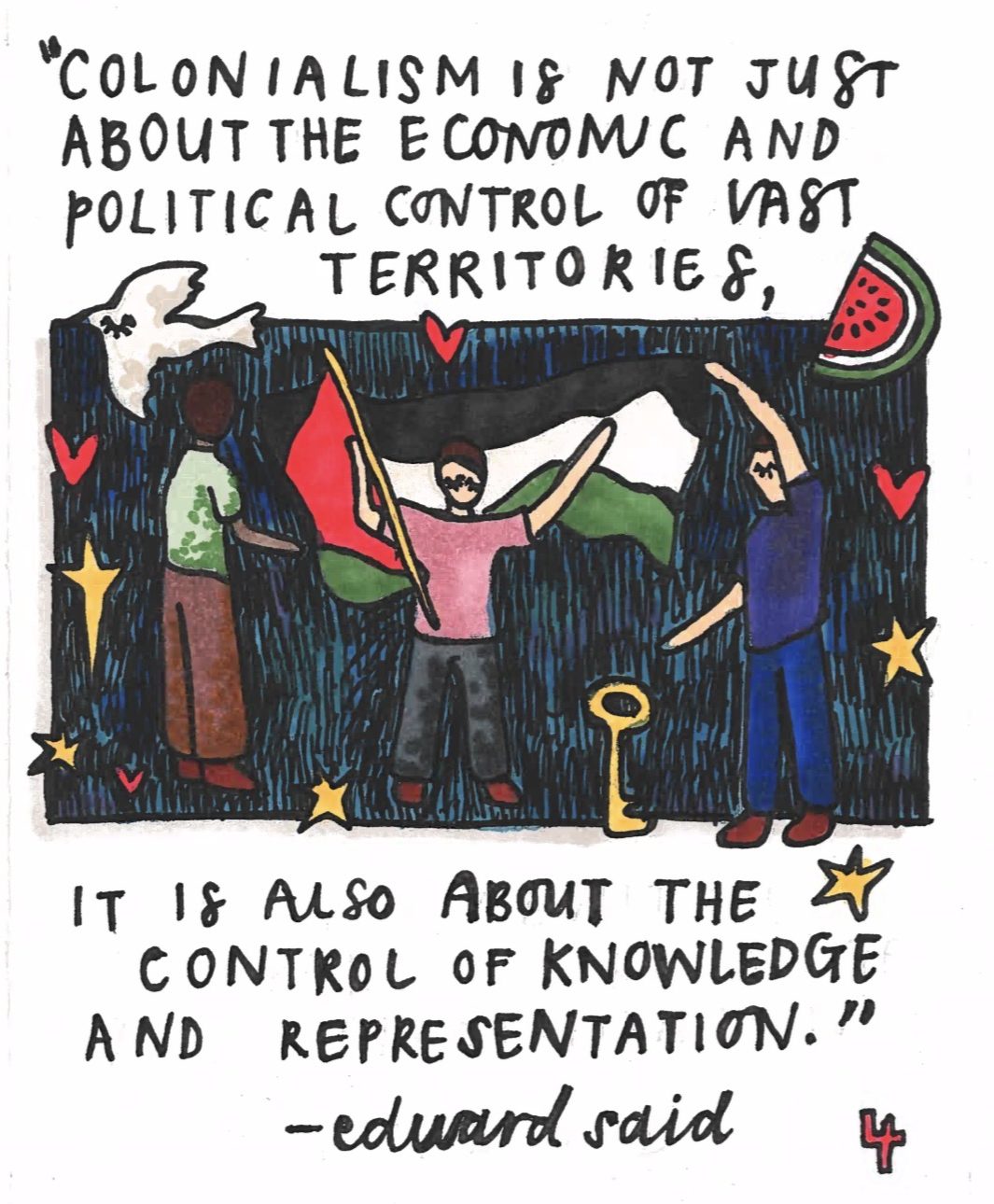
Dismantle the Ivory Tower zine – Intifada, ‘People Power Makes Apartheid History’, 2025.
What Inkani Review Is
Inkani Review is a new platform hosted on the Inkani website, dedicated to publishing critical, in-depth reviews of books and other works, particularly those engaging with the politics, histories, and cultures of Africa and the Global South.
For us, a review is never just a review. There is profound value in different perspectives meeting on the page, across generations, geographies, and conditions of life. A constitutional judgment resonates differently when read alongside the history of the land it concerns. We hold two worlds and two time periods in the same hand, and we are richer for it.
Our aim is not to summarise. It is to surface the immediate and enduring relevance of each text, event or space, at the precise moment it is read, and to place that reading inside the struggle over what kind of society we are becoming.
In a world where high-quality critical writing lies almost exclusively behind paywalls; where newspapers and magazines have steadily reduced space for serious book reviews; and where substantial engagement is treated as a luxury, we are building a public, accessible space for politically grounded, criticism, written for movements, organisers, scholars working without institutional support, and readers far from urban centres where access to new publications is already difficult enough.
Our commitments
- A weekly review, open to submissions from a broad community of writers and critics.
- A long form review in the last week of every month for deeper critical engagement.
- High-quality translations to broaden access across the continent.
- Rigorous, expert-led engagement with Global South issues, gender, class, and geopolitics.
- A contribution to the battle of ideas, grounded in the material realities of our time.
Inkani Review is editorially independent. Grounded in an internationalist perspective attentive to questions of class, geopolitics, and Global South solidarity, it welcomes a diversity of critical viewpoints and does not impose a single line on its contributors. The views expressed are those of their authors.
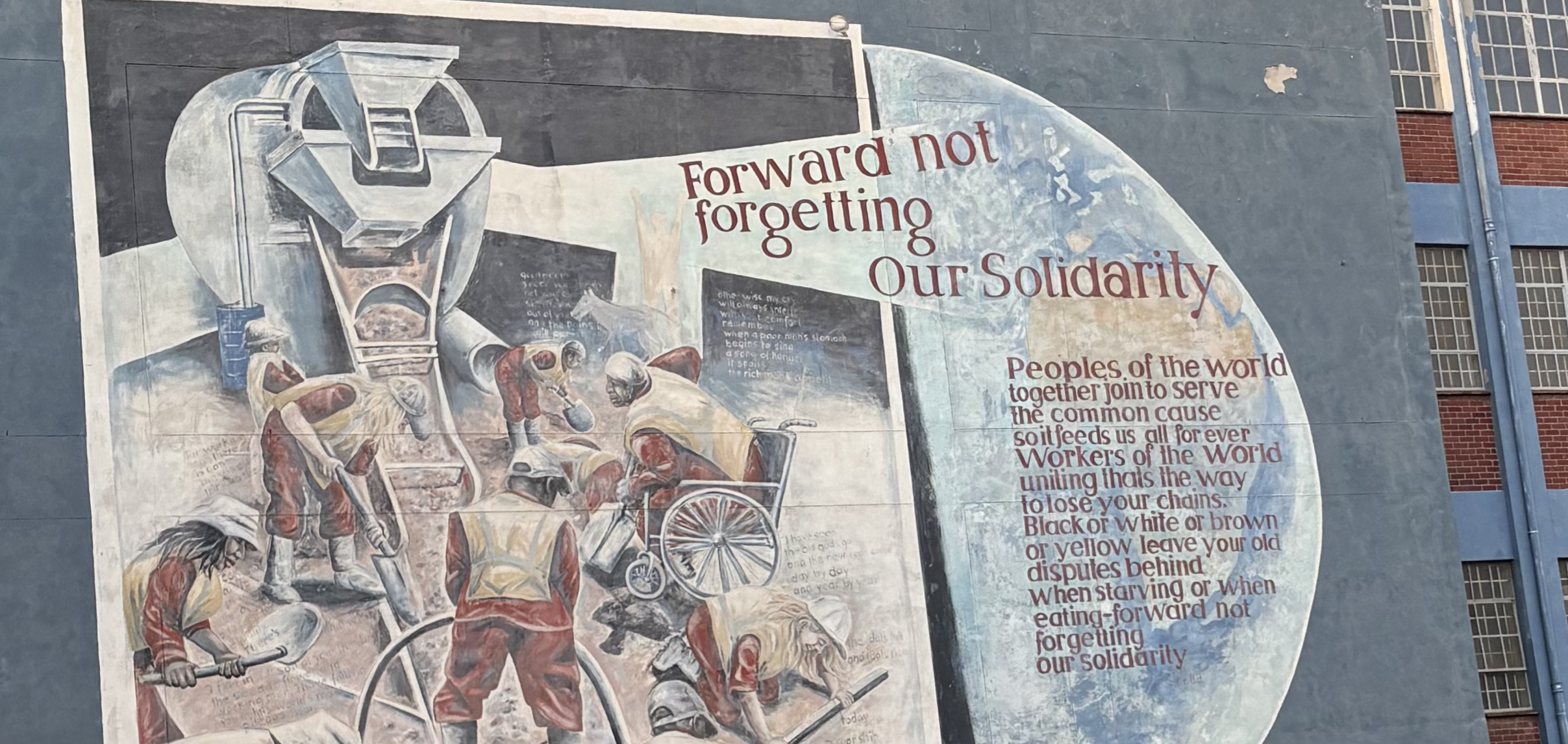
Manfred Zylla with help of Katharina Forster and Jarret Erasmus, ‘Forward not Forgetting Our Solidarity’ mural outside historic site of living heritage Community House in Cape Town, 2011 (Restored by Manfred Zylla with Faried Morris and Francois Hokim, 2017).
An Archive for Those Who Come After
Critical review makes an archive possible. We gain. We expand. We build social ties across continents. We strengthen our movements, refine our thinking, and together we create texts, an archive ready for those who come after us.
This is what reclaiming the infrastructure of ideas looks like: not as a cultural accessory, but as a political necessity. If oppression depends on forgetting, then our task is remembrance, organised, collective, and made public.
We resist erasure.
Visit Inkani Review at: https://review.inkanibooks.co.za/
To submit a review or enquire about contributing: https://review.inkanibooks.co.za/submit
Inkani Review will be launched on 31 May 2026.
All work published in Inkani Review is exclusive to the journal.
Warmly,
Aphiwe
 | Aphiwe Ngalo |