Thirst by Design
From Mali to Sudan, armed groups govern land and water where structural adjustment destroyed the state — our latest dossier shows that the Sahel’s crisis is not climate conflict but class war driven by imperialism.
Dear friends,
Greetings from the desk of Tricontinental Pan-Africa.
On 22 April, the Global Network on Extremism and Technology (GNET) published a text introducing the concept of ‘Dark Green Governance’ – a pattern in which armed groups across the Sahel and beyond are no longer merely exploiting climate stress, but deliberately institutionalising environmental resource management as a source of political legitimacy. Amongst other examples, the author shows how Jama’at Nasr al-Islam wal Muslimin (JNIM) runs Sharia-based courts to arbitrate pastoral disputes, regulates access to water and grazing corridors, and supervises artisanal mining in Mali’s Liptako-Gourma region. The author is careful to note that climate functions as a ‘threat multiplier’, mediated by pre-existing socio-economic fragilities rather than operating as a direct cause of insurgency. The observation that armed groups are building formalised governance architectures around scarce resources – and that ‘reclaiming environmental commons through legitimate and inclusive governance’ is central to any serious response – is an important one.
Where our analysis departs is not in disputing what the author describes, but in asking why these groups succeed, and under which structural conditions such forms of governance arise. To identify ‘Dark Green Governance’ as a phenomenon is valuable. But what explains the specific material basis of its appeal? Why did Katiba Macina – the armed jihadist group at the heart of JNIM’s Sahelian operations – draw mass support from marginalised Fulani pastoralists? Why is this such a widespread phenomenon?
This is what our latest dossier, Class Struggle and Climate Catastrophe in the Sahel (dossier no. 99), co-authored by members of the Tricon Pan-Africa team, sets out to explore. The dossier argues that the answer is not simply that the state retreated, but that its capacity to govern land, water, and pastoral mobility was systematically destroyed – first by French colonialism, then by neo-colonial state formation, and finally by decades of structural adjustment. The governance vacuum is no accident of weak institutions; it is the product of a specific political economy.
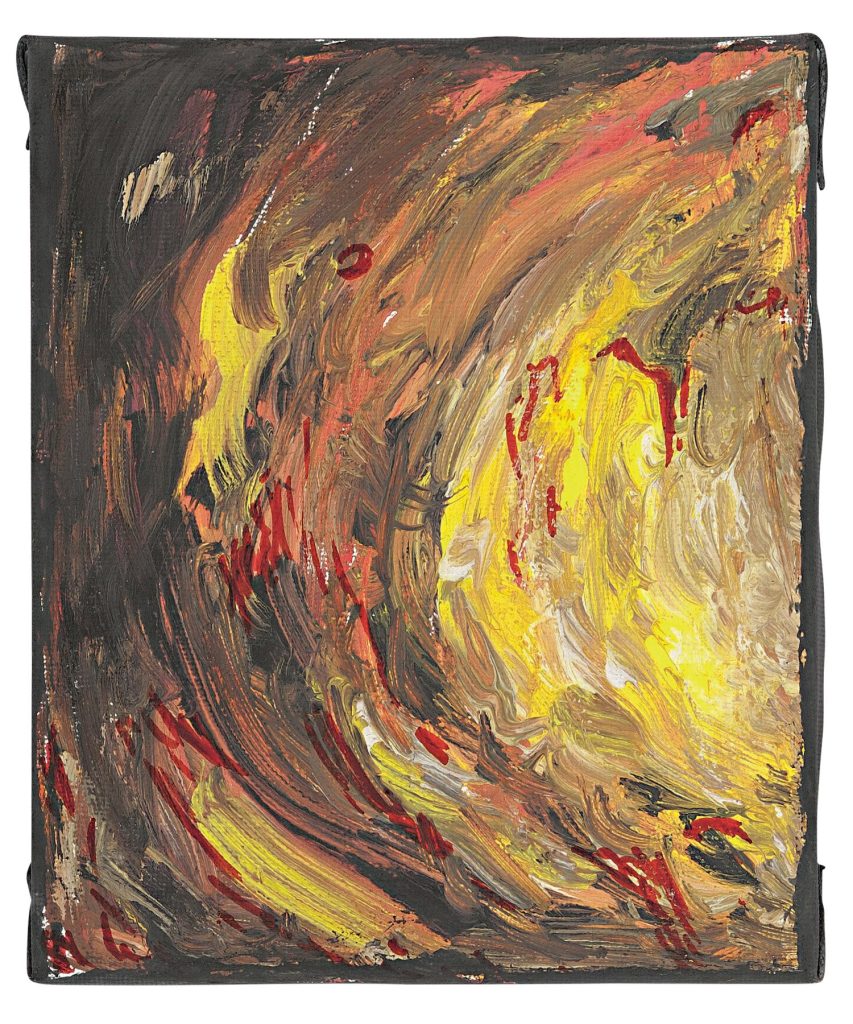
Hama Goro (Niger), Untitled, 2014.
Since the colonial era, conflicts in Africa have been explained by every imaginable category – tribal antagonism, ethnic hatred, religious extremism, governance failures, population pressures, resource scarcity – except the one that underlies them all: class.
Drawing on the tradition of Issa Shivji’s Class Struggles in Tanzania and Mahmood Mamdani’s Saviors and Survivors, the dossier argues that the escalating violence in the Sahel can only be understood if it is grounded in the class struggle, given that it operates within the political economy of imperialist extraction. The climate catastrophe is an accelerant that intensifies pre-existing contradictions – not its root cause. The call to reclaim the environmental commons through legitimate governance is well taken – but it cannot be answered without asking who dispossessed communities of those commons, and through what mechanisms.
The facts are damning. The Sahel has warmed about 1.5 times faster than the global average over the past few decades, despite contributing less than 1% of global greenhouse gas emissions. Africa accounted for less than 3% of cumulative global CO2 emissions from 1750 to 2021. By contrast, the United States, which is warming at a similar rate, accounts for 25% of global emissions. The nature of rainfall itself has changed: rain is now more intense but intermittent, producing both floods and droughts. Yet the dominant ‘climate conflict’ framework – consolidated through the UN Environment Programme, the UN Security Council, and Western-funded security research – frames climate-driven resource scarcity as the root of violence and instability in the Sahel, systematically omitting the context of colonial dispossession, structural adjustment, and militarisation that created the crisis in the first place.
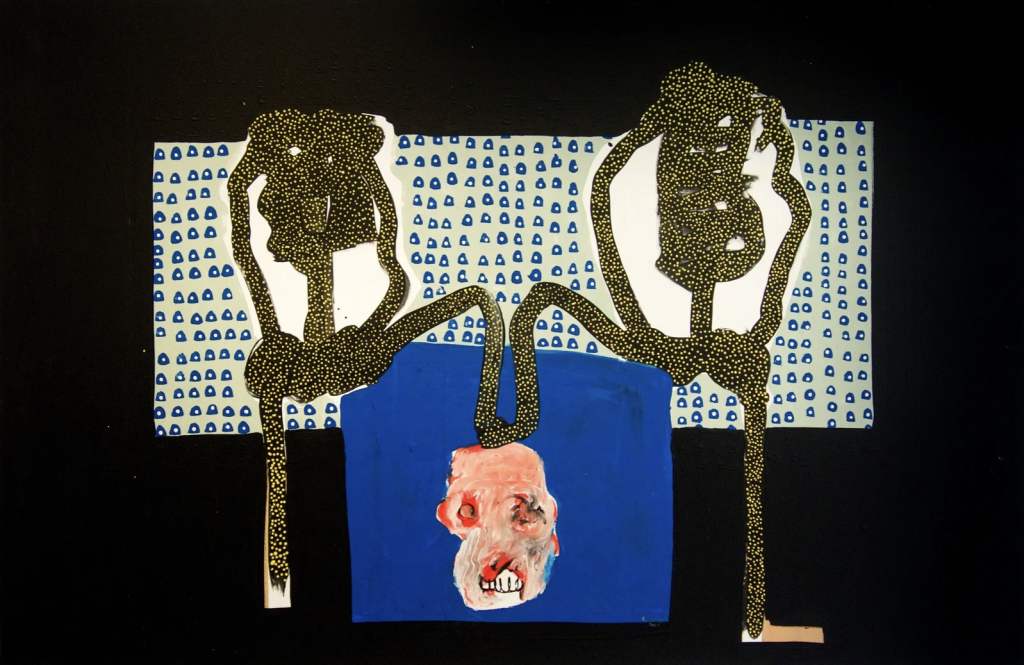
Amadou Sanogo (Mali), Sans Tete (Headless), 2016.
The dossier’s case studies of Mali and Sudan reveal how this works in practice. In Mali, colonial land law destroyed social management systems. Structural adjustment programmes (SAPs) from 1988 onwards finished the job: cutting veterinary and extension staff, privatising water points, and imposing a 50% currency devaluation in 1994. As the state retreated, armed groups stepped into the vacuum. This is the context for ‘Dark Green Governance’ – but the dossier reveals a layer that framework does not reach. Katiba Macina drew mass support from marginalised Fulani pastoralists not simply by providing dispute resolution in a governance vacuum, but by abolishing the grazing fees that pastoral chiefs had imposed on access to nutrient-rich floodplain pastures – fees that consumed a substantial share of pastoral cash income and that the neo-colonial state had allowed to metastasise into a system of rent extraction. For the poorest dryland pastoralists, fee abolition meant the difference between viability and dispossession. When Katiba Macina later reinstated smaller fees in 2018, many pastoralists shifted their allegiance to a rival faction that promised land collectivisation. The violence typically described as ‘ethnic conflict’ between Fulani herders and Dogon farmers is, the dossier shows, a class conflict within both communities – shaped by colonial dispossession and intensified by climate stress. What looks from the outside like ‘environmental governance by extremists’ is, from below, a contest over who sets the rules of access to land and water under conditions of engineered scarcity.
In Sudan, the story is even starker. Darfur – branded ‘the world’s first climate change conflict’ – is in reality an ecological-class war. The Bashir regime’s neoliberal restructuring after 1989, enforced by IMF and World Bank SAPs, privatised communal lands, removed agricultural subsidies, and outsourced state violence to the Janjawid militias who seized livestock, harvests, and land, creating a new class of militarised accumulators. The Rapid Support Forces (RSF) evolved from these militias into capitalist enterprises controlling gold mines and smuggling routes, financed by the UAE and Saudi Arabia. Meanwhile, the EU’s Khartoum Process channelled funding to Sudanese border agencies – including units linked to the RSF – to stem migration, directly militarising the response to climate-displaced populations.
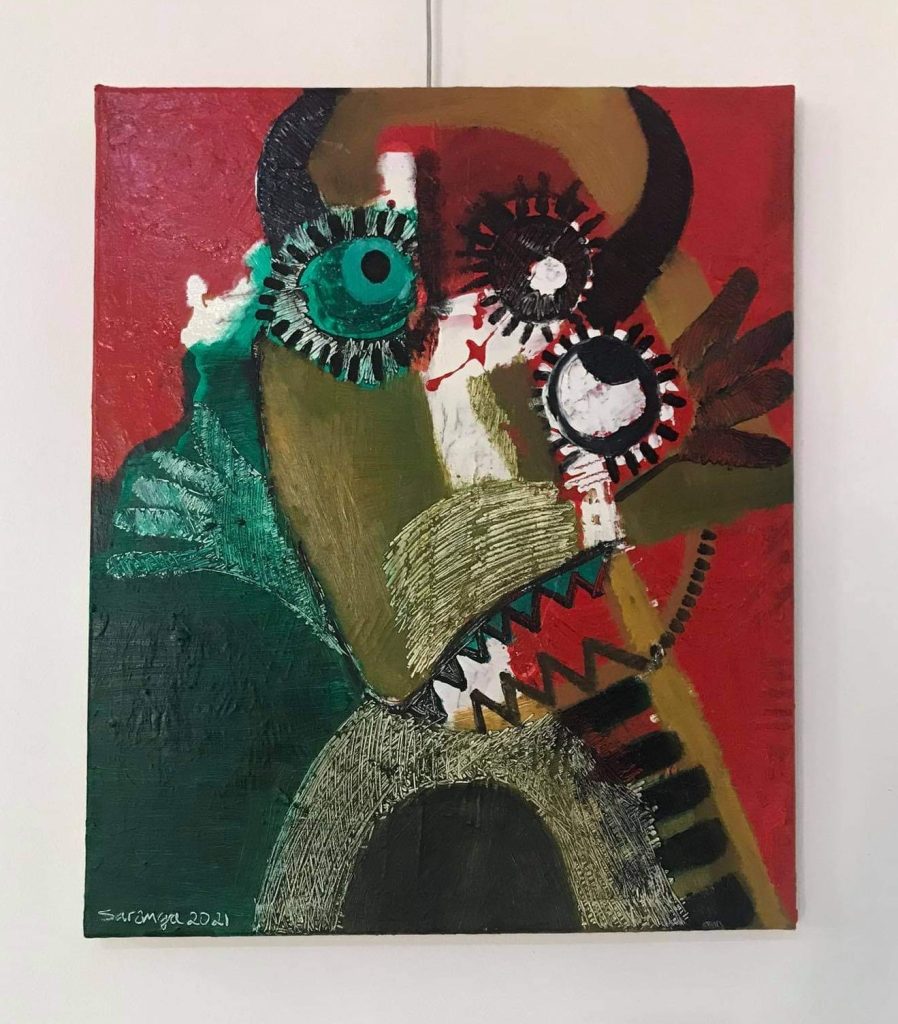
Saranga (Mozambique), Monologue of a War Refugee, 2021.
Women and girls sit at the heart of this intertwined climate-political crisis. As water and firewood grow scarcer, women must walk longer distances each day, reducing time for economic activity or civic participation. Climate shocks pull girls from school, push them into early marriage, and correlate with increases in intimate partner violence. Climate change is not only reshaping physical landscapes but narrowing political space for half the population.
Yet the dossier does not end in despair. In Koubri, roughly forty kilometres from Burkina Faso’s capital Ouagadougou, members of the Watinoma Women’s Association work the land using agroecological practices – growing organic maize as part of peasant resistance to genetically modified seeds, making biopesticides from neem leaves, pounded ginger, garlic, and chilli pepper, and operating a solar-powered well that guarantees water access even in the dry season. These women embody the dossier’s conclusion: the Sahel’s future will not be secured by border walls, bases, or markets, but by confronting the capitalist and imperialist structures that convert climate stress into dispossession and war.
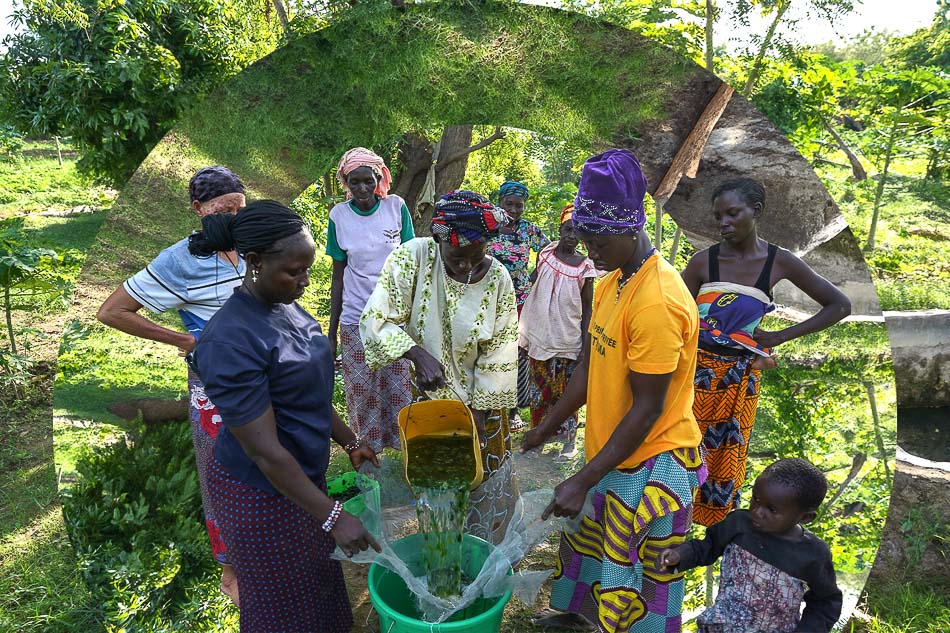
Original image by Pedro Stropasola. Watinoma Women’s Association in Koubri, Burkina Faso, 2025.
In Illighadad, a remote village in central Niger with no electricity or running water, Fatou Seidi Ghali – widely considered to be the first Tuareg woman to play guitar professionally – leads Les Filles de Illighadad (The Daughters of Illighadad). Their music is rooted in tende, a women’s tradition of celebration and community built around a mortar-and-pestle drum and a calabash half-buried in water — a form that, in some ceremonial contexts, also serves as a vehicle for spiritual healing. Where Tinariwen’s desert blues sing of exile and thirst – ‘lost in the night, my thirst, my desire for water awakened me’ – and musically express the conditions of structural deprivation, Les Filles de Illighadad make music from within the conditions the dossier’s images point to: women in a waterless village, drawing on collective practice, ancestral knowledge, and the very element – water – that imperialism and structural adjustment have made scarce. Their songs are not laments for what has been lost. They are acts of cultural sovereignty, insisting that the traditions through which Sahelian communities have always governed their relationship to the land – communally, collectively, through women’s knowledge and labour – have not been extinguished.
This is what reclaiming the commons looks like: not as a security strategy but as a civilisational project. The women of Watinoma growing organic maize in defiance of genetically modified seeds. The women of Illighadad making music from a calabash and water. Thirst, in the Sahel, is created by capitalism. But the people of the Sahel have not stopped building the world that comes after it.
We encourage you to read the full dossier and to share it widely.
Warmly,
Dalaya & Mika
 | Dalaya Ashenafi |
 | Mikaela Nhondo Erskog |