Tall Tales of Genocide in Nigeria: Political Hypocrisy Amidst Systemic Crisis
When Trump threatens to invade Nigeria over alleged Christian genocide, he recycles old colonial tactics wrapped in ‘humanitarian’ rhetoric — while Nigerians demand Hands Off.
November unfolded with threats from US President Donald Trump to invade Nigeria ‘guns-a-blazing’ in defence of ‘cherished Christians’ whom he claimed were facing a genocide in the country. This immediately sparked discussions across the country and beyond – everywhere except in The Nation, a newspaper owned by President Bola Ahmed Tinubu. By the end of the week, Trump not only reiterated his insidious threats; he also put Nigeria on the US list of ‘countries of particular concern’ (CPC) for the second time.
US Senator Ted Cruz, who boasts that he has ‘fought for years to counter the slaughter and persecution of Christians in Nigeria,’ introduced a bill for religious freedom and accountability in Nigeria two months earlier. According to him, jihadists have murdered 52,000 Nigerian Christians and destroyed 20,000 churches and institutions since 2009, the year the Boko Haram Salafi-Jihadist group took up arms against the Nigerian state.
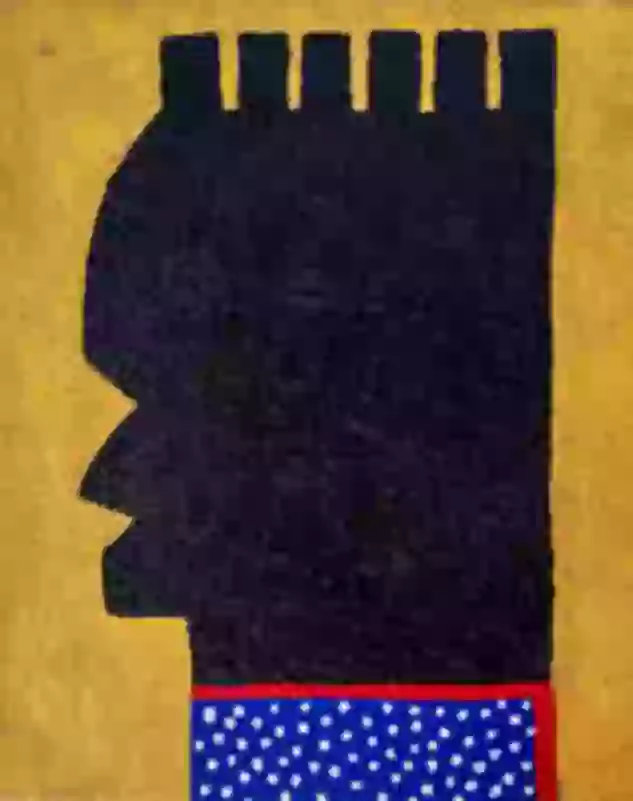
Victor Ekpuk (Nigeria), This American, 2022.
These claims would have been laughable in less tragic circumstances. There is no doubt that Nigeria has been bleeding, with tens of thousands of people killed by an array of non-state actors and the military. But the reality, rooted in a history of imperialist machinations and morbid manipulation of the national question by those in power or contending for power, is much more complex. And the figures put forward to justify allegations of genocide are at best conjectural.
The major source of these figures, as well as several other numbers bandied about over the years, is the colourfully named ‘International Society for Civil Liberties and Rule of Law’ or InterSociety for short, which is headed by liberal democracy advocate Emeka Umeagbalasi. Since 2008, apart from Emeka himself, the group’s board has had only two other members: his friend, Anayo Okoli, a journalist based in the same town, and Emeka’s wife, Blessing Chidiebere Ohia-Umeagbalasi, an evangelical church leader. While the organisation lists several ‘field officers’ on its website, InterSociety has never published its research methodology, raw data sources, or verification processes for the staggering death toll figures it claims. No peer-reviewed publications, independent audits, or collaborative research with established human rights documentation organisations support these numbers.
The United States has refused to call the massacre of over 60,000 people in Gaza a genocide, including Christians, for whatever Trump’s supposed ‘cherishing’ is worth. This is despite the impeccable documentation of this genocide which shows that ‘Israel has killed or injured more than 10 per cent of Gaza’s population over the past 24 months.’ Yet, it hurls accusations of genocide and threats of invasion at a ‘shithole’ country like Nigeria for some supposed ‘genocidal’ killing of 52,000 Christians over a 16-year period, based on the most spurious ‘data’ by the most questionable ‘researchers’. There can be no more macabre definition of hypocrisy in high places.
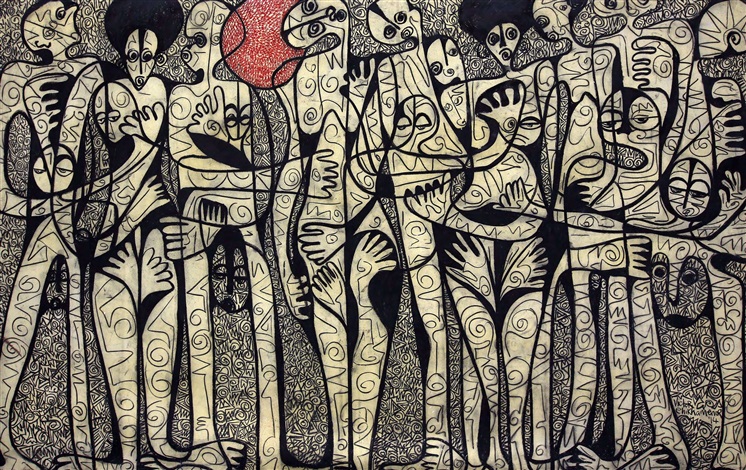
Victor Ehikhamenor (Nigeria), Lagos Hide and Seek, 2014.
A spectrum of responses
There has been a broad spectrum of responses in Nigeria. The federal government has denied any genocide, responding with a timidity that is the very opposite of the arrogance it displays when addressing and repressing critics at home. Liberals and politicians from the traditional parties of the ruling class have been more concerned with calming the situation and averting any breakdown in the Nigerian state’s long-term strategic partnership with the United States.
Middle-class perspectives have taken two broad lines of thought. On the one hand, nationalist narratives present Trump’s tirades and threats as responses to what appear to be progressive politics by President Tinubu’s All Progressives Congress (APC) government. These include Nigeria’s support for Palestine, refusal to accept deported Venezuelans, and deepening ties with Russia and China.
On the other hand, critics have highlighted the hypocrisy of President Tinubu and the ruling APC, pointing out that an APC delegation met with John Kerry and other top US officials in 2014 to report an alleged Christian genocide in Nigeria.
The dominant perspective on the left is that the United States’ concern is much more profane than celestial. Trump’s aim, as political economist Yusuf Bangura argues, is to bully Nigeria into opening up its rich mineral resources for ‘the supply chains of US hi-tech companies and defence industries.’ Others argue that ‘targets and victims of bloodthirsty jihadists’ (whether herders or bandits) ‘have nothing to lose but their cruel chains of bloodbaths’ – including activists in the Middle Belt, where violence has killed thousands (most of them Christians). Yet Boko Haram and its offshoots have been most active in the Northeast, where most victims have been Muslims. Omoyele Sowore, National Chair of the revolutionary African Action Congress (AAC), pointed out that while the threat to launch a military action ‘may sound appealing to some…history has shown this to be perilous’.
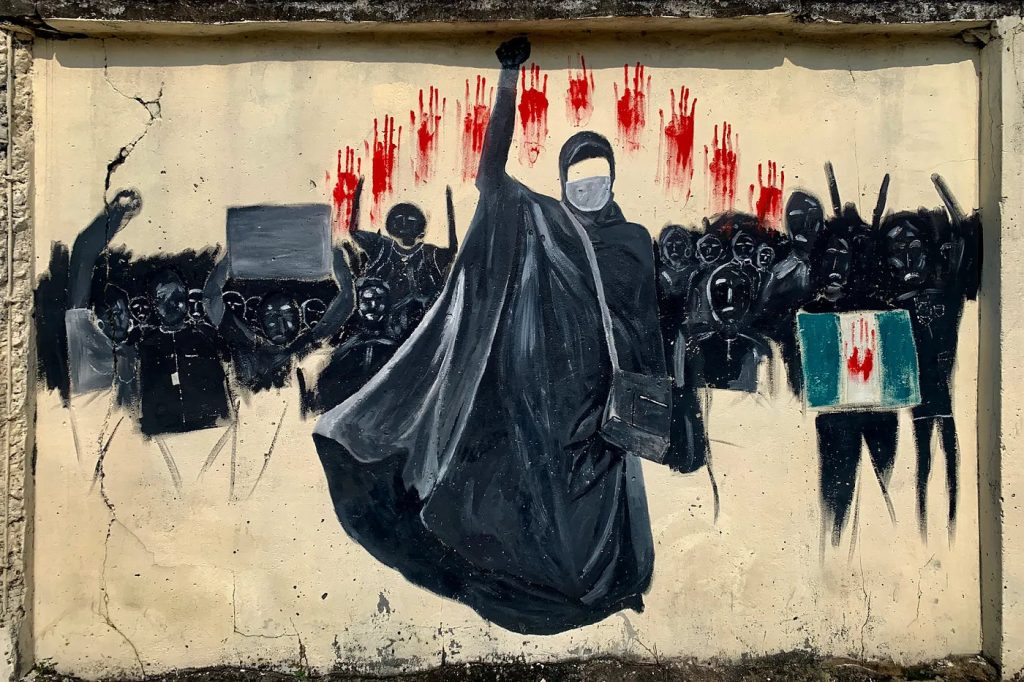
Amaremo Elaebi aka ‘Eli the Great’ (Nigeria), #EndSars mural, 2020.
Hands Off Nigeria!
Political analysts like Jeffrey Sachs have underscored the political hypocrisy of Trump and the United States in playing the ‘moral symbolism’ card of Christian genocide. Sachs adds that this mirrors the humanitarian narrative of post-Cold War Western imperialism. But this line of politics goes even deeper for us. Britain bombarded Lagos in 1851, ostensibly to stop the trans-Atlantic slave trade. A decade later, it annexed Lagos, beginning the period of formal colonialism, using the same lame excuse.
The hypocritical and brutish process of colonisation did not end with that. Divide and rule was a pivotal strategy of conquest. They recruited Muslims from the north into a Hausa constabulary to police Lagos and its environs in the west. Meanwhile, missionaries encouraged ethnic minorities in the north – especially those in the Middle Belt region who felt suffocated by the Emirate system that expanded after the 19th-century Jihad in that region – to join the church. They did so in droves. The religious divide, so to speak, became bound with ethnicity, geography, and politics in what would become a very complex national question – a dynamic I explored in a 2013 article on the manipulation of ethno-religious identities as masks in Nigerian politics. Donald Trump and his ilk in the United States have joined the masquerade ball with claims of genocide as their masks.
We must reject any attempt to reduce this bloodletting to unfounded claims of genocide, and tear the masks from their faces. Working-class people in Nigeria must hold the Nigerian state responsible for the generalised insecurity, without illusions of salvation from the United States. The systemic crisis of capitalism – which has engendered poverty, mass unemployment, climate change, and social anomie – is the root we must address. We must stand firm against Yankee imperialism under any guise.
Warmly,
Bàbá Ayé
 | Bàbá Ayé |