The Economics of Thomas Sankara
What does liberation require when poverty has been engineered by history, dependency is sold as development, and dignity can only be won through collective discipline, popular power and self-reliance?
Thomas Sankara’s economic thought cannot be understood only through the conventional categories used to analyse public policy. Growth, budgets, inflation, fiscal revenues and monetary balances matter, but they are not enough to explain the coherence of the vision he developed and attempted to implement in Burkina Faso between 1983 and 1987.
For Sankara, economics was first and foremost a political, moral and anti- colonial project: a means through which a people could become masters of their own destiny. In this sense, he stands in the pan- African revolutionary tradition of Kwame Nkrumah’s critique of neocolonialism, Amilcar Cabral’s theory of national liberation and Julius Nyerere’s experiments in self-reliant development. His project was rooted in the search for sovereignty, dignity, social justice and collective responsibility, and in the clear understanding that Africa’s economic subordination was not a natural condition but a historical construction that could, and must, be undone.
A Country Made Poor by History
When Sankara came to power, Burkina Faso was among the poorest nations on Earth. World Bank data for 1983 show the scale of the crisis. GDP per capita stood at around 212 US dollars, less than half the Sub-Saharan African average. The economy remained overwhelmingly rural, with roughly nine-tenths of the population engaged in subsistence agriculture or livestock raising. Life expectancy at birth was 48 years; infant mortality stood at 116 deaths per 1,000 live births, meaning that more than one in nine children born alive did not survive their first year. Fewer than one adult in ten could read. Dependence on foreign assistance was considerable, with net official development assistance exceeding 181 million US dollars in 1983 alone. In an economy of this scale, that was a structurally significant share of public resources.
Many observers concluded from these facts that Burkina Faso’s development could come only through massive external support. Sankara took a different position. He did not deny the importance of international co-operation. What he refused was the idea that dependence could be the foundation of liberation. He understood that his country’s poverty had been produced through colonial extraction, deliberately unfavourable terms of trade and an international economic order that transferred value from the periphery to the centre. To make external dependence the basis of national development would therefore be to reproduce the very relations that had created underdevelopment.
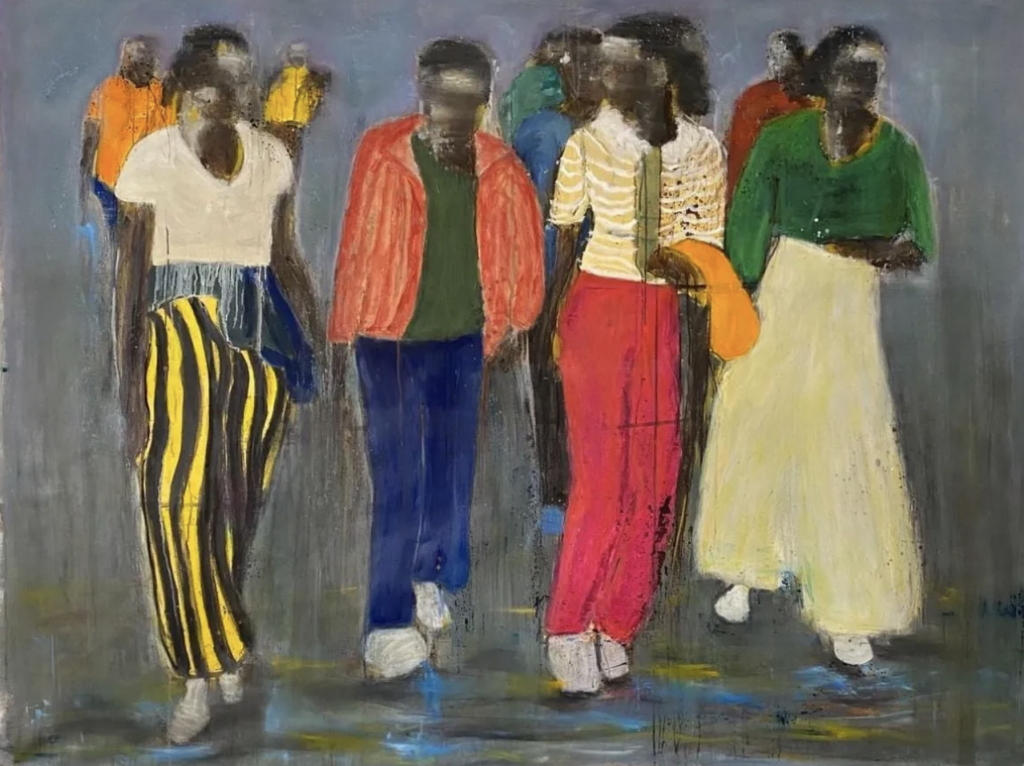
Olga Yaméogo (Burkina Faso), The Sun is in Your Feet, 2023.
Self-Reliance and Endogenous Development
For Sankara, sustainable development could not be imported. It had to emerge primarily from the capacities of the people themselves. It had to rely on human resources, land, local knowledge, traditions of solidarity and the energies available within the country. This conviction formed the heart of what can be called an economy of sovereignty. A people are truly free only when they possess sufficient capacity to produce what they need to live with dignity.
Sankara said, ‘Let us produce what we consume and consume what we produce’. Behind this phrase lies a profound reflection on economic dependence and a conscious rupture with the dependency structures that colonialism built and neocolonialism continues to reproduce. When a country imports most of its food, consumer goods or basic equipment, it becomes vulnerable to decisions made elsewhere. Its development then depends on factors beyond its control: commodity prices set in distant markets, credit conditions determined by Northern financial institutions and supply chains designed to serve metropolitan interests. Conversely, a nation capable of meeting a significant share of its essential needs strengthens its freedom of action and begins to reclaim the economic sovereignty that colonial rule denied.
Agriculture, Food Sovereignty, and Self-Adjustment
Such a vision naturally placed agriculture at the centre of economic strategy. For Sankara, food sovereignty represented the first pillar of national independence. No development project could be sustainable if the population depended on external sources for its food. Agriculture therefore ceased to be viewed as a secondary sector concerned merely with rural survival. It became a strategic activity upon which economic, social and political stability depended.
The efforts undertaken to increase agricultural production followed this logic. Cereal production rose from approximately 1.1 million to 1.6 million metric tonnes between 1983 and 1987, pushing the food coverage ratio from 81 per cent to a peak of 129 per cent without imports. Burkina Faso was, for the first time, producing more food than it needed. Irrigation projects, notably the expansion of the Sourou Valley scheme from 1984, farmer mobilisation, improved agricultural techniques and the systematic pursuit of food self-sufficiency were all intended to reduce national vulnerability. Feeding the population became both an act of sovereignty and an economic objective.
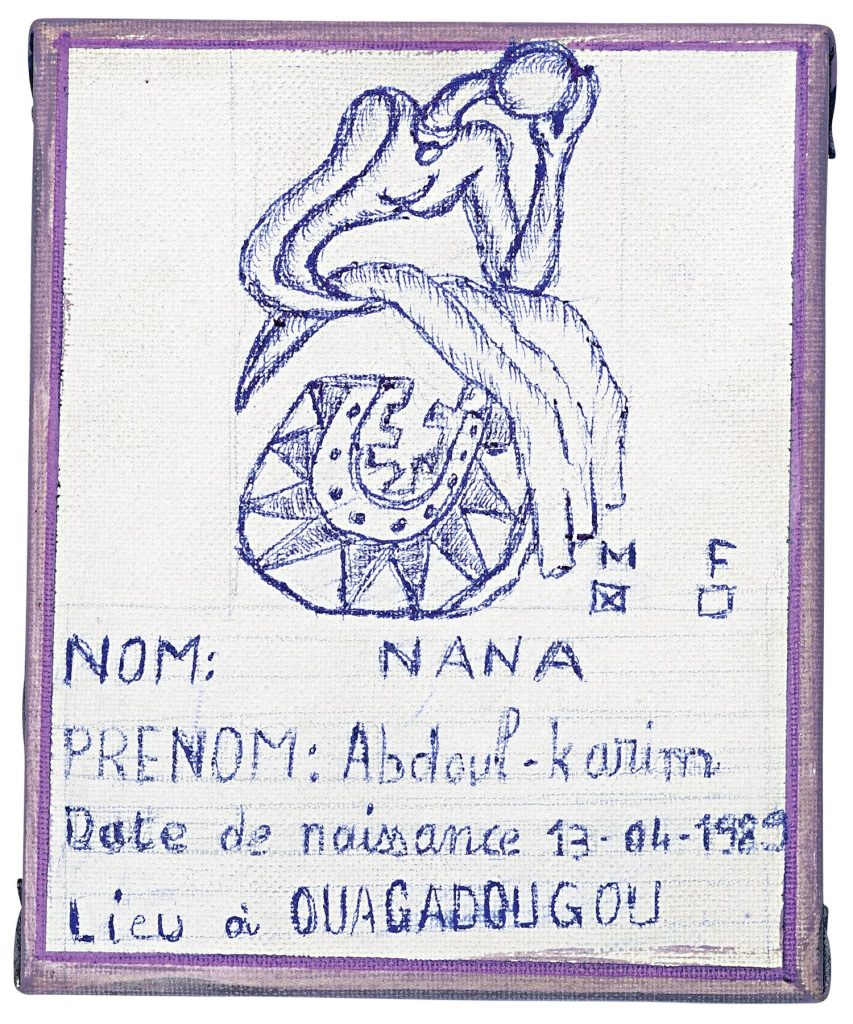
Abdoul Karim Nana (Burkina Faso), Farmer Thinker, 2014.
Sankara’s reflection went far beyond agriculture. It emerged within an international context marked by the rise of the IMF Structural Adjustment Programs promoted across Africa. Presented as technical remedies for fiscal imbalance, these programs generally sought to reduce public deficits, limit state expenditure, liberalise sectors of the economy and restore macroeconomic balances. Sankara acknowledged the existence of economic imbalances. He did not deny the need for reform or fiscal discipline. But he questioned the origins of the proposed solutions and their social consequences.
It was in this spirit that he developed a form of economic self-adjustment. The idea was simple yet ambitious: if sacrifices were necessary, they had to be defined sovereignly and directed towards strengthening national capacities. The efforts demanded from the population should finance education, healthcare, agricultural production, infrastructure and local skills. They should not merely satisfy the accounting requirements of creditors.
The Exemplary State: Discipline and Political Ethics
Sankara also reflected on the role of the state itself. It was impossible to ask sacrifices from the population without first reforming public institutions. The state had to lead by example. This demand for exemplary conduct became one of the most visible characteristics of his government.
Reducing the cost of government was not merely a budgetary measure. It was a political act designed to restore coherence between words and deeds. Leaders had to share the burdens imposed on the nation. They could not demand discipline from the population while preserving costly privileges for themselves. Sankara refused the presidential salary of 2,000 US dollars a month, drawing instead an army officer’s pay of 450 US dollars. First-class air travel and government chauffeurs were banned for all ministers. The decision to replace prestigious official vehicles, including Mercedes cars used by public officials, with more modest vehicles such as the Renault 5 became a powerful symbol of this philosophy.
The objective was not simply to save money. It was to affirm that no sustainable development is possible when elites live in conditions entirely disconnected from those of the majority. In many countries, official cars symbolise status and privilege. Sankara turned them into symbols of austerity, responsibility and political ethics.
This policy of reducing privileges extended into other areas and sought to redirect public resources towards collective needs. Every unnecessary expenditure represented resources that could otherwise be devoted to schools, health centres, dams, agricultural projects or public infrastructure. The Programme Populaire de Développement, launched in October 1984, formalised this logic. Funding came in part from the Effort Populaire d’Investissement, which deducted between five and twelve per cent of civil servants’ monthly salaries for national development. Public finance management thus became an exercise in national responsibility.
Within this framework, economics could never be separated from public morality. The struggle against waste, corruption and privilege directly contributed to economic effectiveness. A disciplined and credible administration was better able to mobilise citizens around a collective project. Trust itself became an economic resource as important as financial capital.
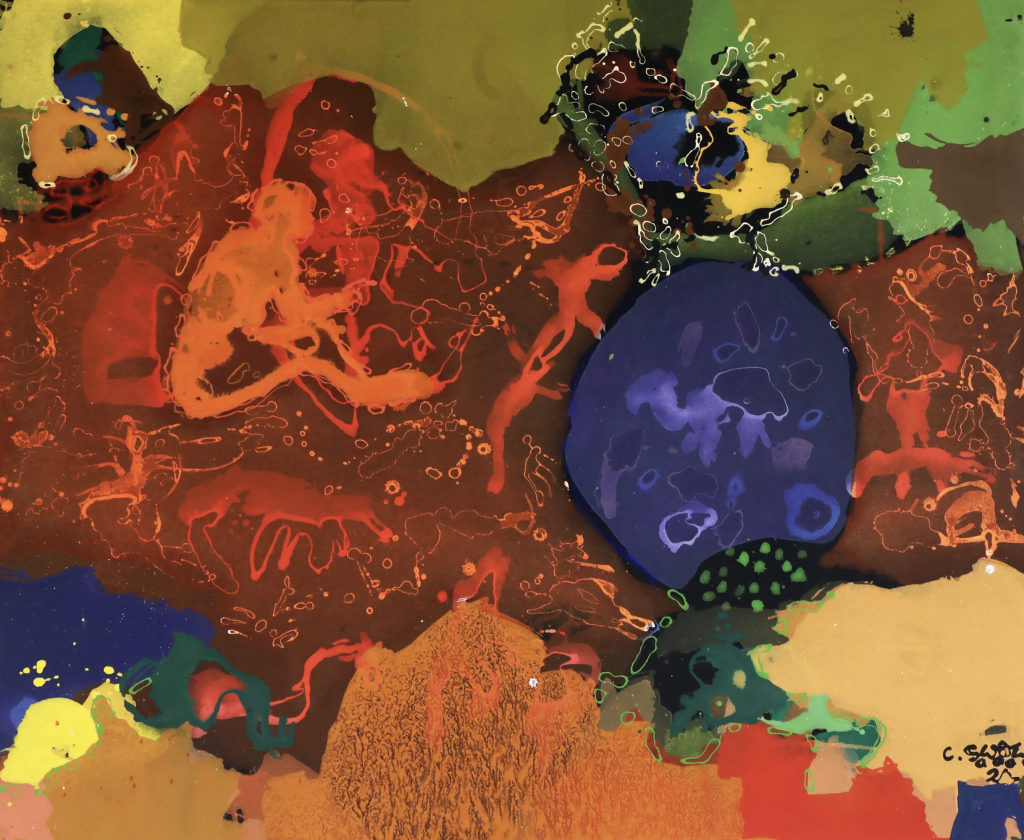
Christophe Sawadogo (Burkina Faso), The Philosopher, the Chicken, and His Egg, 2024.
The People as the Principal Wealth of the Nation
This philosophy rested upon a fundamental conviction: the principal wealth of a nation is not money but its people. A population that is organised, educated, mobilised and conscious of its responsibilities possesses extraordinary transformative power. Conversely, even abundant financial resources can be wasted if they are not accompanied by a clear vision and collective mobilisation.
For Sankara, development was therefore not merely a matter of investment or technology. It was above all a process of emancipation. It required citizens to become active participants in shaping their own future rather than passive recipients of policies designed elsewhere. Popular participation became one of the foundations of his economic project, institutionalised through the Comités de Défense de la Révolution (CDRs), the mass neighbourhood, and workplace committees that reached from urban centres to rural villages. The renaming of the country in August 1984, from Upper Volta to Burkina Faso, meaning ‘Land of Upright People’, encoded this conviction directly into the national identity.
Thus emerged a conception of development profoundly different from approaches that reduce economics to statistical indicators. The goal was not simply to increase national wealth. It was to build a society capable of deciding its future freely, meeting its essential needs and preserving its dignity in a world marked by unequal power relations. From this perspective, economic sovereignty was not an end in itself. It was the means through which a people could fully exercise their freedom.
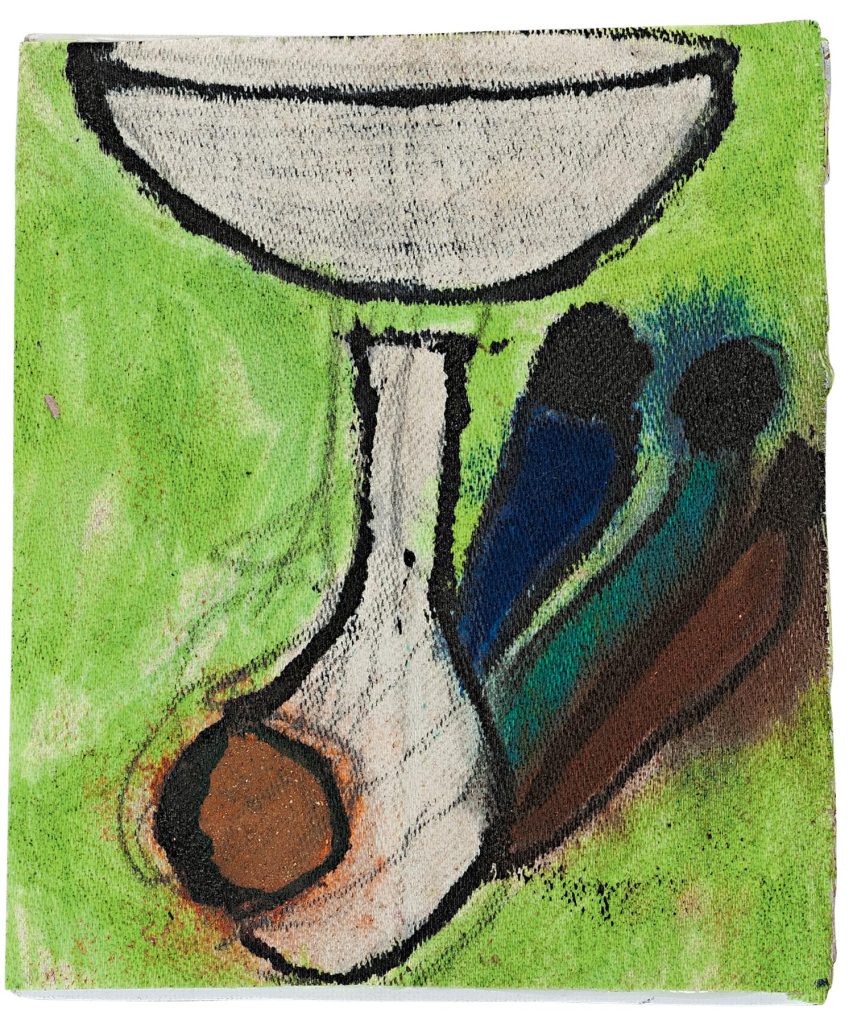
Neb Noma Desiré Ouedraogo (Burkina Faso), Family Education, 2014.
Women, Labour, and National Development
Among the most remarkable dimensions of Sankara’s economic thought was his analysis of women’s role in society. He believed that no country could achieve lasting development while excluding half its population from full participation in economic, social and political life. Women already played a fundamental role in agriculture, trade, family welfare and local economic systems. In both rural and urban areas, they contributed significantly to production and community life. Yet their contributions were frequently undervalued, while they often lacked equal access to education, resources, decision-making positions and economic opportunities.
For Sankara, this was both unjust and economically irrational. A nation that limits the potential of women weakens its own development prospects. Discrimination does not only harm those directly affected; it reduces the productivity, creativity and collective power of society as a whole. Women’s emancipation was therefore not a secondary social issue separate from economics. It was a central component of national development strategy.
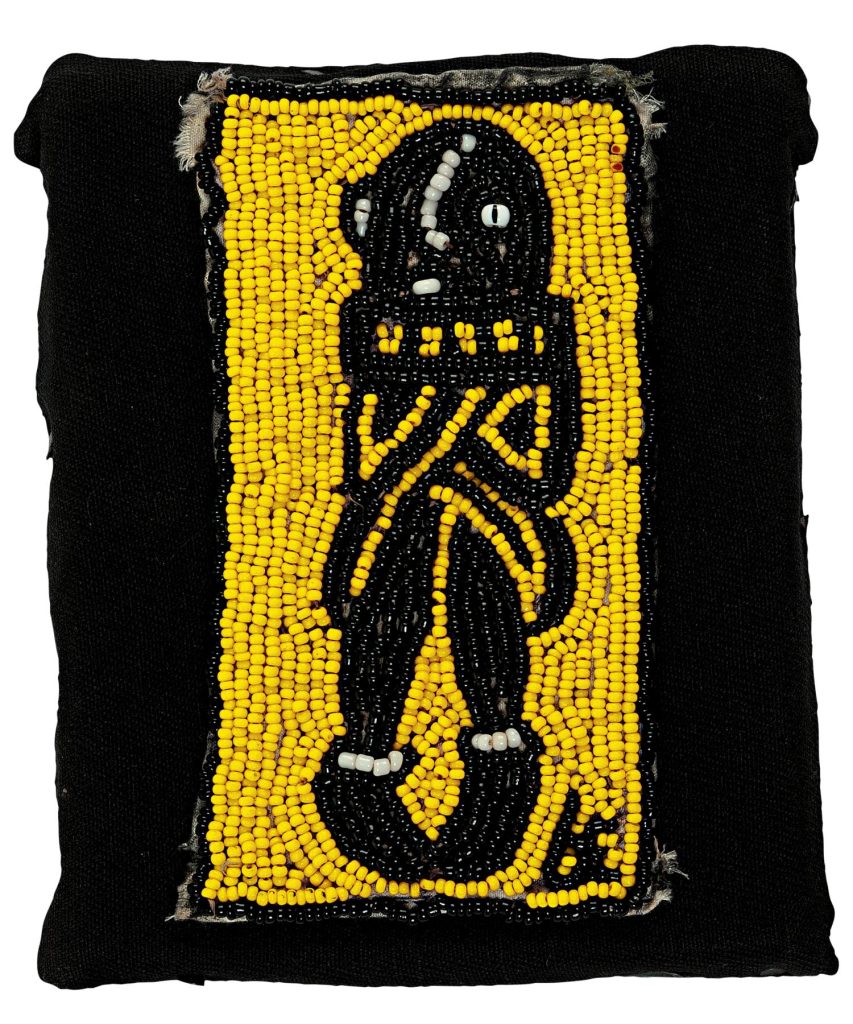
Seydou Cisse (Burkina Faso), Woman Freedom, 2014.
His government acted on this conviction. A new family code abolished the bride price and established a widow’s right to inherit, challenging the legal mechanisms through which women were excluded from property and economic life. On 22 September 1984, Sankara proclaimed the Day of Solidarity with Housewives, on which men were required to go to the market, work the family plot and prepare meals. By making unpaid domestic labour visible in public life, the revolution insisted that the household was not outside the economy. It was one of the places where social reproduction, labour and power were organised.
This perspective appears strikingly modern today. Contemporary economic research consistently demonstrates that educating girls, expanding women’s access to employment and increasing women’s participation in decision-making contribute significantly to economic growth, poverty reduction, public health improvements and social stability. Sankara understood this not as a technocratic insight but as a revolutionary principle: development cannot be built by half a people.
Debt and the International Economic Order
Sankara’s critique of indebtedness formed part of a much broader analysis of international economic relations and Africa’s position within the global economy. Speaking at the Organisation of African Unity summit in Addis Ababa in July 1987, just months before his assassination, he issued one of the most uncompromising indictments of the debt system ever articulated by an African head of state: ‘Debt is a cleverly managed reconquest of Africa, intended to subjugate its growth and development through foreign rules. Thus each of us becomes a financial slave, which is to say a true slave, of those who had been treacherous enough to put money in our hands when they knew we could not use it wisely.’
He called for a united front of African debtors. No single country could resist alone what required collective continental action. For Sankara, debt could not be viewed merely as a financial mechanism through which a state obtains additional resources to finance development. It was also a relationship of power. When a country becomes heavily dependent on creditors, its ability to define its own economic and social priorities gradually diminishes. National decisions are increasingly shaped by external constraints that do not correspond to the needs of the population.

Abdoul Karim Ouedraogo (Akowilson) (Burkina Faso), Movement, 2014.
This reflection emerged from the transformations affecting many African countries during the 1970s and 1980s. The structural deterioration of Africa’s terms of trade, a longstanding feature of the global economic order that transferred value from raw material exporters to industrial importers, made diversification and domestic investment increasingly difficult. Faced with declining commodity prices, growing deficits and tightening external constraints, many states turned to borrowing. These loans often financed infrastructure, imports and development projects, but they also created obligations that became more burdensome as economic conditions deteriorated. Countries were trapped in a cycle in which new borrowing was required simply to service existing debt.
Sankara feared that the wealth produced by African peoples would serve primarily to repay creditors rather than improve living conditions. A country that devotes an ever-growing share of its resources to debt servicing reduces its capacity to invest in education, healthcare, agriculture, infrastructure and productive activity. Debt then ceases to be a tool of development and becomes an obstacle to it.
His analysis was also linked to historical responsibility. The economic difficulties faced by many African nations could not be understood outside colonial history, unequal trade relations and economic structures inherited from decades of foreign domination. African peoples should not be regarded as solely responsible for circumstances produced through centuries of extraction.
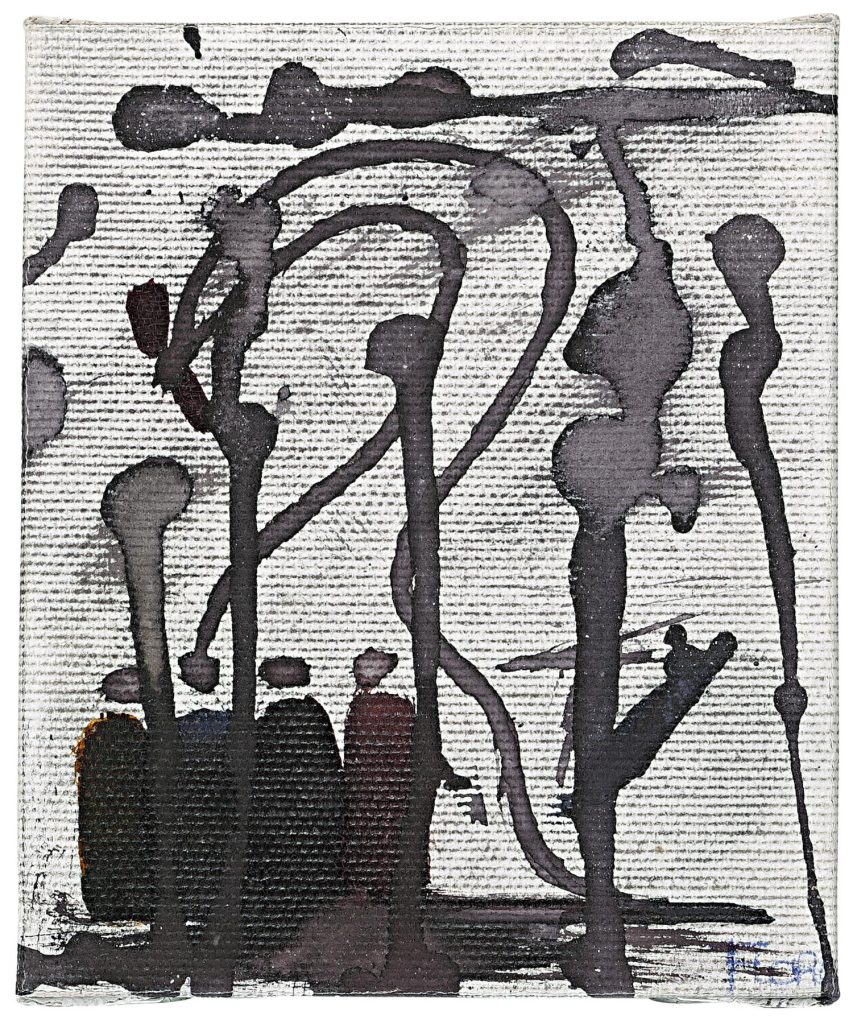
Flore Kaboré (Burkina Faso), Education, 2014.
Internal Reform: Work, Health, and the Conditions of Development
Yet Sankara’s thought was never limited to criticising international inequality. It was equally grounded in a strong demand for internal responsibility. Economic sovereignty required disciplined management of national resources. It was not enough to denounce external domination; countries also had to combat inefficiency, waste, corruption and practices that weakened their development potential.
This dual requirement explains his determination to promote a culture of economic responsibility. Citizens, farmers, workers, civil servants, entrepreneurs and political leaders were all expected to contribute to the collective effort. Development was not viewed as assistance granted to passive populations. It was conceived as a common endeavour requiring the participation of everyone.
Within this framework, work occupied a central place. Work was not merely a means of producing wealth; it was also a contribution to nation-building. Every productive activity strengthened the country’s autonomy and reduced its dependence. Development therefore became a process based on the mobilisation of human energy rather than the expectation of solutions from abroad.
This confidence in the capacities of the people led Sankara to place great emphasis on education. A nation that wishes to control its destiny must be capable of training its own teachers, engineers, doctors, agronomists, technicians, scientists and entrepreneurs. Education was a strategic investment aimed at increasing national competence and reducing dependence on external expertise.
The same logic applied to healthcare. A population weakened by disease cannot fully contribute to economic development. Vaccination campaigns, preventive medicine, healthcare infrastructure and public health initiatives were not viewed simply as social policies. They were investments in human capability, strengthening the productive and creative capacities of the nation. Organised through the CDR network rather than conventional health administration, the Vaccination Commando of November–December 1984 raised national child vaccination coverage from approximately 17 per cent to 77 per cent in fifteen days. It demonstrated that mobilisation, not capital, was often the binding constraint.
For Sankara, true wealth resided in knowledge, organisation, creativity, discipline and collective determination. A country poor in capital but rich in human resources possessed enormous potential for transformation. Conversely, a nation endowed with financial resources, but lacking organisation and vision could easily squander its opportunities.
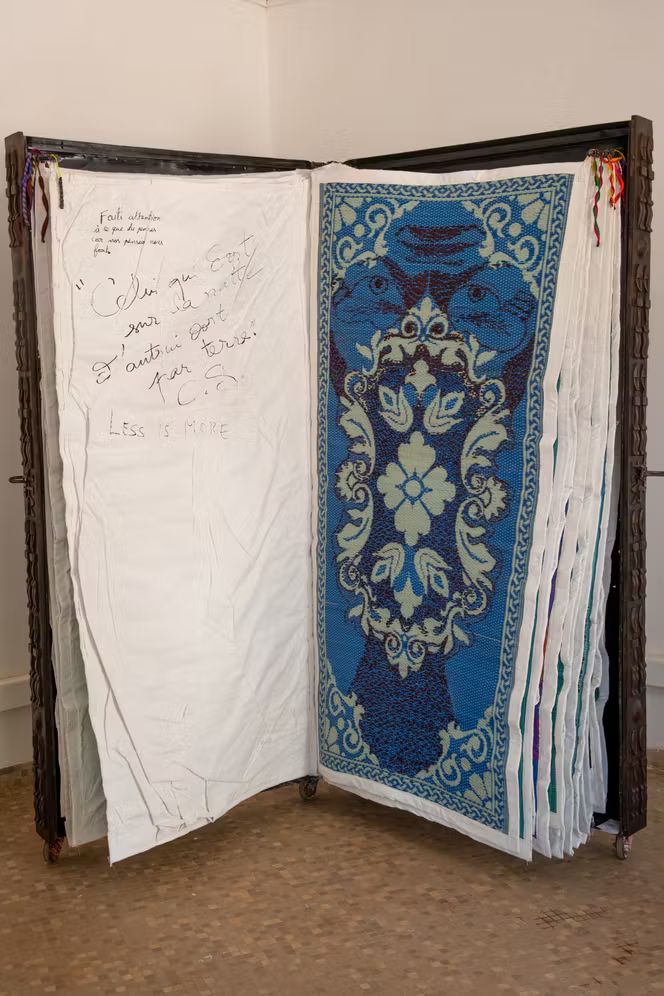
Kader Kaboré (Burkina Faso), ‘The Mats’ (series), 2021.
Industrialisation and Production Sovereignty
Sankara’s concern for sovereignty extended to the structure of production itself. He observed, as Nkrumah had argued two decades earlier in his analysis of neocolonialism, that many African countries exported raw materials and then imported finished products at much higher prices. This structural pattern kept value creation outside Africa and restricted opportunities for skilled employment and technological development.
Development therefore required not only producing more, but transforming more. A country capable of processing its agricultural products, minerals and natural resources retains a larger share of the value generated by its economy. Local transformation creates jobs, develops technical expertise and strengthens economic independence. This imperative for African industrialisation remains as urgent today as it was in 1987, and continues to animate pan-African economic debates across the continent.
The textile sector provides one of the clearest examples of this strategy. Sankara’s promotion of Faso Dan Fani, the hand-woven cotton cloth of Burkina Faso, was not merely a cultural gesture. It was part of a deliberate economic policy. By encouraging the production and consumption of locally woven cloth, he sought to support domestic producers, create employment and keep wealth circulating within the national economy.
The garment thus became a symbol of economic sovereignty. It demonstrated that consumption choices have economic consequences and that national development can be strengthened when local products are valued and supported. Sankara did not reject international trade. Rather, he asked how trade and consumption habits affect national development. Every imported product represented wealth leaving the country, while every locally produced product contributed to national economic activity. His objective was not isolation but balance. International trade could be beneficial when it encouraged mutually advantageous exchange. It became dangerous when it created excessive dependence or prevented the emergence of domestic productive capacities.
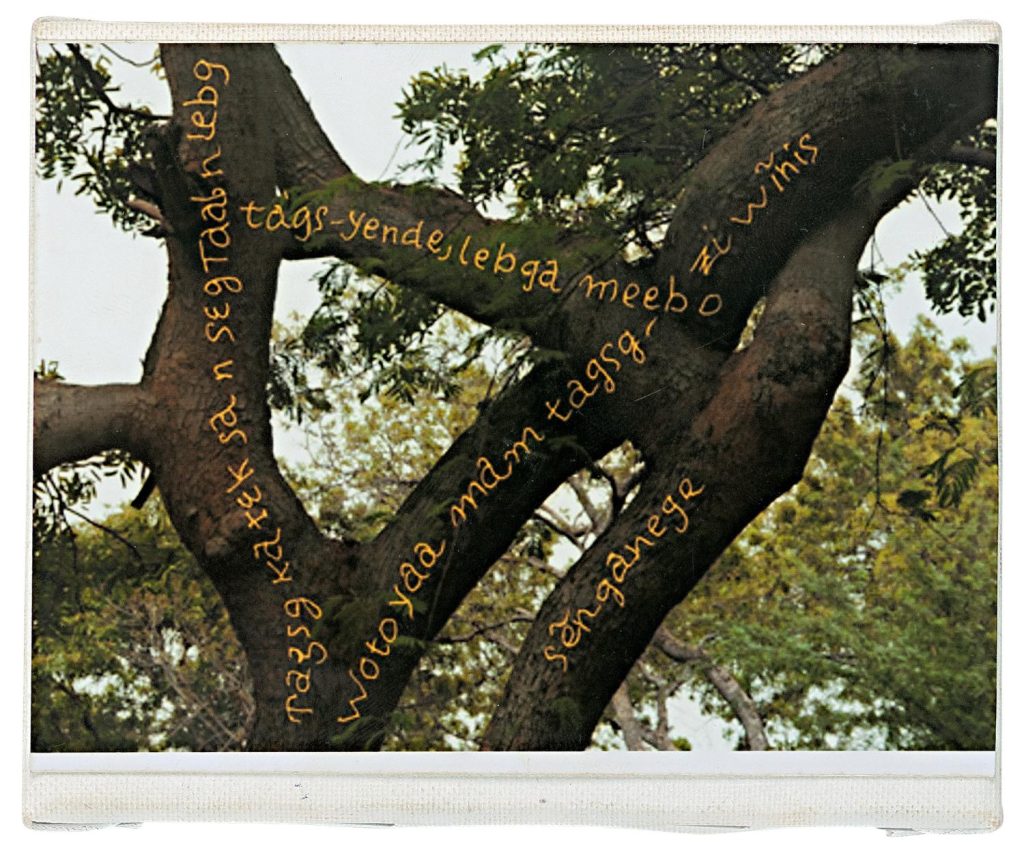
Talato Michel Zangre (Burkina Faso), Meeting of Ideas, 2014.
Development as Emancipation
Through his reflections on debt, self-adjustment, education, healthcare, local transformation, women’s emancipation and production sovereignty, Thomas Sankara developed a comprehensive vision of development. Economics ceased to be a collection of financial mechanisms. It became a societal project aimed at expanding freedom, strengthening sovereignty and enabling every individual to participate fully in the construction of the common good.
This ambition explains why his thought continues to inspire debate decades after his death. His ideas are not limited to a particular historical period. They offer a broader framework for understanding the relationship between production, justice, independence, dignity and human development. The originality of Sankara’s economics lies not only in particular policies but in its underlying philosophy: development should serve human emancipation, national sovereignty and collective dignity rather than the mere expansion of economic statistics.
For Africa today, this lesson remains urgent. Debt, dependency, austerity, extractivism and imported development models continue to shape the lives of millions. Sankara’s answer was neither resignation nor charity. It was organisation. It was production. It was discipline. It was public morality. It was women’s liberation. It was food sovereignty. It was continental solidarity. It was the insistence that the people themselves are the greatest productive force of history.
To study the economics of Thomas Sankara, then, is not to look backwards with nostalgia. It is to recover a living method for the struggles before us: produce what we need, organise what we have, refuse the chains of debt, discipline the state, liberate women, trust the people, and build sovereignty from below.
Warmly,
Ferdinand
 | Ferdinand Ouedraogo |