The Continuing Struggle for Reparatory Justice
The wounds of slavery and colonial theft did not close with abolition or independence; they endure in global inequality, and their repair demands truth, law, memory and organised African power.
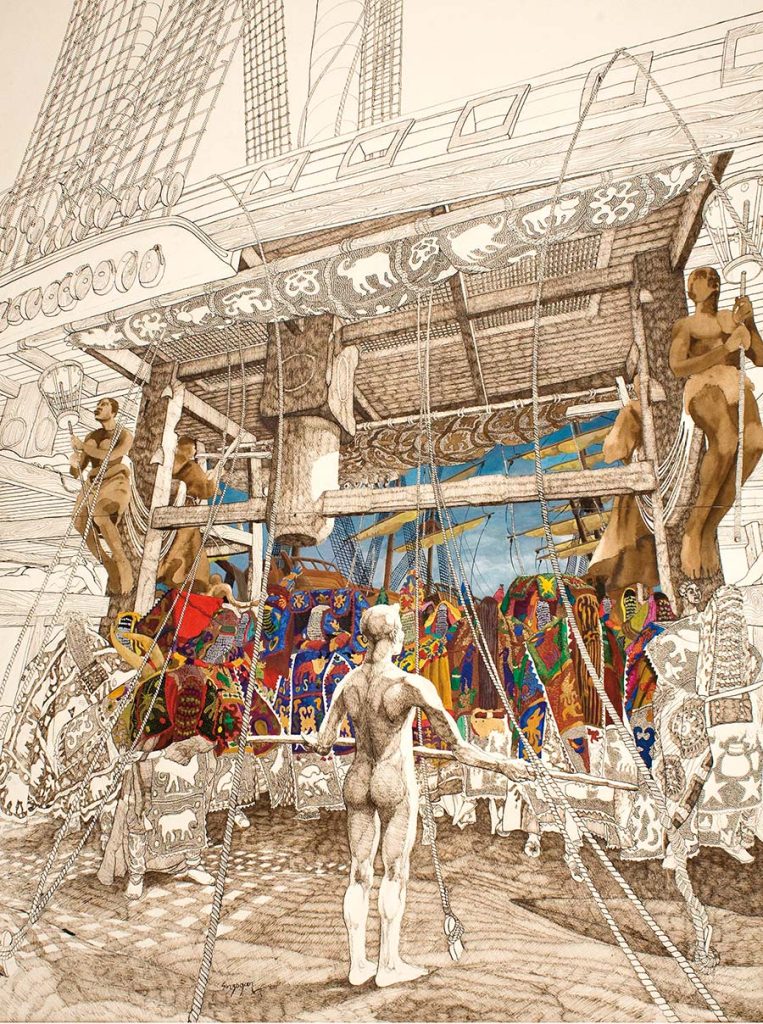
Julien Sinzogan (Benin), Gates of Return II (detail), 2009.
‘Visualising justice means making it real. It involves putting African truths out there and taking down colonial lies. It is about using every kind of visual tool, paint, camera, light, pixel, to honour Africa’s past, uplift its present, and empower its future. Reparations make this possible. They provide the way to finally see justice.’
So ends this succinct account in the book by Kwesi Pratt Jnr. But this is where I enter, because at the core of the reparations movement is this struggle for justice: justice for the capture and enslavement of Africans; justice for their march to the coast and storage in filthy dungeons; justice for the trafficking of over 15 million Africans in slavers across the Atlantic and millions more across other routes; justice for the millions subjected to chattel enslavement; justice for Africans who were ‘otherised’, dehumanised, denied their humanity and personhood, and subjected to the worst forms of punishment when they resisted; justice for gender-based violence; justice for those still suffering from the legacies of chattel enslavement and colonialism. In fact, the racialisation of Africans, introduced by and through the transatlantic trafficking and chattel enslavement, is the premise on which racism continues to dictate global societies and systems today, further fuelling contemporary injustices, manifested through underdevelopment and impoverishment endured by Africans and people of African descent today. Therefore, this is a continuing harm for which repair must be claimed. This is the justice that we seek.
This is a timely book, coming as this version does in the wake of the successful adoption in the United Nations General Assembly (UNGA) on 25 March 2026, of Ghana’s Resolution declaring ‘The Transatlantic Trafficking of Enslaved Africans and the System of Racialised Chattel Enslavement of Africans as the Gravest Crime Against Humanity.
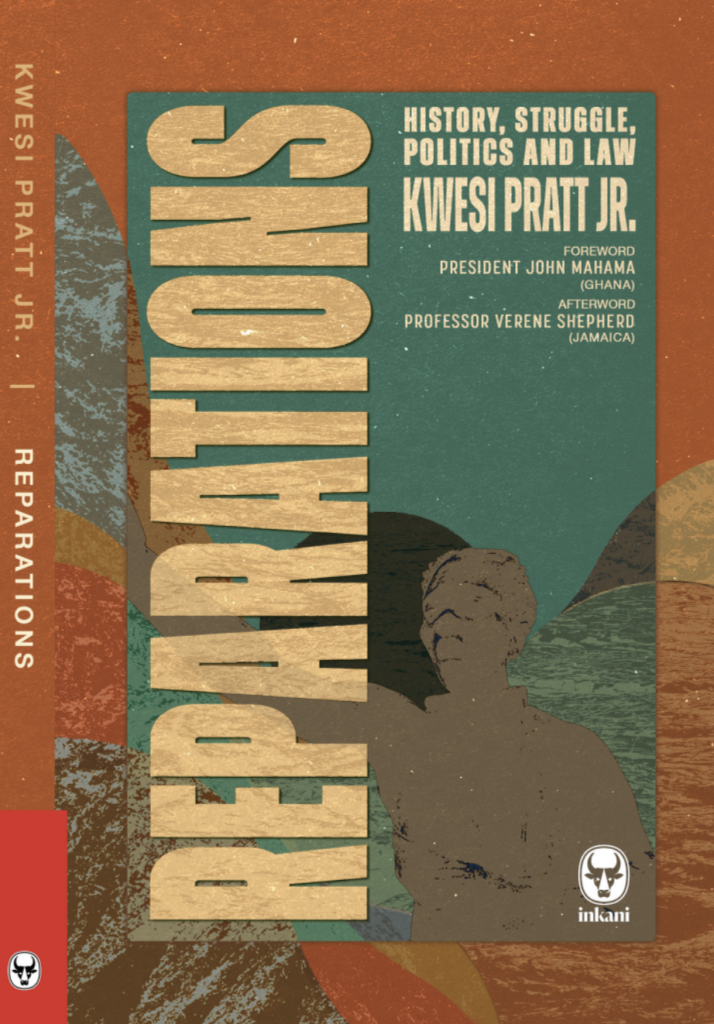
Reparations book cover.
While there has been pushback against this claim of ‘gravest’, historians and legal scholars have long argued that of all the great historical injustices that have shaped the modern world, none is as profound or as enduring a legacy as the Trans-Atlantic Trafficking in Enslaved Africans. This centuries-long enterprise was the actualisation of a criminal enterprise that systematically dismantled societies, commodified human beings, and constructed a global economic order built upon the tenets of racial hierarchy and brutal exploitation. Despite emancipation and independence in formerly colonised spaces in which chattel enslavement was practised, the consequences of this system reverberate today in the persistent social, economic, and political disparities that continue to affect continental Africans and people of African descent across the Americas, the Caribbean, and the world.
While in recent decades, the discourses surrounding this history have shifted dramatically from a demand confined to the realms of moral and political advocacy to an urgent call for reparatory justice, grounded increasingly in the language and rules of international law, the historical context is extremely important to those building a legal case. These historical injustices provide the evidence which substantiates the claim for reparations. To begin with, the vast record of human rights violations at each stage of the trafficking and chattel enslavement of Africans justifies the demand for reparations. This is well outlined in the Caribbean Community (CARICOM) Ten-Point Plan for Reparations.
Ghana’s entry — and, with it, continental Africa’s reentry – into the movement is very welcome, and we in the CARICOM Region are thrilled. A strong, united army of reparations advocates will surely win this fight for justice.
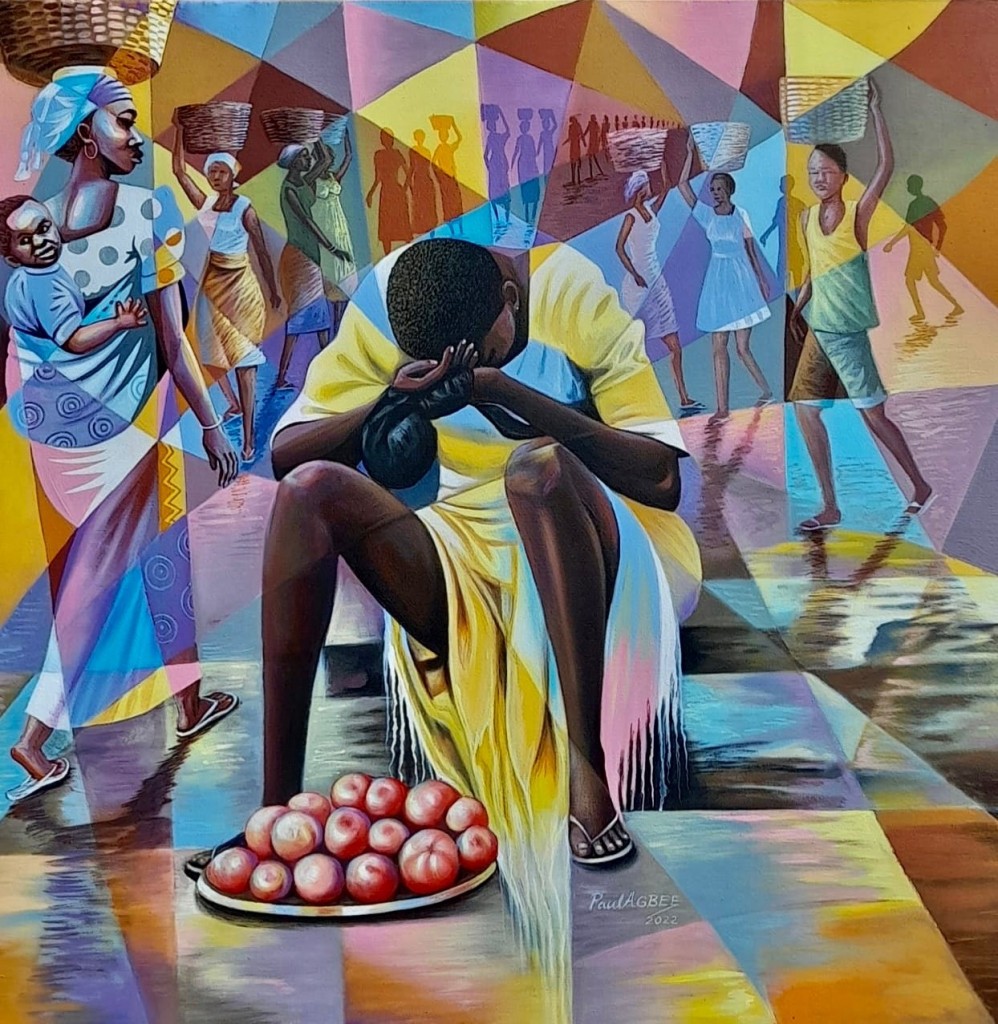
Paul Agbee (Ghana), Child Labour, date unknown.
So, I end where the author started: ‘This book is born out of a longstanding wound, one etched deep into the soil, psyche, and soul of Africa. It is a wound that bleeds across centuries of slavery, colonial violence, and economic theft. But it is also a call to action, a demand for repair, justice, and transformation.’
I agree. Only a reparatory justice approach to truth and educational exposure can begin the process of healing and repair. Indeed, what many have described as the immorality, political irresponsibility and social injustice of European colonisers who conceived of, capitalised, managed and benefited from the Ma’angamizi or African Holocaust, for over 400 years, forms the philosophical underpinnings of the movement for reparations/reparatory justice. For over 400 years, Africans and their descendants were classified in law as non-human, chattel, property, and real estate. Furthermore, through the chattelisation and dehumanisation of Africans, the normative principle of humanity was breached. The later scramble for Africa and colonial rule, which relied on strict systems aimed at maximising profits, help to shore up claims for reparations under international law.
European governments that sanctioned and participated in the trafficking and chattel enslavement of Africans and that continued to colonise Africa and the Caribbean long after their abolition, forcing a long struggle for independence, with its casualties, have a responsibility to participate in this effort. Therefore, we must reject the position of the EU, whose members abstained from the vote in the UNGA on 25 March 2026. Speaking through Ambassador James Kariuki, UK Chargé d’Affaires to the UN, the UK, for example, argued that the trafficking and chattel enslavement of Africans were not condemned by international law at the time; that ‘the principles of inter-temporality and non-retroactivity are long-standing tenets of international law.’ According to the inter-temporal rule, the applicable law is the law of the relevant time. The UK representative further argued that ‘There is equally no duty to provide reparation for historical acts that were not, at the time those acts were committed, violations of international law. These principles cannot be circumvented by recourse to the concept of ‘continuing harms’. But who made the law? The perpetrators! African legal experts and historians, therefore, reject the inter-temporal rule on the basis that ‘a crime does not rot’; on the basis that Africans from the 15th century long opposed the capture and trafficking of its citizens; long opposed post-slavery colonialism. Kwesi Pratt Jnr. shows all this clearly in this work; so does the history of African resistance to chattel enslavement, any religious justification of slavery in the Americas, and continuing colonialist acts.
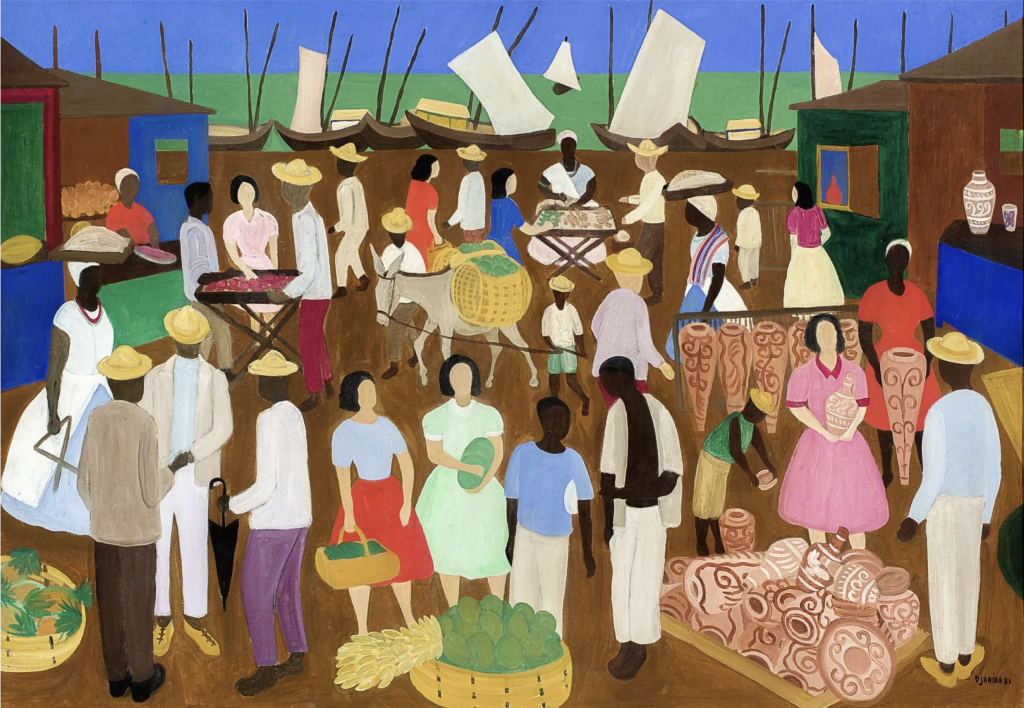
Djanira da Motta e Silva (Brazil), Bahian Market, 1956.
The author is correct to argue that ‘Reparations discourse must account for… Africa’s underdevelopment…The wealth stolen, the institutions wrecked, and the cosmologies assaulted were all components of a broader capitalist project. Reparations must then include not only reparations for forced labour, but for centuries of economic and ideological violence that were orchestrated under the cover of trade.’
In the end, the fight for justice and freedom will continue despite the pushback. As Sweet Honey in the Rock sang in ‘Ella’s Song’: ‘Those who believe in freedom will not rest until it comes’.
Warmly,
Verene
This text is adapted from the afterword to ‘Reparations: The History, Struggle, Politics, and Law’ by Kwesi Pratt Jnr. In this upcoming Inkani Books release, renowned Pan-Africanist Kwesi Pratt Jnr. lays bare the facts, figures, and pathways behind one of the defining struggles of our time: Africa’s case for reparations. Drawing on history, law, and politics, Pratt argues that reparations are not an act of charity but a demand for justice, a necessary step towards dismantling the structures of inequality rooted in slavery and colonialism and reorganising the global order in Africa’s favour. Written for activists, students, and the rising generation of African leaders, with a foreword by Ghana’s President John Dramani Mahama, ‘Reparations’ is both a rigorous historical account and an urgent call to action. Look out for the launch announcement on the Inkani Books website.
 | Verene A. Shepherd |