Collective Cultural Resistance from South Africa and Mexico
From the walls of Oaxaca to the streets of Cape Town, the fight for freedom continues to find its rhythm in collective imagination.
In October 2020, as the world grappled with pandemic isolation and communities across the Global South faced deepening economic crisis, Subcomandante Insurgente Moisés of the Zapatista movement in Chiapas, Mexico, offered a powerful reflection on the nature of collective struggle. Writing from autonomous territories that have sustained revolutionary culture for decades, he reflected:
We see and hear a socially sick world, fragmented into millions of people estranged from each other, doubled down in their efforts for individual survival but united under the oppression of a system that will do anything to satisfy its thirst for profit, even when its path is in direct contradiction to the existence of planet Earth.
… life, and the struggle for life, is not an individual issue, but a collective one.
These words speak directly to the crisis facing cultural workers today: how do we sustain collective cultural resistance when the forces we oppose isolate us, defund our spaces, and reduce resistance art to individual survival strategies? Following Tricontinental’s recent dossier Mexico and the Fourth Transformation, this newsletter draws lessons from South Africa and Mexico on how collective cultural resistance can endure both the withdrawal of support and the pressures of neoliberal individualisation.
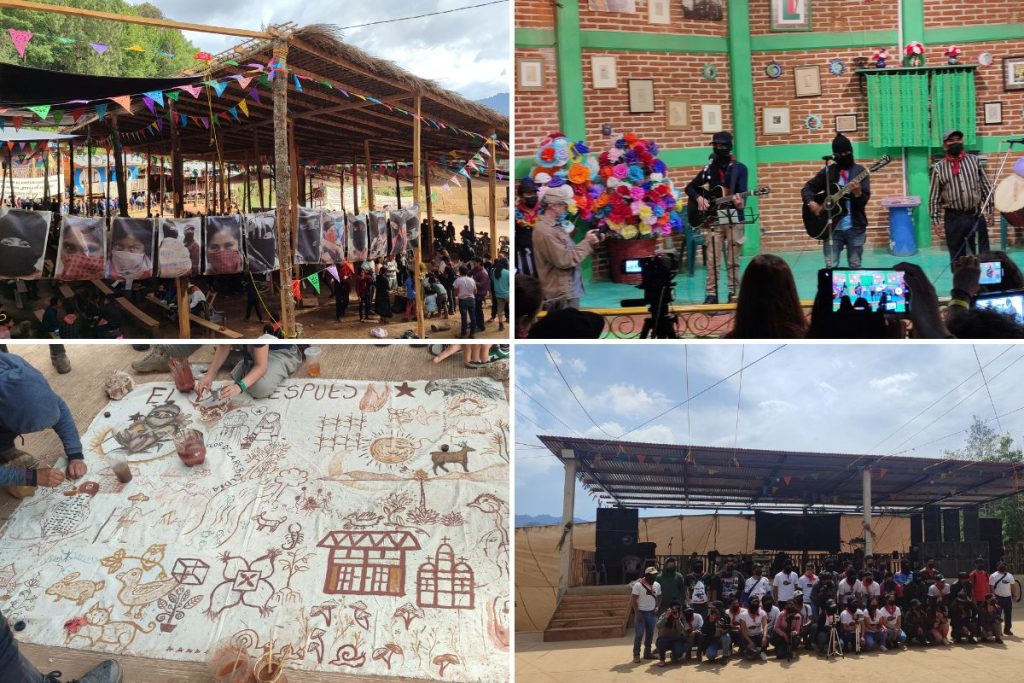
Rebel and Revel: Zapatista art, rebellion, and resistance solidarity meeting towards the day after, autonomous Zapatista territories, Chiapas, Mexico, April 2025. Credit: Robyn Park-Ross.
The Community Arts Project (CAP), founded in Cape Town in 1977 following the Soweto uprising of 1976, was one of the most formative collective cultural initiatives of the anti-apartheid struggle. Alongside the Federated Union of Black Artists, the Medu Art Ensemble, the Johannesburg Foundation and others, CAP trained and housed artists and students, and by the 1980s was central to the formation of the idea of ‘culture as resistance’ against apartheid.
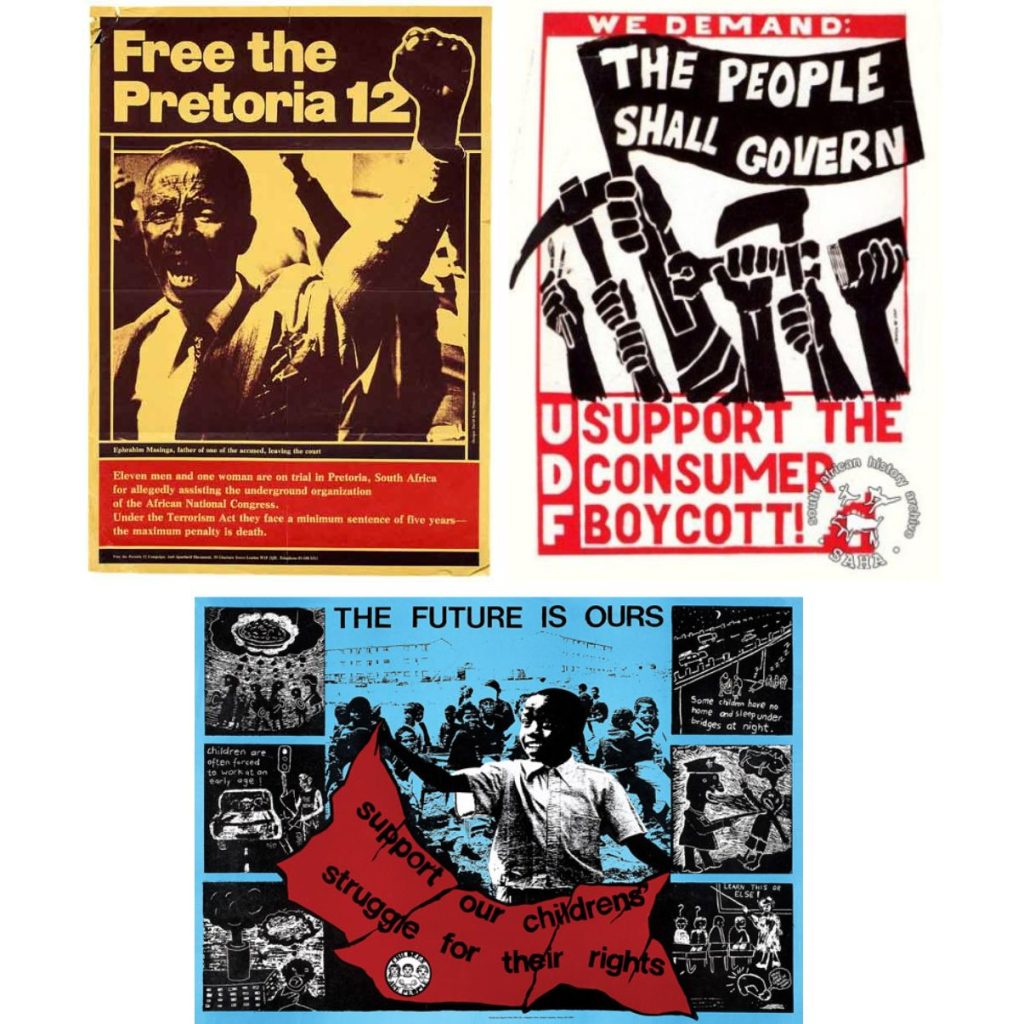
Political posters produced at CAP between 1977 and the 1990s, (Source: Community Arts Project Poster Collection, The Centre for Humanities Research, University of the Western Cape).
With the transition to democracy in the early 1990s, foreign donors withdrew, undermining the sustainability of community-centred spaces. CAP went through many transitions to adapt to the changing political and funding context, including merging with Media Works in 2002 to form the Arts and Media Access Centre, which eventually closed in 2008 due to lack of funding. The challenge of how to sustain political art collectives remains unresolved.
Without collective spaces, many artists have been left to struggle individually in a neoliberal order that depoliticises art, commodifies cultural work, and neutralises its revolutionary potential. Patrick Holo, a member of CAP and later co-founder of the Nyanga Arts Centre, with works in major national galleries and even featured in the national curriculum, in his later years of life now sells his art on the pavement in Cape Town just to make a living. His story exemplifies how cultural workers are left to rely on their own resilience, while the very conditions that marginalise them continue to profit from their individualised struggles.
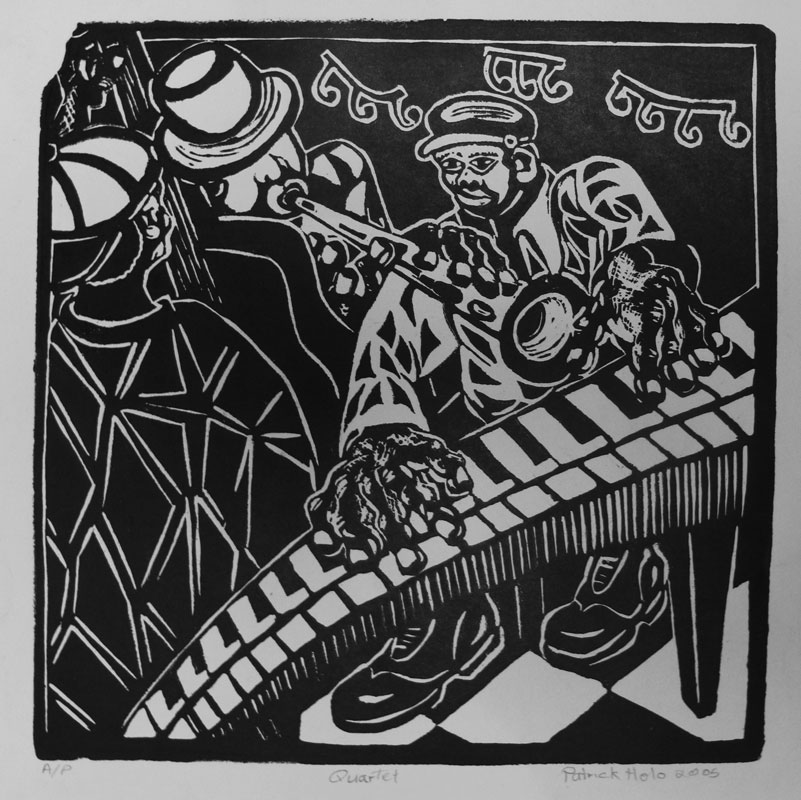
Quartet, Patrick Holo (Source: Cape Gallery).
Where are our solidarity networks to support cultural workers and their crucial contributions? What can we learn from other southern contexts?
The post-revolution political strategy to prioritise culture is an underpinning influence of the maintenance of Mexican cultural collectives. This political prioritisation of cultural work dates back to José Vasconcelos’s 1920–1924 term as Secretary of State for Public Education, during which his strong commitment to cultural nationalism led to the funding of murals on public buildings to visualise a revolutionary nationalism. While subject to much valid critique, this legacy of nation-building through culture continues to be reflected in Mexico today. For example, Mexico City is rumoured to have the highest density of cultural institutions in the world. The role of the government should not however be overstated. The driving force of collective cultural resistance work is always the dedication and resilience of organised cultural workers. With or without state or institutional support, people will make political cultural work together. The question is, what precarity will they be asked to endure in order to provide this public service?
The Taller de Grafica Popular (‘People’s Graphic Workshop’), a movement of political artists founded in 1937, revolutionised Mexican graphic culture and became one of Latin America’s most influential art movements. Despite tensions between generations of artists within the collective amongst other challenges, its longevity (financially and otherwise) was due in large part to its structure:
- Public work: posters and flyers for movements, unions, and other political campaigns, portfolios created under the name of the Taller, never attributed to individual artists and often done for free with a creative process that included a weekly internal feedback system for collective strengthening of work
- Fine arts (‘La Estampa Mexicana’): offered a broader cultural representation of Mexico, including the diversity of the land, work, and people. It provided a form of propaganda (“served with a spoon, not a knife”), with a money-generating function – print runs were sold under the name of individual artists and proceeds portioned between the individual artist and the Taller to fund other activities
- Calaveras publications (depictions of skulls or skeletons): Taller produced 22 calaveras newspapers between 1938 and 1965 reflecting on the political moment with humour. Building on the history of political satire through caricature tradition rooted in the work of José Guadalupe Posada (1852–1913), the collective gathered annually around Dia de los Muertos (‘Day of the Dead’) and worked intensively for a few days to produce a collective satirical reflection of the current political situation. Though not income-generating, they were vital to the Taller’s cultural role.
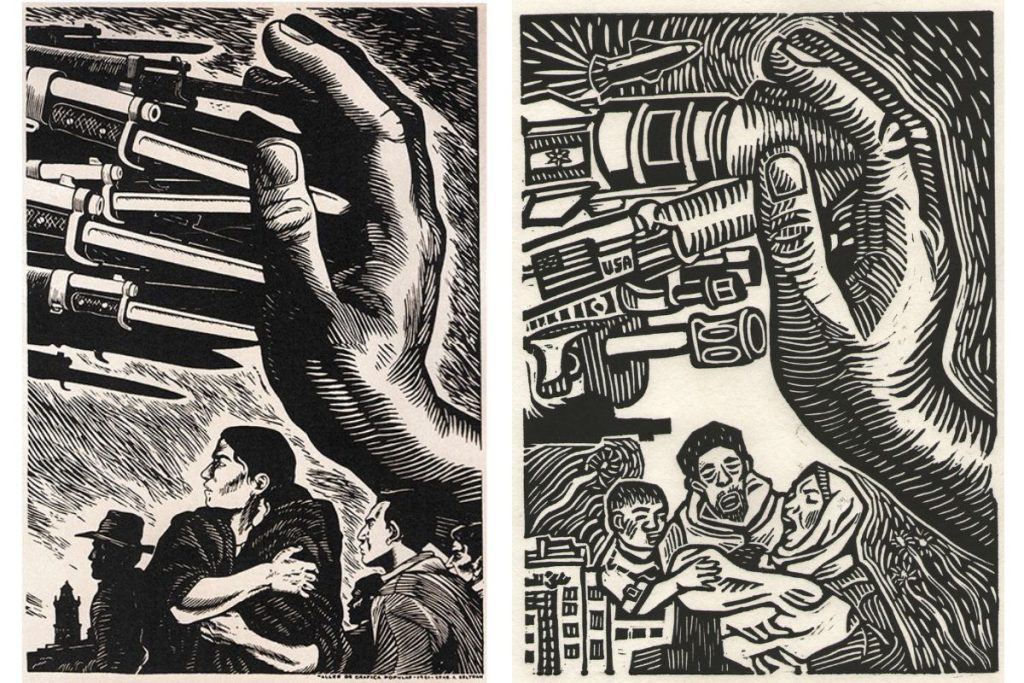
L: Detengamos la guerra (‘Stop the War’), 1951, Taller de Grafica Popular, (Source: Mexico Desconocido), R: America Libre, a 2024 reinterpretation by collective Enraizando Solidaridad in solidarity with the ongoing genocide in Gaza, (Source: Enraizando Solidaridad. Free, open access to the Palestine Solidarity portfolio here.
In Mexico today, Oaxaca is home to a rich concentration of political art collectives such as Armarte (‘arm yourself’), a feminist linocut collective producing political wheatpaste interventions in the city’s gentrifying streets. Members create and sell individual work (with the option to use the collective space and facilities) but come together monthly to design, carve, print and paste collectively around chosen themes. These themes are often tied to political anniversaries such as the disappearance of 43 students from the Ayotzinapa Rural Teachers’ College in 2014 by the Mexican police and security forces in collusion with organised crime. The collective use various income streams to fund the collective: including the sale of t-shirts, stickers, prints, zines and hosting workshops in the collective space.
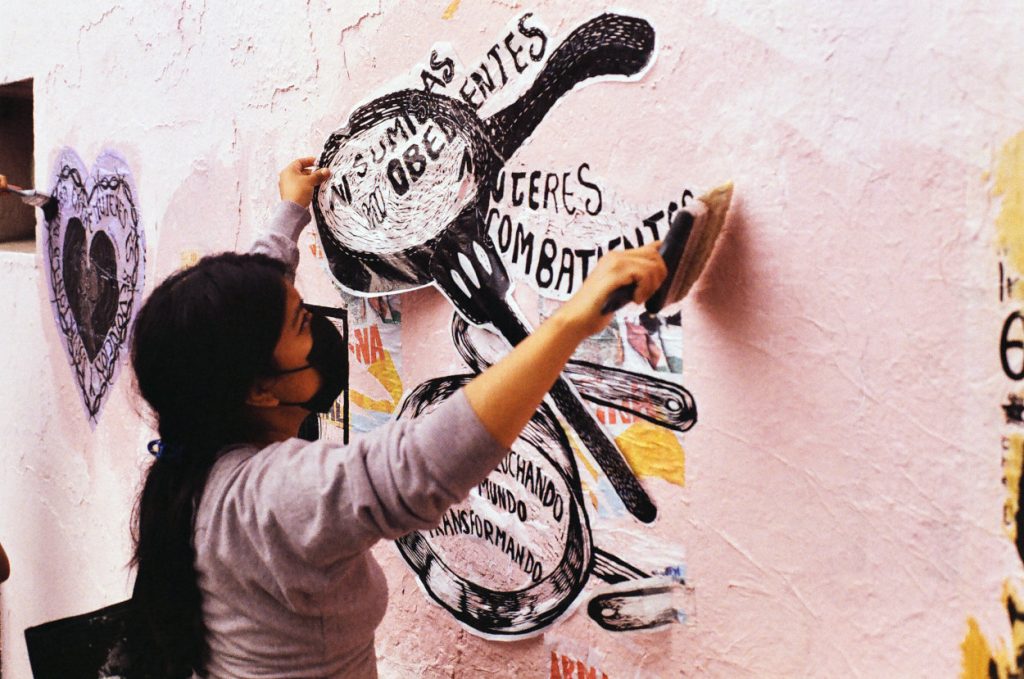
Armarte wheatpasting, July 2024, Oaxaca City, Mexico. Credit: Robyn Park-Ross.
Other inspiring Mexico City based collectives include Hijas de la Luna (‘Daughters of the Moon’) a feminist linocut collective who, among other political work, recover the histories of overlooked women political artists, and Enraizando Solidaridad (‘Rooting Solidarity’) who, from the long-standing popular education creative workshop Escuela de Cultura Popular Martires del 68 (‘Martyrs of ‘68 School of Popular Culture’) produce graphic sets (prints, stickers, posters and wheatpastes) in solidarity with Palestine and other global struggles.
Yet Mexican collectives also face precarity. Radio Nopal, an online independent community radio station in Mexico City, recently convened assemblies to strategise survival after crowdfunding fell short. They continue broadcasting while trying to build communal solutions ‘with the certainty that the impossible can be sustained when built together’.
From South Africa and Mexico emerge urgent questions: how do we learn from the lifespans of past collectives without nostalgia? How do we adapt lessons across contexts while building new spaces for the difficult but essential work of collective cultural resistance?
As cultural workers supporting liberation struggles from South Africa to Palestine, from Nigeria to Mexico, we have no choice but to build collective structures that sustain revolutionary consciousness across regions and generations.
South African musician and composer Asher Gamedze reminds us, in his piece ‘Turbulence’s Pulse’, that the rhythms of resistance – like the rhythms of jazz – are always collective:
One important thing about time in music, particularly in improvised music, in free music
Is the fact that time itself, the feeling of time, time’s movement or its signature, the sense of time
In front, behind
Pushing and pulling in different directions
Is very clearly produced by the group of musicians playing together
Their individual times working and weaving to constitute and articulate a sense of ensemble timeThis is useful to remember when we think about history
What time in music, its nature as a collective product teaches or reminds us about time in history, is that time and how it moves is produced by people working togetherFor the oppressed being dispossessed, as we are, from the means of movement and being subject to the times of others
Music is one space where we can articulate, define and live in our own sense of timeThe world as we see and experience it today, through all the violence, tyranny, exploitation and oppression, can seem overwhelming and stuck in place
Unmoving and impossible to shift
History also can seem like a story outside of us, outside of and beyond ourselves
Taking place on a level far removed from us everyday folks
But music time reminds us that history is also a collective productHistory, the movement of historical time, is produced by people
People organising to intervene in, challenge and change the dynamics of their reality
This realisation has liberatory potential
The fact that history and present society has been made by people means that the future will also be made by people, by usSo despite living and working in conditions neither of our making nor our choosing
We can indeed make time
Make history
Warmly,
Robyn Park-Ross
 | Robyn Park-Ross |