100 Years After Brussels: Renewing Internationalism, Advancing Liberation
Held in Brussels in 1927, the Congress against Colonial Oppression and Imperialism brought together anti-colonial leaders, trade unionists, intellectuals, and activists from across the world in one of the first attempts to build a common front against imperialism.
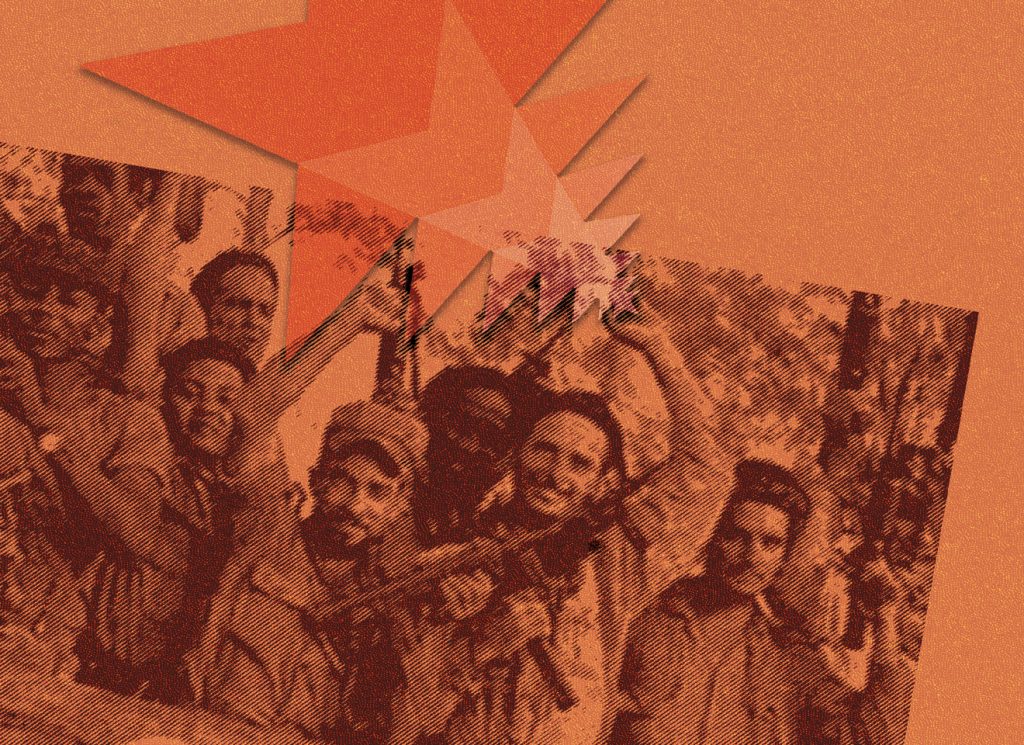
As war, militarisation, austerity, and imperialist aggression intensify, people continue to organise and resist. From Palestine to Latin America, from Africa to Asia, movements are confronting occupation, exploitation, and colonial domination in all its forms. In this context, the centennial of the 1927 Congress against Colonial Oppression and Imperialism offers an opportunity not only to remember a historic moment, but also to draw lessons from it for the challenges of the present.
Held in Brussels in 1927, the Congress brought together anti-colonial leaders, trade unionists, intellectuals, and activists from across the world in one of the first attempts to build a common front against imperialism. The gathering forged new links between liberation movements and helped lay the foundations for international solidarity and coordination that would influence anti-colonial struggles for decades to come.
The League Against Imperialism Centennial Campaign (LAI27) marks one hundred years since this landmark event. More than a commemoration, it is a collective effort to recover this history and place it in dialogue with the realities of today. The campaign brings together movements, trade unions, researchers, artists, and activists from different regions to exchange experiences, strengthen relationships, and create spaces for political and cultural collaboration.
Throughout 2026 and leading up to the centennial gathering in Brussels in March 2027, LAI27 is organising publications, educational initiatives, and international meetings. By connecting organisations and initiatives across continents, the campaign seeks to highlight shared histories of resistance, strengthen international solidarity, and contribute to the renewal of anti-imperialist and anti-colonial internationalism for the twenty-first century. Beyond commemorating the past, LAI27 aims to serve as a platform for coordination, political exchange, and joint action, providing movements with opportunities to collaborate, organise common initiatives, and build stronger links across regions and struggles. These efforts will culminate in an international gathering in Brussels in March 2027, bringing together movements, trade unions, researchers, artists, and activists from across the world to reflect on a century of anti-imperialist struggle and discuss the challenges and tasks that lie ahead.
Voices of 1927
Voices of 1927 is one of the campaign’s flagship projects. Through a series of three pamphlets published during 2026, it revisits some of the most important speeches delivered at the Brussels Congress and explores their relevance for the present.
Combining historical texts with archival materials, biographical sketches, reflections from organisations and movements participating in the LAI27 campaign, and newly commissioned artworks, the project places the voices of 1927 in dialogue with contemporary struggles. It introduces readers to figures such as Lamine Senghor, Jawaharlal Nehru, and Carlos Quijano, whose interventions emerged from different political and geographical contexts yet shared a common commitment to liberation, international solidarity, and resistance to imperial domination.
The aim is not simply to preserve these speeches as historical documents, but to reclaim them as part of a living tradition of resistance. By making these materials available in both print and digital formats, Voices of 1927 seeks to connect past and present struggles and contribute to the renewal of anti-imperialist internationalism for a new generation.
Contributors
Daniel Kersffield holds a BA in Political Science from the University of Buenos Aires, an MA in Social Sciences from FLACSO-Argentina, and a PhD in Latin American Studies from UNAM, where he also completed postdoctoral research in Political Science. His award-winning doctoral work on the Anti-Imperialist League of the Americas received the Mexican Academy of Sciences Prize (2009) and led to his book Against Empire (Siglo Veintiuno, 2012). He has published extensively on the subject and is currently a researcher at CONICET (Torcuato di Tella University, Argentina), as well as an international policy analyst for Página 12.
Laura Capote is a Colombian social activist and researcher. She is Co-Coordinator of the Nuestra América Office at the Tricontinental Institute for Social Research, and Coordinator of the Continental Secretariat of the Continental Articulation of Social and Popular Movements toward ALBA, where she is responsible for the Political Education department. She holds a bachelor’s degree in Social Communication Sciences from the University of Buenos Aires and is pursuing a master’s degree in International Relations at the National University of La Plata
Carlos Quijano
Carlos Quijano was born in Montevideo in 1900. Influenced by the Russian Revolution and the ideas of José Enrique Rodó, he co-founded the Centro de Estudios Ariel in 1917 and took part in early student movements for educational reform. He studied law at the University of the Republic, graduating with top honors in 1923, and later continued his studies in economics and political science at the Sorbonne in Paris.
While in Europe, he became active in Latin American student politics, serving as secretary-general of AGELA and advocating against U.S. imperialism. In 1927 he published Nicaragua: An Essay on United States Imperialism. He also built connections with major Latin American intellectuals and political figures, becoming an important voice for a new generation of anti-imperialist thinkers.
After participating in international congresses in Brussels, Moscow, and Havana, Quijano returned to Uruguay in 1928. He became a deputy (1929–1932), founded newspapers such as El Nacional and Acción, and opposed both party leadership and dictatorship. Over time, he distanced himself from the National Party and helped lay the groundwork for the left-wing Frente Amplio coalition.
In 1939 he founded the influential weekly Marcha, which he directed for 35 years as a platform for leftist, nationalist, and anti-imperialist ideas. During the dictatorship (1973– 1974), the paper was censored and eventually shut down, and Quijano was briefly imprisoned before going into exile in Mexico, where he continued his intellectual work.
A leading Latin American thinker and author of over twenty works, Carlos Quijano died in Mexico City in 1984.
Voice of Quijano
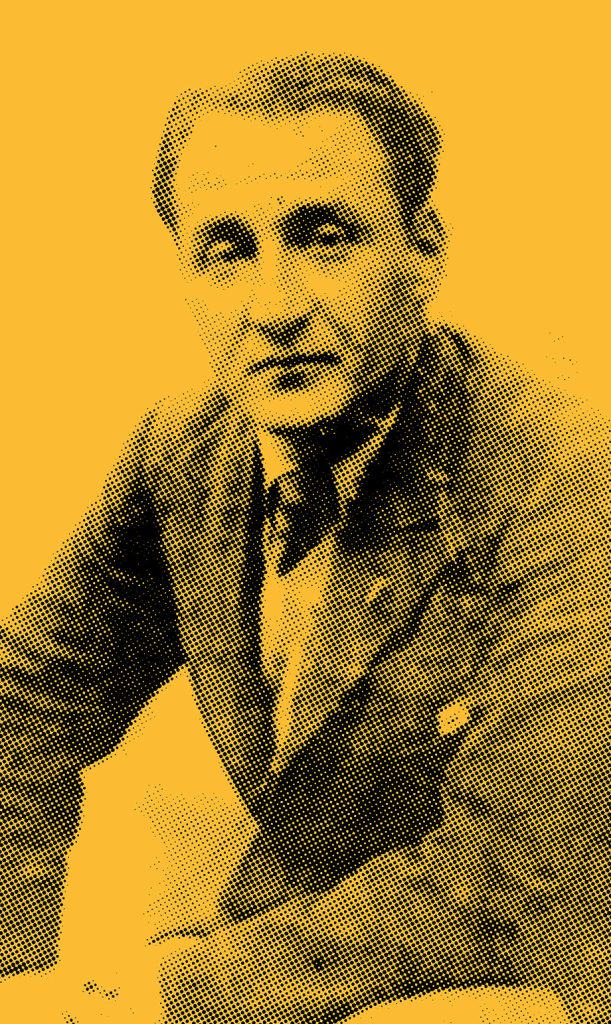
On behalf of the delegations from Latin America, encompassing more than 20 nations with 80 million inhabitants oppressed by American imperialism, I greet you fraternally and declare my solidarity with you.
Our struggle down there is primarily directed against American imperialism. Yet we know that our action is only part of the international fight against global imperialism. The battles of the Chinese, the Indians, the Egyptians—these are also our battles. The enemy of all other oppressed peoples is our enemy as well. And so we stand among you, representing with you all anti-imperialist movements of the world, striving to unite our forces, to combine our actions, so we may achieve our goal by the shortest and surest path.
With the last imperialist war of 1914, a new chapter began for Latin America in its relations with the United States. The Covenant of the League of Nations recognized the Monroe Doctrine, thereby granting the U.S. full authority to intervene in Latin America.
Since then, American capital has more than tripled. It seizes control of the most vital raw material sources and exploits the masses of workers and peasants so ruthlessly that they are forced to live under the worst conditions.
More than 20 so-called ‘independent’ republics—which in fact combine the very traits that make them prey to imperialists: national weakness and vast, sparsely populated territories with feudal economies that still exist across much of the region, especially in various countries. These lands also contain important raw materials, particularly petroleum. Labor is as cheap as in colonial countries. And finally, they also serve as markets for the goods of imperialist nations.
Mexico is the border of Latin America. In this country, the U.S. has encountered an adversary not easily subdued. A fierce resistance has always been the response to aggression. In the two wars that the U.S. forced upon Mexico, the latter lost vast portions of its territory, and its president Huerta —an agent of British imperialism—was overthrown.
The Yankees compel other nations to sign treaties, deploy troops, and provoke uprisings, depending on the interests they pursue and the resistance they face from local governments. This has happened, for example, in Panama, Nicaragua, Santo Domingo, and Haiti.
Currently, they have occupied nearly all of Nicaragua’s territory to support a certain Adolfo Diaz, a former tool of the imperialists, and to provide him military aid against the people’s revolution.
They also employ the method of infiltration, which, though more diplomatic, is in certain cases even more criminal. It is the assistance they lend to national dictators. In Venezuela, they keep Vicente Gomez in power—a savage tyrant who, over 18 years, had more than 20,000 of his fellow citizens murdered and over 5,000 imprisoned, while more than 70,000 could save their lives only by fleeing. Today, the United States wants to repeat what it did to Colombia when it carved out the province of Panama to supposedly create an independent republic. Maracaibo, Venezuela’s oil region, which is of utmost importance to the U.S. due to its wealth and strategic location opposite the Panama Canal, will become an ‘independent’ republic because the Americans fear the revolution that will overthrow the dictatorship.
The struggle against imperialism is only just beginning. Yet among all the peoples of the Americas, a rapid awakening of national revolutionary confidence is evident. In recent days, the workers of the Yankee oil companies, supported by the solidarity of the working class of the entire. However, the reactionary government, which sold itself to the imperialists, had them massacred by the national army.
Everywhere imperialism attempts to impose its rule —in Mexico, Central America, the Antilles, and South America— it faces increasingly fierce resistance.
Workers, peasants, students, and progressive intellectuals have already recognized the necessity of forming a united front.
This is a very general overview of the situation of the fighting forces, but unfortunately the time available to me does not allow me to go into further detail. The reports from the various American delegates provide an overview of the different countries, their particular characteristics, and a list of the assassinations carried out by the imperialists.
In conclusion, I wish to emphasize that our problem is also yours—it is the problem of the workers in imperialist countries as well as the productive forces of the oppressed nations.
Thanks to the Anti-Imperialist League in the Americas, the struggle against imperialism in Latin America is now being waged in a unified manner. Since we have now united our fight with the international struggle against every form of imperialism, we expect our struggle to be conducted more vigorously, concretely, and actively in the future, and we shall apply the principles and resolutions of this congress in doing so.
Carlos Quijano
Brussels, 1927
In Nuestra America, Imperialism Will Always Meet the Fate It Met at Playa Girón
This anniversary of the League Against Imperialism comes at a pivotal moment in the history of peoples around the world, and particularly in Latin America and the Caribbean.
Unfortunately, the words written decades ago by Carlos Quijano seem to portray with remarkable accuracy the current reality of our region and the effects that imperialism has had on the peoples of our continent and the world.
At ALBA Movimientos, our Continental Network of Social and Popular Movements, made up of nearly 200 organizations from 23 countries across the region, launched the campaign “Bolívar vs. Monroe” in 2023, marking the bicentennial of the Monroe Doctrine, proclaimed on December 2, 1823, by John Quincy Adams, Secretary to President Monroe. The campaign sought to expose how this doctrine embodied the view of Latin America and the Caribbean as a region belonging to “America,” meaning the United States.
The doctrine, which systematized the idea that neighboring countries belonged within the U.S. sphere and established a line against possible European interests, became the central axis of U.S. foreign policy toward the region. As Quijano notes, it formalized U.S. intervention in the destiny of our continent. Simón Bolívar later reflected on this reality in his famous warning: “The United States seems destined by Providence to plague America with misery in the name of liberty,” a statement made in 1829 in response to U.S. expansion in the region.
Although we promoted this campaign during the bicentennial, several social organizations and continental networks argued that it was mistaken to center a campaign on anti-imperialism. They claimed that ordinary people did not understand imperialism and would not mobilize politically around anti-imperialist struggle. Instead, they argued, we should focus on more immediate and tangible enemies affecting the majority.
However, the reality of recent years has unfortunately proven otherwise. Perhaps as a result of the plurality of voices within progressive and alternative projects in the region, or of postmodernism’s declaration of the “end of history,” many social sectors stopped speaking about imperialism by name, despite the uninterrupted presence of the United States and its imperial intervention throughout our continent.
Quijano already highlighted the role of the United States in influencing, directly or indirectly, the sovereignty and independence of countries across the region. Operation Condor in the Southern Cone remains one of the clearest examples of intervention and support for coups against democratically elected governments. Beyond paving the way for neoliberalism, it also produced horrific scenes of torture and forced disappearances affecting millions of Latin Americans.
Likewise, the so-called “War on Drugs,” launched in the 1970s, functioned as a mechanism of control and a moral pretext for intervention through financing, training, and arming security forces across the region. In practice, it became a war against the poor while large drug cartels continued laundering enormous profits through major U.S. banks.
At the beginning of this century, there was also an attempt to establish the Free Trade Area of the Americas (FTAA), a hemispheric free-trade project that would have deepened dependency by reducing our region to a supplier of raw materials and strategic resources, with little opportunity for autonomous industrial development.
Throughout the twenty-first century, intervention has also taken place through “cooperation” and “development assistance” agencies, often aimed at weakening struggles for the defense of life and territory. Revolutionary agendas were transformed into NGO agendas and reduced to superficial reforms. At the same time, lawfare has been used to sideline major political leaders, as seen in the cases of Fernando Lugo in Paraguay, Dilma Rousseff and Lula da Silva in Brazil, Cristina Fernández in Argentina, and Rafael Correa in Ecuador.
Meanwhile, imperialism has continued punishing rebellious processes and revolutionary experiences that demonstrated the possibility of emancipation and socialism in our Great Homeland. Haiti experienced deepened violence under MINUSTAH and MINUJUSTH, which brought increased poverty, the spread of diseases such as cholera, and countless abuses, including sexual violence committed by UN peacekeepers. Cuba, for its part, continues to endure the increasingly harsh and inhumane effects of the illegal blockade imposed for more than six decades against a people that dared to challenge imperialism only ninety miles from U.S. shores.
In 2026, imperialism once again resorted to its traditional methods. According to the author, events began with the bombing of Caracas and other regions of Venezuela on January 3, followed by the kidnapping of President Nicolás Maduro Moros and National Assembly member Cilia Flores. These events, she argues, demonstrated that imperial ambition recognizes no limits and is willing to disregard international law, much as many observers believe was evident in the genocide committed against the Palestinian people amid the silence of much of the international community.
Like a beast in decline making its final desperate movements, the weakening of the United States and of imperialism is increasingly visible. The emergence of new global centers of power has highlighted that the principal strength of U.S. imperialism continues to rest in its military-industrial complex and its capacity to wage war.
From the perspective of social and popular movements in Latin America and the Caribbean, there is a firm commitment to defending continental sovereignty and independence against what is described as the “Monroe Doctrine 2.0” and its “Trump Corollary.” For them, what some consider a backyard is in fact Nuestra America, a sacred inheritance entrusted by the liberators.
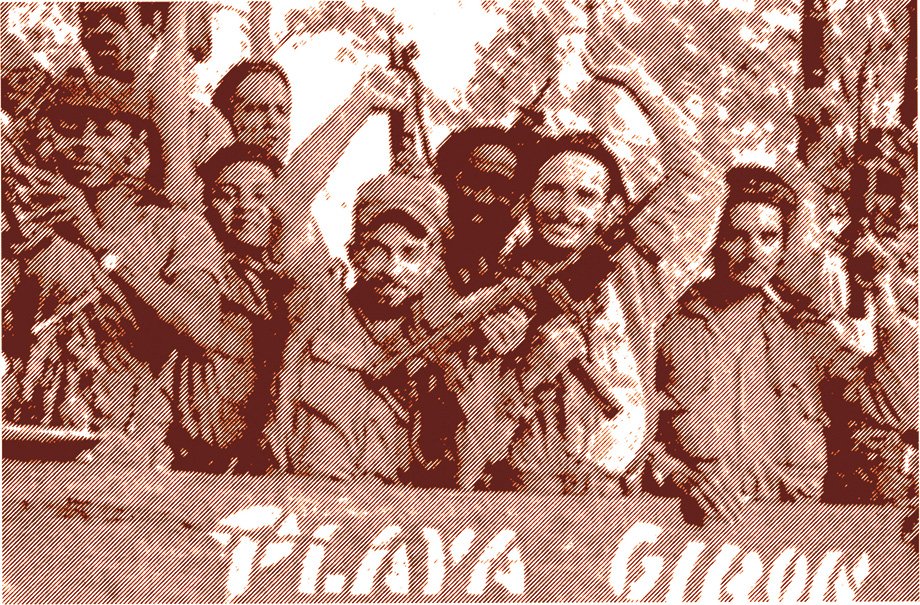
In our continent we know that imperialism will not collapse on its own. We do not wait for that day. Ours is the continent that has achieved major victories against imperial domination, symbolized by the historic defeat of Playa Girón invasion sixty-five years ago and embodied in every struggle for sovereignty and every effort to build socialism.
Laura Capote
Bogotá, 2026