The Earthquake in Venezuela and the Politics of Disaster: The Twenty-Seventh Newsletter (2026)
Venezuela is rebuilding amid an information war that obscures the effects of sanctions, frozen assets, and decades of US economic warfare – and turns human suffering into another pretext to discredit the Bolivarian process.
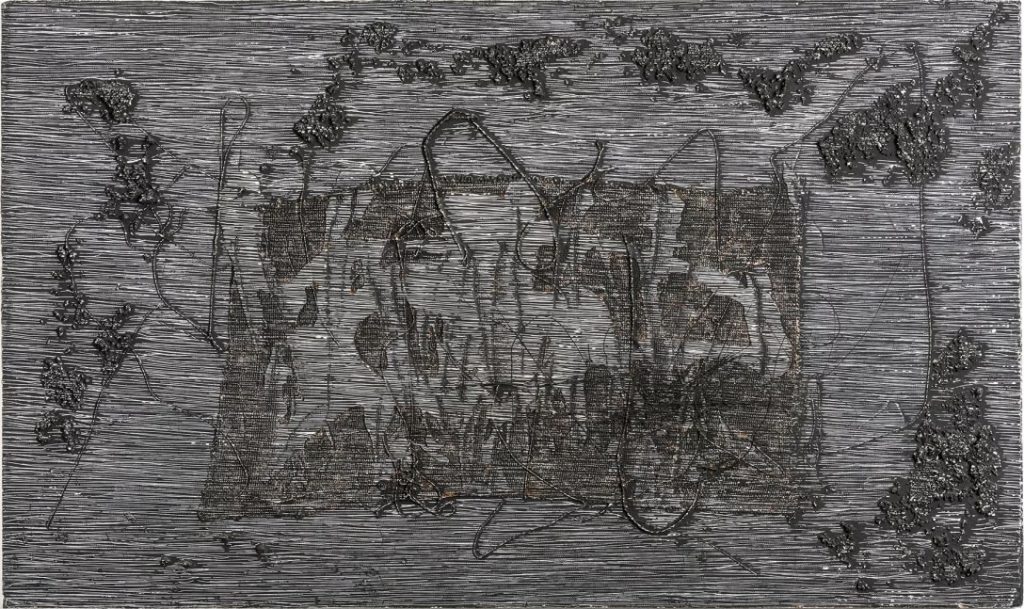
Jesús Rafael Soto (Venezuela), Barroco negro (Black Baroque), 1961.
Dear friends,
Greetings from the desk of Tricontinental: Institute for Social Research.
On 24 June 2026, a set of back-to-back earthquakes rocked Venezuela, just months after the United States bombed the capital city and kidnapped President Nicolás Maduro and National Assembly member Cilia Flores. The year has been unkind to Venezuela, whose people have been under attack by the United States since the start of the Bolivarian Revolution. This week’s newsletter carries our latest red alert, ‘Truth Amid the Rubble’, published in collaboration with the International Peoples’ Assembly, ALBA Movimientos, Sociedad Patriótica, La Union Comunera, Fuerza Patriótica Alexis Vive, and Frente Francisco de Miranda. It is reproduced below with a printable version available here.
Red Alert no. 22: Truth Amid the Rubble
Natural disasters reveal more than the movement of tectonic plates: the strength of societies, the resilience of communities, and the political fault lines that shape whose suffering is seen and whose suffering is exploited. Within hours of the devastating earthquakes that struck Venezuela on 24 June 2026, social media and sections of the international press were already circulating familiar narratives. Before rescue operations could even begin in earnest, the disaster had been transformed into another battlefield in the long US-led campaign to undermine the Bolivarian process set in motion by Hugo Chávez’s election in 1998.
None of this should diminish the immense tragedy facing the Venezuelan people. Entire neighbourhoods have been devastated. Hundreds of buildings have collapsed. Hospitals, roads, bridges, and other public infrastructure are in ruins. Families continue to search for loved ones while rescue workers struggle against rain, aftershocks, and difficult road access. But solidarity requires more than sympathy. It requires truth. That is why red alert no. 22, ‘Truth Amid the Rubble’, examines some of the most common myths circulating about the earthquake and places them against the available evidence.

Mario Carreño (Cuba), Allegory of a Cuban Landscape, 1943.
Myth One: Venezuela’s government has failed to respond effectively to the earthquake.
The scale of the catastrophe must be understood before any serious judgement can be made. The death toll climbs every day as first responders and volunteers sift through the debris, with tens of thousands still missing. Nearly two hundred buildings collapsed completely, with hundreds more partially destroyed. Hospitals that would normally receive the injured were themselves damaged. A major bridge and several roads were damaged in the state of La Guaira, where the earthquake struck the hardest of the six impacted states, making it extraordinarily difficult to move rescue equipment and teams into affected areas. Continuous rainfall and nearly 800 aftershocks have further complicated rescue operations while the partial collapse of the Caracas airport has forced international rescue teams to arrive via more distant airports and then travel by road. No country has unlimited emergency capacity in the face of destruction on this scale.
Yet Venezuela entered this disaster carrying an additional burden that few countries have ever experienced at this scale: years of economic warfare through unilateral coercive measures imposed principally by the United States and its allies. These measures have frozen more than $30 billion in Venezuelan public assets that could otherwise have strengthened disaster preparedness, modernised infrastructure, and financed emergency reserves. They have severely restricted the country’s ability to purchase specialised rescue equipment, heavy machinery, medicines, replacement parts, and construction materials and driven mass migration.
The tightening of US-driven sanctions in 2017 drove emigration and led to a profound drain of workers from key public services. United Nations Special Rapporteur Alena Douhan reported that by 2021 public services had lost between 30% to 50% of their personnel, including many doctors, nurses, engineers, teachers, judges, and other skilled professionals, and many public hospitals reported that between 50% to 70% of specialist posts were vacant. This loss of personnel weakened the country’s emergency capacity: fewer trained workers, heavier workloads for those who remained, and public services less able to respond when disaster struck.
The effects of natural disasters cannot be separated from the political and economic conditions under which they occur. Yet Venezuela is not a helpless victim. Despite the devastating toll on human life, the country slowly began to recover. After a 75% contraction in GDP between 2013 and 2021, Venezuela’s GDP grew by around 9% in 2024 and again in 2025. It moved from importing more than 70% of its food supply in 2017 to producing 96% domestically by March 2026. Oil revenue, which had fallen from $93 billion in 2012 to $4.2 billion in 2020, had recovered to around $18 billion in recent years. Life was not without significant challenges, nor had the country returned to pre-crisis levels, but – despite around 1,000 unilateral coercive measures that remain in place – Venezuela’s economy, infrastructure, public services, and the quality of life of many of its people had begun to improve – including disaster response.
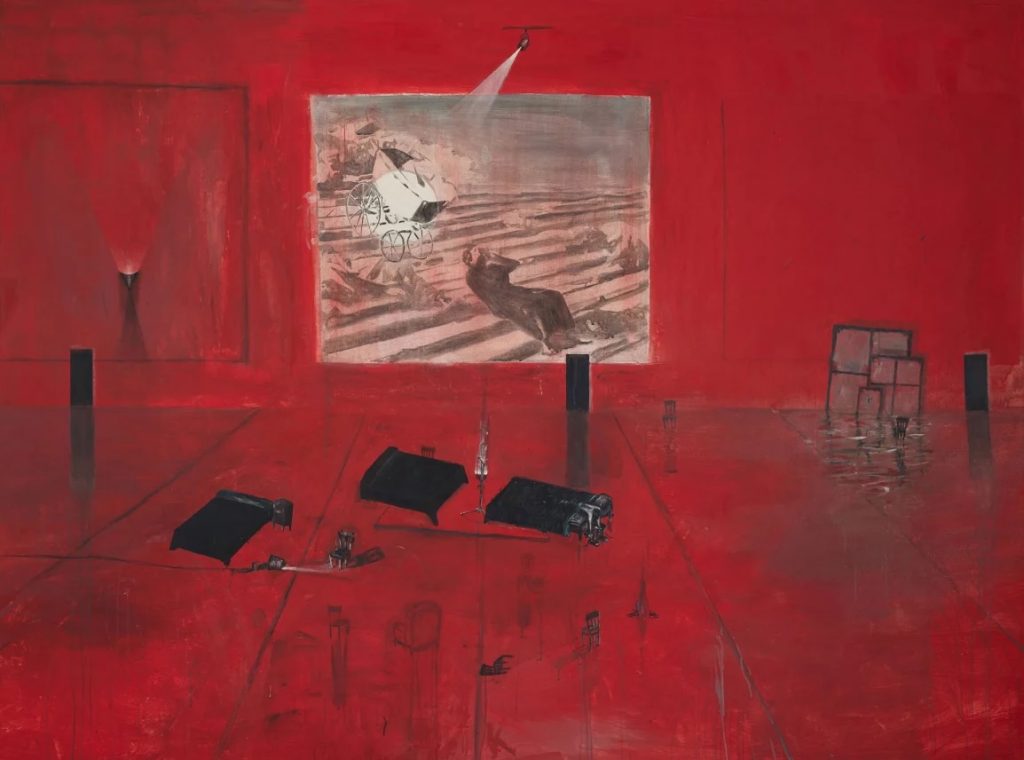
Guillermo Kuitca (Argentina), El mar dulce (The Sweet Sea), 1989.
Myth Two: The Venezuelan government is blocking humanitarian relief.
Perhaps the most widely circulated claim has been that Venezuelan authorities have deliberately prevented volunteers and aid from reaching affected communities. Yet modern search-and-rescue operations depend on careful coordination. Rescue dogs require silence to detect survivors beneath rubble. Heavy machinery needs clear access routes. Ambulances require roads free of congestion. The uncoordinated movement of thousands of civilians through disaster zones, however well intentioned, can obstruct rescue operations and cost lives.
Reports from the ground indicate that rescue vehicles were becoming trapped in civilian traffic. Journeys that normally take forty minutes took hours. Ambulances carrying critically injured victims were delayed by congested and impassable roads. Restricting access to disaster zones is, therefore, not evidence of repression but rather a standard emergency practice employed around the world.
At the same time, organised volunteer participation has been extensive from the start, with thousands formally registering after 26 June for coordinated relief efforts alongside professional emergency services, ensuring that solidarity strengthens rather than disrupts rescue operations. The question has never been whether civilians should help but whether assistance is organised in ways that save lives.
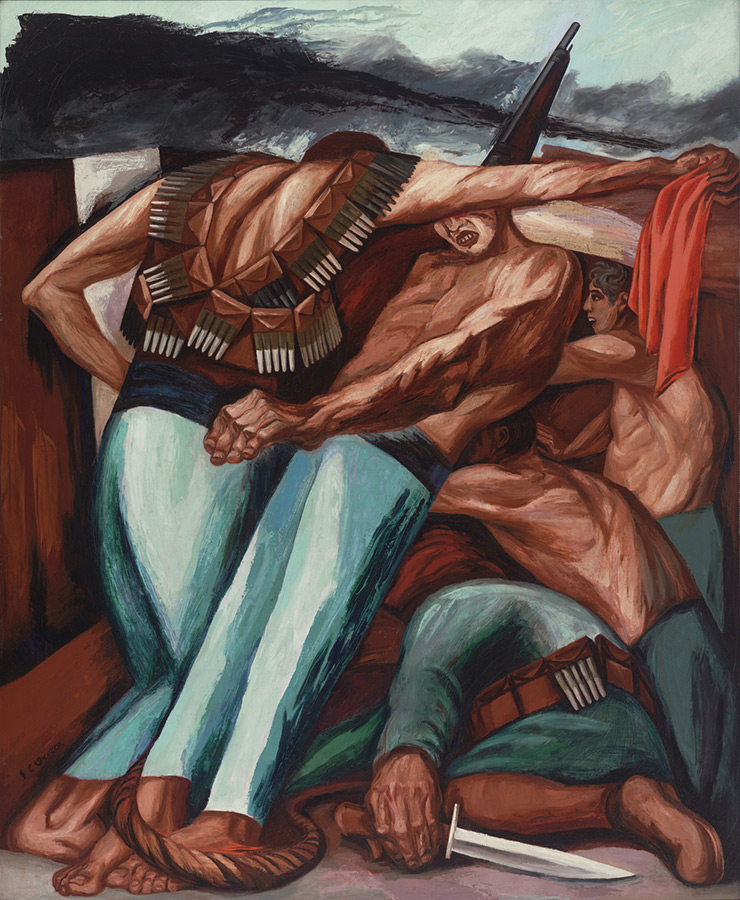
José Clemente Orozco (Mexico), Barricade, 1931.
Myth Three: Affected communities are being neglected by the Venezuelan government.
On the first day of the tragedy, joint efforts by Civil Protection, the Bolivarian National Armed Forces (FANB), police, and victims’ families and communities responded and helped rescue 2,407 people from the most affected areas in La Guaira. By 1 July, one week after the earthquake, approximately 26,000 personnel from civil protection agencies, emergency services, the police, armed forces, and other public institutions had been deployed across the disaster zone. Roughly 17,000 volunteers had formally joined relief operations. Across the affected areas, 6,461 people have been rescued. Authorities have coordinated rescue efforts with over 4,000 foreign rescue personnel and at least 41 international delegations participating in humanitarian efforts. The humanitarian response has already directly delivered nearly 9 million kilogrammes of food, around 28,000 food parcels, and 3.2 million litres of drinking water to affected areas – numbers that rise significantly every day with ongoing relief efforts and daily reports from the National Assembly. More than 80,000 families have received assistance including food, transportation, medical care, psychological support, and emergency shelter.
Medical teams have treated more than 17,000 people in hospitals, field clinics, and emergency triage centres. Electrical service has largely been restored across affected areas. Claims that homes built through Gran Misión Vivienda Venezuela – the government’s flagship housing programme, which has provided housing for 5.2 million families – were poorly constructed fell apart when those built under prior governments and by private contractors suffered similar damage. Thirteen large shelters have been opened in La Guaira, with twelve more operating across Caracas, Miranda, and other affected states and expansion efforts underway. None of these achievements erase the enormous suffering that remains. But they show that, far from standing aside, Venezuela’s public institutions and thousands of organised citizens continue the relief effort under extraordinarily difficult conditions.
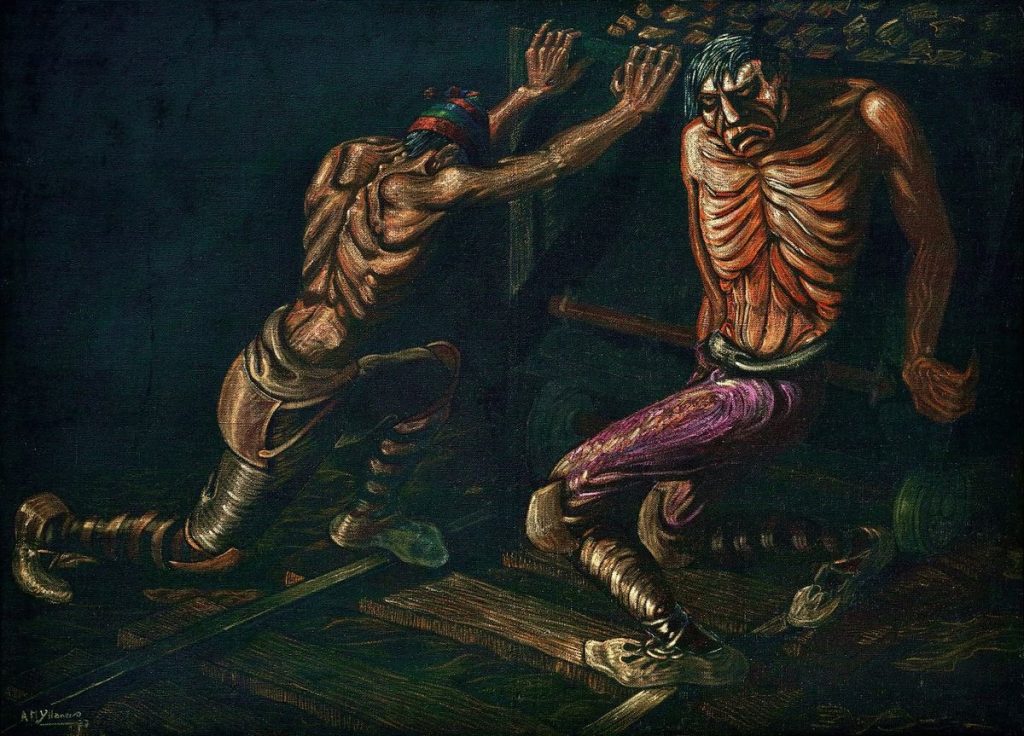
Alejandro Mario Yllanes (Bolivia), Estaño Maldito (Cursed Tin), 1937.
Myth Four: US concern for Venezuela can be separated from US hybrid warfare.
Every genuine humanitarian contribution deserves recognition, regardless of its source. But humanitarian gestures cannot be separated from the broader political reality nor from the historical record. The United States continues to impose sanctions that have systematically weakened Venezuela’s economy, restricted its access to international finance, blocked imports of critical goods, and frozen billions of dollars belonging to the Venezuelan people. One cannot simultaneously praise humanitarian assistance while maintaining policies that make humanitarian emergencies more severe.
Sanctions and other unilateral coercive measures are often politically effective precisely because they are invisible. Unlike bombs, they rarely produce dramatic images. Instead, they slowly erode public health systems, infrastructure, productive capacity, and state institutions over many years. When disaster eventually strikes, weakened institutions are then presented as evidence of governmental incompetence rather than the cumulative effect of deliberate economic warfare. The human cost of this economic warfare has been devastating, with US sanctions causing more than 40,000 deaths between 2017 and 2018 and placing 300,000 people at risk of the same fate because they lacked access to essential medicines or treatment.
Approximately 31 tonnes of Venezuelan gold – valued at about $1.95 billion in 2020 – remain held at the Bank of England after the United Kingdom aligned itself with Washington’s pressure campaign against Venezuela. The country also faces a reported debt burden of around $240 billion, including defaulted sovereign and PDVSA bonds, accrued interest, unpaid invoices, arbitration awards, and bilateral loans. Though the financial sanctions imposed in 2017 did not create this entire debt burden, they cut Venezuela off from US financial markets and severely constrained its capacity to service and restructure its obligations. The continued withholding of assets and the debt overhang hinder the country’s efforts to rebuild infrastructure, provide housing, and care for survivors with dignity.
The most meaningful humanitarian gesture today would not be another statement of concern. It would be the immediate lifting of all unilateral coercive measures and release of Venezuela’s frozen sovereign assets for reconstruction.
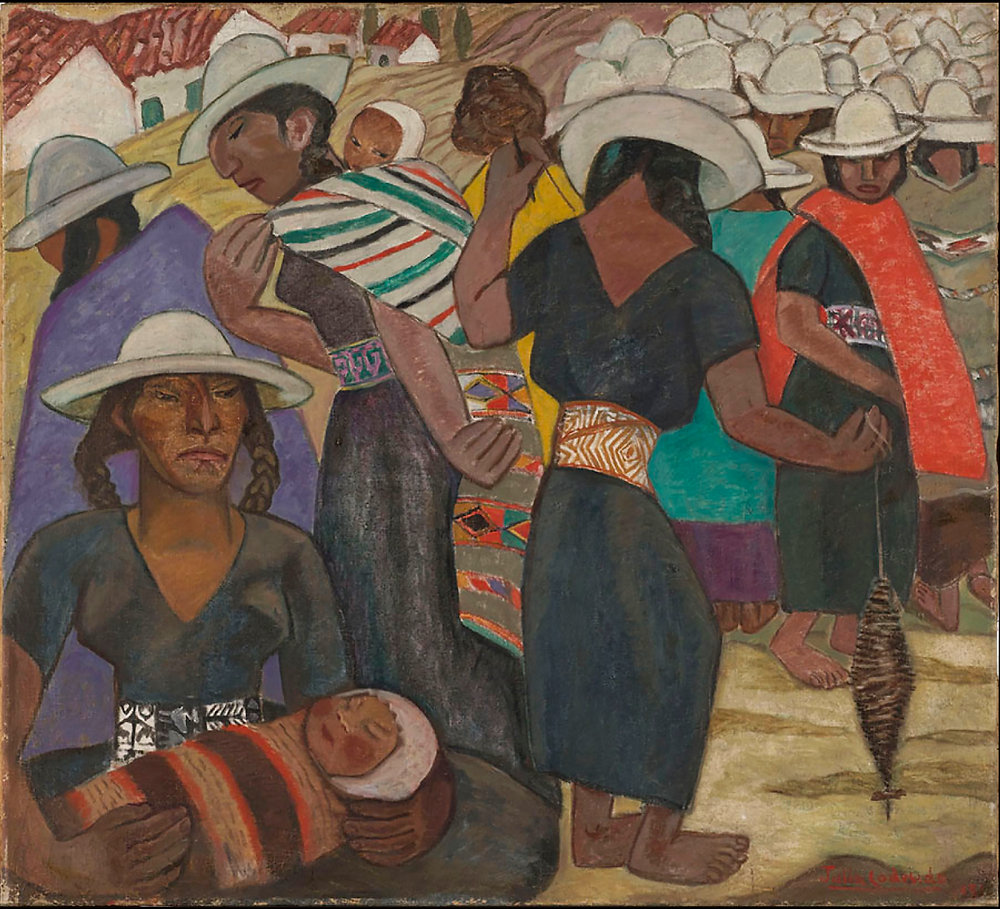
Julia Codesido (Peru), Indias Huancas (Huanca Indigenous Women), 1931.
Myth Five: The earthquake proves that the Bolivarian process has failed.
The disaster has revealed the capacity of an organised society capable of collective action under extraordinary pressure. Communes, neighbourhood organisations, public health networks, food distribution systems, volunteer brigades, and local institutions built over decades have become indispensable to the emergency response. Across the country, organised communities have mobilised food, shelter, transport, medical care, and volunteers through structures that long predate the earthquake.
No society can eliminate the suffering produced by a disaster of this magnitude. But societies with organised communities are generally better able to withstand and respond to such crises than those that rely exclusively on markets and private initiative. This resilience did not emerge spontaneously. It rests upon decades of investment in public education, literacy, healthcare, and community organisation. Since the beginning of the Bolivarian process, millions of Venezuelans have gained access to education, illiteracy was eradicated, new public universities have expanded higher education, and public investment in healthcare has increased dramatically. Despite the damage inflicted by US-led hybrid warfare, these advances have strengthened not only social indicators but also the forms of collective organisation that become indispensable in moments of national emergency.
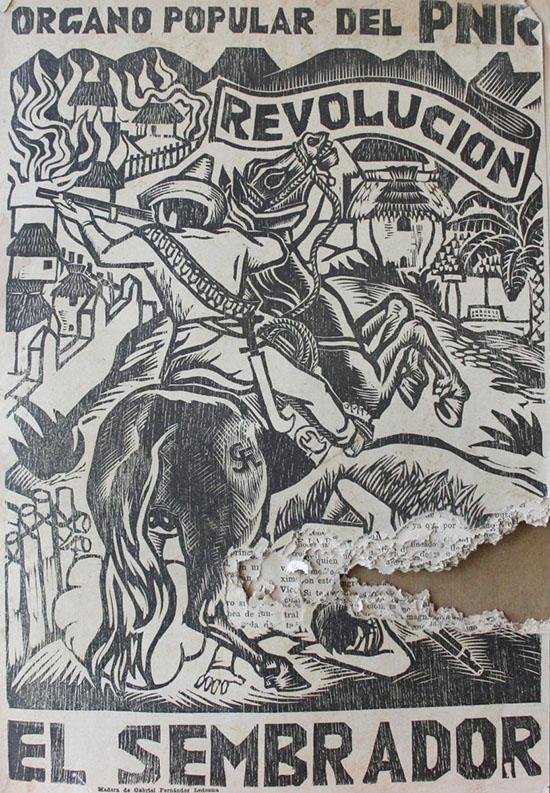
Gabriel Fernández Ledesma (Mexico), Portada de El sembrador (Cover for El Sembrador), 1930.
For the Venezuelan people, the following measures must be undertaken:
- All unilateral coercive measures, including economic sanctions, imposed on Venezuela must be lifted immediately, and Venezuelan public assets that remain frozen, withheld, or otherwise inaccessible abroad must be released.
- Foreign intervention of all forms must be ended.
- Venezuela’s foreign debt must be cancelled.
- Humanitarian assistance must be coordinated with Venezuela’s public institutions and organised communities rather than used as an instrument of political or military intervention.
- International movements must continue to support the Venezuelan people long after international media attention inevitably shifts elsewhere.
Natural disasters cannot be prevented. But whether they become humanitarian catastrophes is shaped by political choices. The Venezuelan people now confront the immense challenge of rebuilding homes, schools, hospitals, and communities while bearing the consequences of decades of economic warfare. International solidarity must therefore mean more than sympathy: it must reject the myths pushed by Venezuela’s enemies, demand an end to the sanctions and asset restrictions that have weakened Venezuela’s capacity to respond, and defend the country’s right to recover, rebuild, and determine its own future free from external coercion.
Warmly,
Vijay