The World Needs a Living Left: The Twenty-Fourth Newsletter (2026)
As a declining imperialist system lashes out to preserve its declining order, working-class organisation becomes not only necessary for the oppressed of the world but indispensable to human survival.
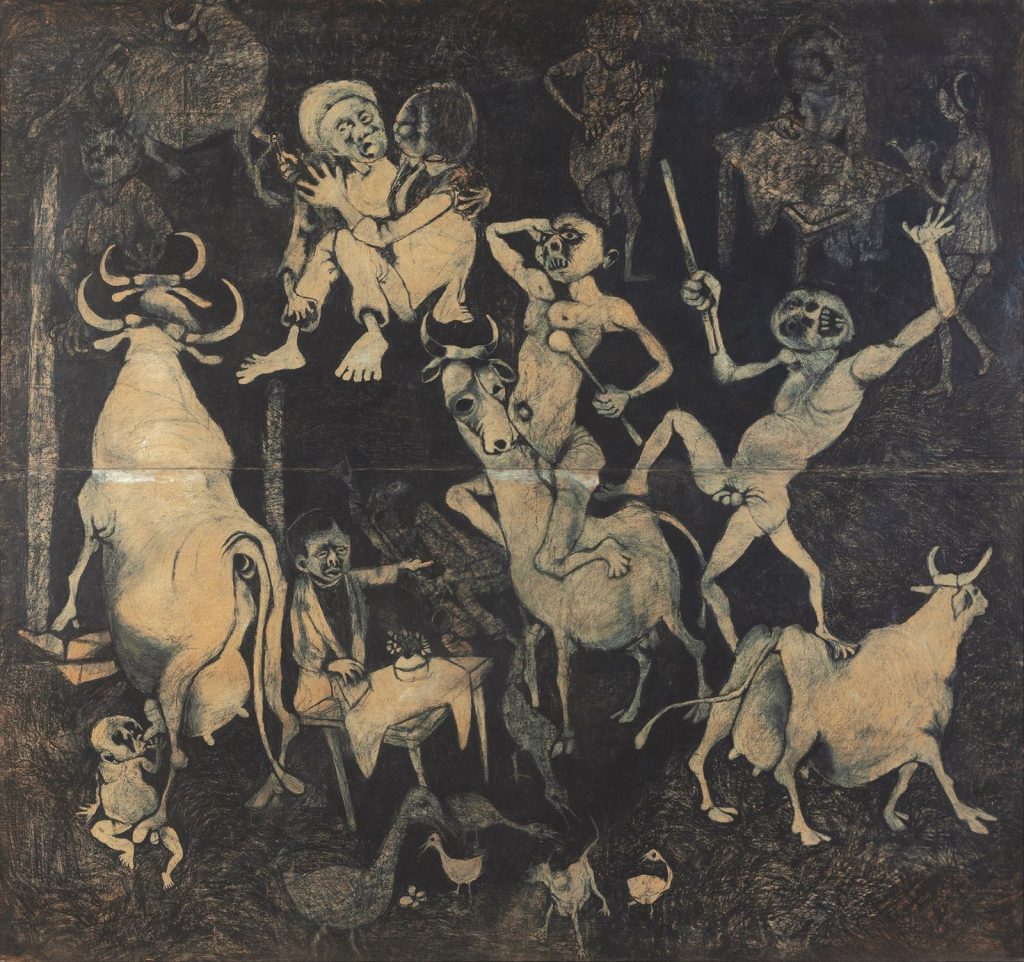
Dumile Feni (South Africa), African Guernica, 1967.
Dear friends,
Greetings from the desk of Tricontinental: Institute for Social Research.
From 29 to 31 May, forces of the South African left gathered in Johannesburg, South Africa, for the Conference of the Left. It is important to understand the context for this meeting. More than thirty years after the end of formal apartheid, South Africa’s people still struggle to meet their basic needs, with unemployment at 32.7% officially and 43.7% when discouraged workers – those available for work but no longer looking – are included. Meanwhile, the country’s riches are extracted by multinational corporations. The failure to address these imbalances in the creation and distribution of wealth has led to the fragmentation of the African National Congress (ANC), once the principal vehicle of the national liberation struggle, and its deterioration into a party of the wealthy. At the same time, the forces of the left are demoralised while the right, including the old apartheid oligarchy, runs rampant.
It is at this moment that the South African Communist Party (SACP) and the conference steering committee brought together a range of political forces, many of them formations that broke away from the ANC, to debate pressing questions of strategy for South Africa and other countries facing similar crises.
During a plenary on the present conjuncture, I spoke on behalf of our institute. The reflections that follow are drawn from that presentation.
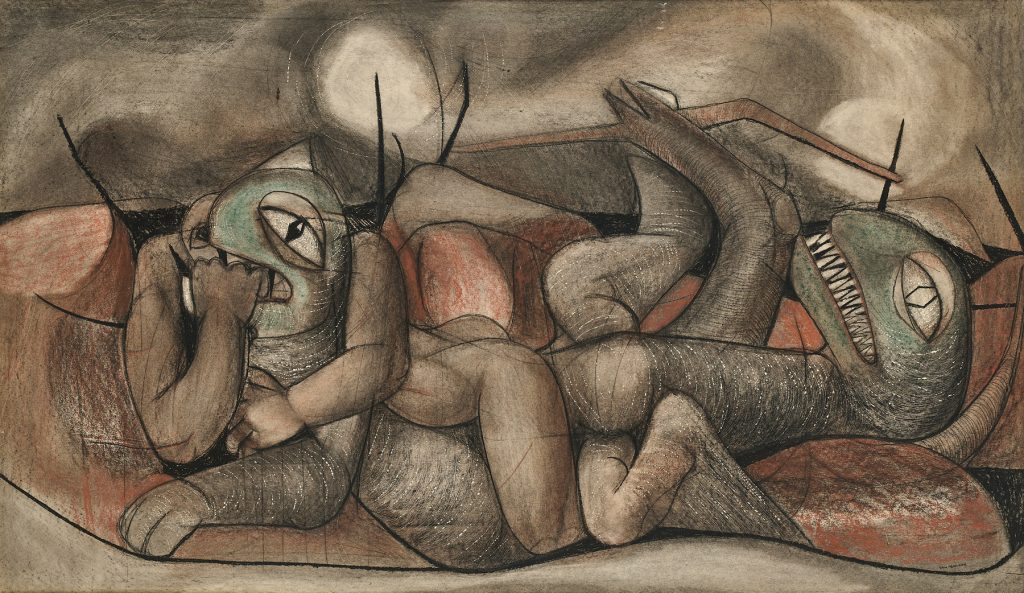
Louis Maqhubela (South Africa), St. George and the Dragon, 1965.
When we fight, we win. If we are too scared to fail, we will do nothing.
Today, 30 May, is the fifty-sixth anniversary of the formation of the Centre of Indian Trade Unions (CITU), a federation that represents over seven million workers. On 12 February 2026, CITU joined other central trade unions and farmers’ organisations in a general strike against the new labour codes, which weaken workers’ rights to collective bargaining, promote contractualisation, and open the door to longer working hours. An estimated 300 million workers, farmers, and other sections of the working class took part in strike actions and mass mobilisations across the country. India’s workers continue to fight under difficult conditions, following in the footsteps of the historic farmers’ revolt of 2020–2021, when hundreds of thousands of farmers sustained a year-long protest movement that drew support from hundreds of millions of workers and peasants across the country and forced the government to withdraw its anti-farmer laws.
When we fight, we win, and even when we do not immediately achieve our goals, we gain confidence and experience for the next fight.
We stand on the shoulders of more than a century of organised working-class, peasant, and national liberation struggles. These struggles found expression in the Paris Commune (1871), the October Revolution (1917), the Vietnamese Revolution (1945), the Chinese Revolution (1949), the Cuban Revolution (1959), and a range of anti-colonial victories, including the remarkable and little understood events under way in the Sahel. A discussion of the left need not begin in despair. The working class and the peasantry must be proud of their key role in these struggles and in the attempt to go beyond capitalism and shape a socialist society.
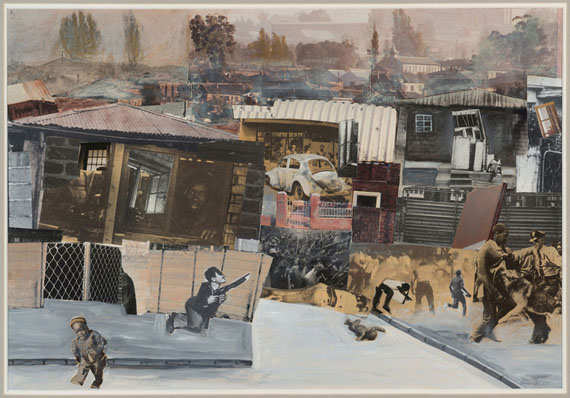
Sam Nhlengethwa (South Africa), Very Ugly, 1992.
Since the financial crisis of 2008, the world economy has experienced slow growth, high debt, declining productive investment, and deep social inequality. The most dramatic declines have been in the economies of the North Atlantic, which continue to suffer what we call the Third Great Depression. The United States and its allies have failed to resolve these economic problems or offer a credible social project. As their control over finance, technology, and natural resources has weakened, decadent and dangerous elites have sharpened their control over information and escalated warfare to sustain their global order. This is the phase of hyper-imperialism. The evidence of these hyper-imperialist attacks is clear: China, Cuba, Iran, Lebanon, Palestine, Venezuela, and Yemen are all targets. These dynamics are intensified by the New Cold War, in which the United States seeks to contain the rise of China in particular and the shift of the centre of gravity to Asia in general.
These developments make it clear that the central contradiction of our era lies between a declining imperialist system attempting to preserve its dominance and the aspirations of peoples and nations seeking sovereignty, development, and social justice.
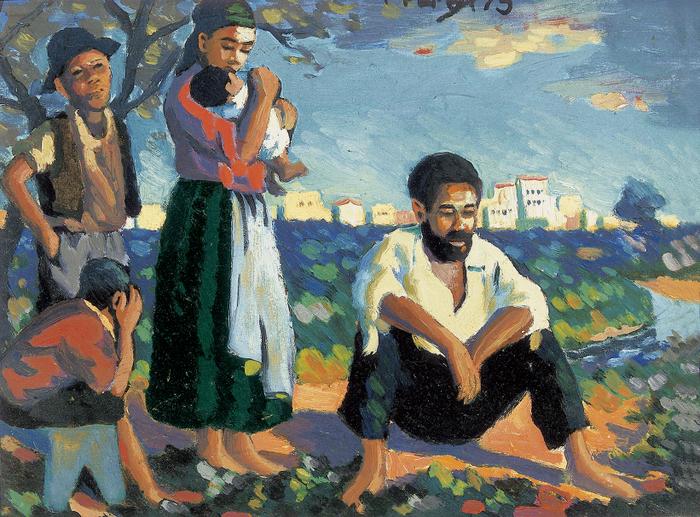
George Pemba (South Africa), Homeless, 1973.
However, the weakening of imperialist power does not automatically produce liberation. History offers no automatic transitions or victories. The fragmentation of the old order creates openings but also dangers: inter-capitalist rivalry, regional wars, toxic political ideologies, and intensified extraction of wealth from the Global South to the Global North. That is why the decisive question before humanity is organisation. Can the working classes and oppressed peoples build sufficient organised power to intervene independently in this crisis? This is the central challenge of our era. Here, we must speak honestly about the crisis of the left itself. In many countries, communist and workers’ movements suffered historic defeats during the neoliberal offensive of the late twentieth century. Trade unions weakened. Political education declined. Electoralism replaced mass mobilisation. NGOs displaced popular structures.
Over the past forty years, the historical national liberation parties (such as the Indian National Congress and the ANC) and the social democratic parties have exhausted their missions – they no longer hold fast to the basic requirements of social welfare. These parties no longer have any faith in redistribution and have embraced the austerity framework of the International Monetary Fund as their own. This kind of brain capture has devastated the policy landscape, allowing governments to disregard the immediate needs of their people while supporting the needs of the wealthy, including the bondholders. The collapse of social democracy has meant that the left has had to expand its historical mission of fighting for revolutionary transformation to include fighting for the immediate needs of the people. Despite its limited resources, it is the left that has been at the forefront of the fight to secure social welfare, food, water, and healthcare for increasingly desperate populations.
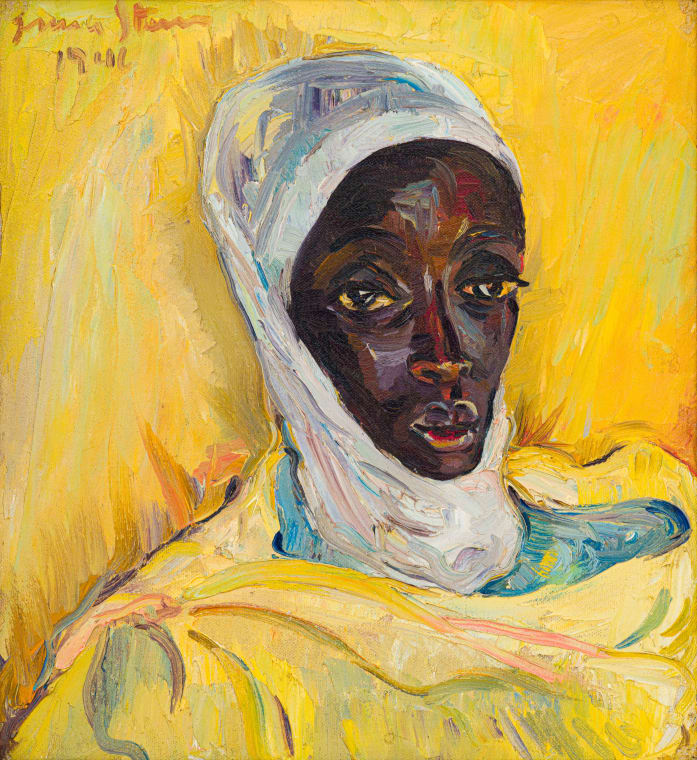
Irma Stern (South Africa), Watussi Chief’s Wife in Yellow, 1946.
The future will not be decided by the calculations of elites or the benevolence of institutions. It will be decided by organisation. The ruling classes are organised globally through corporations, banks, media systems, and military alliances. The peoples of the world must organise with equal seriousness. This requires patience, ideological clarity, and confidence in socialist politics, not as nostalgia but as necessity. Unity is essential. A living left will always contain different traditions and debates, but we must recognise the principal contradiction between labour and capital, between the vast majority who produce social wealth and the tiny minority who appropriate it. As the general secretary of the SACP, Solly Mapaila, said, ‘We are not enemies despite our differences’. When the left is fragmented, reactionary forces exploit despair. But when progressive movements act together through political education, mass mobilisation, and concrete struggle, workers begin to recognise their own collective power.
That is why rebuilding working-class power is the strategic task before us. This involves not merely electoral alliances or backroom negotiations among elites but rooted organisation among workers, the unemployed, women, students, informal workers, peasants, and communities. The left must recover traditions of political education, democratic mass organisation, collective discipline, and internationalism. The latter is not charity between nations but the recognition that the working classes of the world confront a common enemy in the system of capital accumulation and imperial domination.
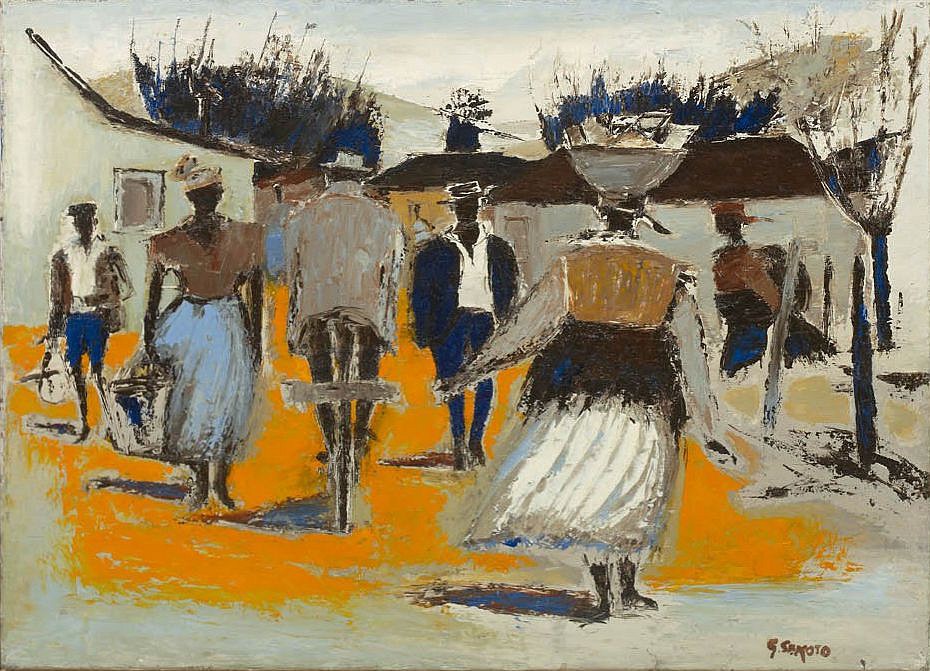
Gerard Sekoto (South Africa), Township Street, 1958.
Socialism is no longer merely an aspiration. It is a condition for human survival. But socialism will not arrive spontaneously. It must be built through struggle, through institutions of popular power, and through organised movements rooted in the daily life of the people. We have examples of such construction in the cooperatives built by the left in Kerala, the settlements of the Landless Workers’ Movement in Brazil, and the Red Caravans of the SACP. These projects are the ‘not yet’: fragments of a future that has not yet arrived in full but is already being built in the present. These experiments are what Karl Marx called ‘possible communism’.
That is why gatherings such as this matter. They cannot solve every strategic question immediately, but they represent efforts to reconstruct collective political capacity after decades of fragmentation. The road ahead will be difficult. But history remains open. Imperialism is powerful, but it is not invincible. Capitalism is violent, but it is not eternal. The working classes and oppressed peoples remain the makers of history. Our task is to help organise that historical force consciously, internationally, and with revolutionary patience.
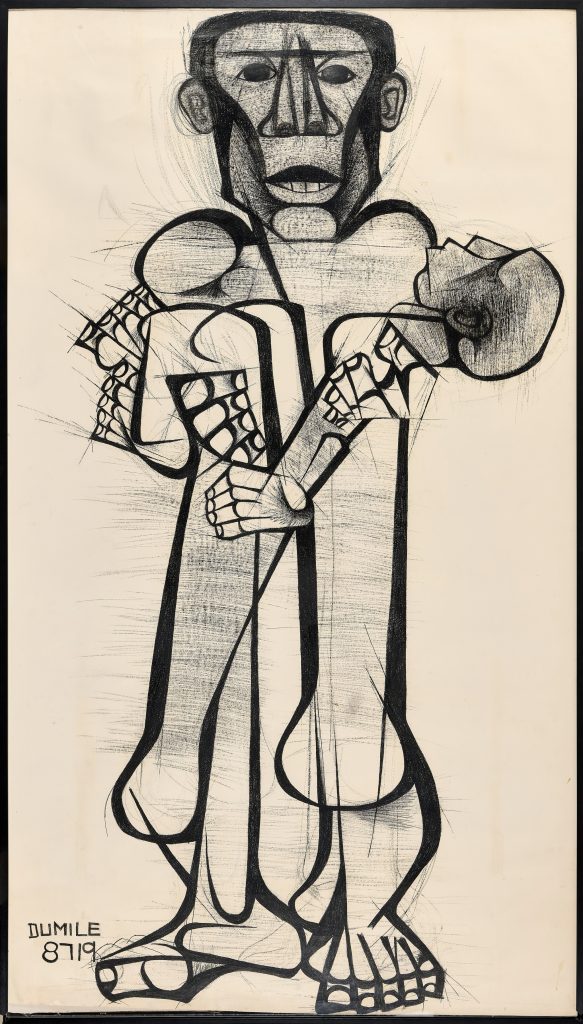
Dumile Feni (South Africa), Hector Pieterson, 1987.
Our meeting took place not far from Soweto, where fifty years ago, on the morning of 16 June 1976, Black students began a protest against the indignity of being denied the right to learn in their own languages and forced to study in Afrikaans. As thousands of young students marched, the police opened fire, killing at least 176 and wounding more than 1,000. Twelve-year-old Hector Pieterson was one of the first students to be shot. Photographer Sam Nzima captured the image of student Mbuyisa Makhubo carrying a dying Hector, with Hector’s sister Antoinette running beside them. The now iconic photograph inspired Dumile Feni’s 1987 painting, shown above. The gunfire did not cease.
Just a little atrocity, deep in the city
Soweto blues
Soweto blues
These were the words Miriam Makeba, the South African singer and anti-apartheid activist, sang in ‘Soweto Blues’, the powerful song written by Hugh Masekela after the massacre. Fifty years after Soweto, the children of South Africa still need a living left – and so do the rest of us.
Warmly,
Vijay