Modernisation Does Not Mean Capitalism: The Thirty-Eighth Newsletter (2026)
For the Global South, development cannot be achieved by imitating the capitalist West; it requires breaking imperialist dependency through the defence of sovereignty, socialist planning, and the transformation of social relations.
Tricontinental: Institute for Social Research, Steps 1–3, 2026. Featured in dossier no. 104, Walking on Two Legs: The Socialism of Chinese Modernisation, September 2026.
Dear friends,
Greetings from the desk of Tricontinental: Institute for Social Research.
In 1960, the US economist Walt Whitman Rostow published The Stages of Economic Growth: A Non-Communist Manifesto. The subtitle revealed the book’s purpose. Rostow did not merely describe economic development; he offered an ideological weapon for the Cold War. All societies, he argued, travelled along the same road, beginning in ‘traditional society’, passing through the ‘preconditions for take-off’, ‘take-off’, the ‘drive to maturity’, and eventually arriving at the ‘age of high mass consumption’. At the end of this road stood the United States itself: its social, cultural, and political institutions appeared as the model for the rest of the world. In Rostow’s story, to develop was to imitate the consumption patterns and institutional forms of the imperialist West; to modernise was to become capitalist.
Rostow’s theory, and especially that of the Saint Lucian economist Arthur Lewis, placed ‘tradition’ in opposition to ‘modernity’. The old world had to be cleared away so that the new could appear. Colonialism disappeared from this account, as did slavery, plunder, unequal exchange, and the organised transfer of wealth from Asia, Africa, and Latin America to Europe and North America. Countries impoverished by imperialism were told that their poverty resulted from their own backward cultures. They did not need sovereignty or social revolution; what they needed, they were told, was foreign capital, Western experts, and patience.
Tricontinental: Institute for Social Research, Walking on Two Legs, 2026. Cover art for dossier no. 104, Walking on Two Legs: The Socialism of Chinese Modernisation, September 2026.
In a previous newsletter on our radical traditions, we discussed the richness of the debate around cultural inheritances within radical politics. In China, however, the principal problem was not tradition per se but humiliation. From the First Opium War (1839–1842) until the victory of the Chinese Revolution (1949), China endured what is remembered as the ‘century of humiliation’: opium forced upon its people, unequal treaties imposed on its governments, territory seized by foreign powers, ports subordinated to imperial monopolies, and the country torn apart by warlords, occupation, and civil war. Capitalism entered China not with Adam Smith’s The Wealth of Nations (1776) in hand, but with gunboats and narcotics. The forces of capitalism neither unified the country nor liberated its productive capacities. Instead, capitalist imperialism shattered Chinese society and strengthened landlords, compradors, and intermediaries of foreign capital.
For the Chinese people, modernisation did not mean the wholesale repudiation of their civilisation or entry into the waiting room of the West. To modernise meant to end humiliation, to recover sovereignty, to unify the country, to defeat hunger and illiteracy, and to create the material capacity to prevent the return of the gunboats. By this logic, Chinese modernisation could only begin with national liberation and could only advance through socialism.
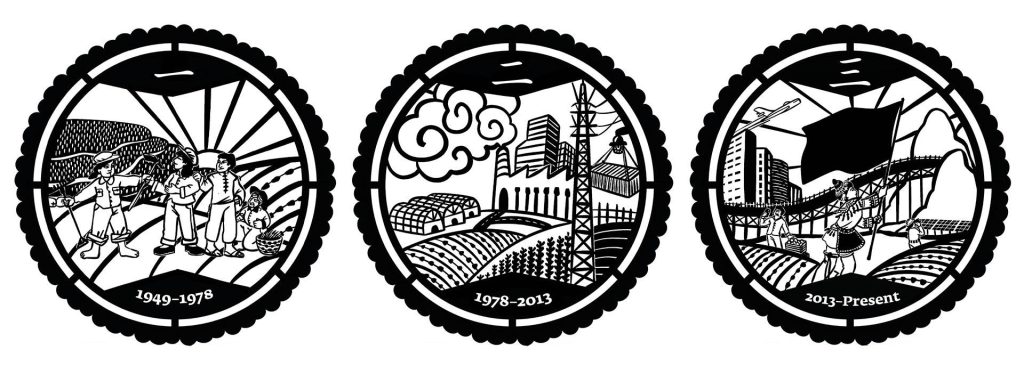
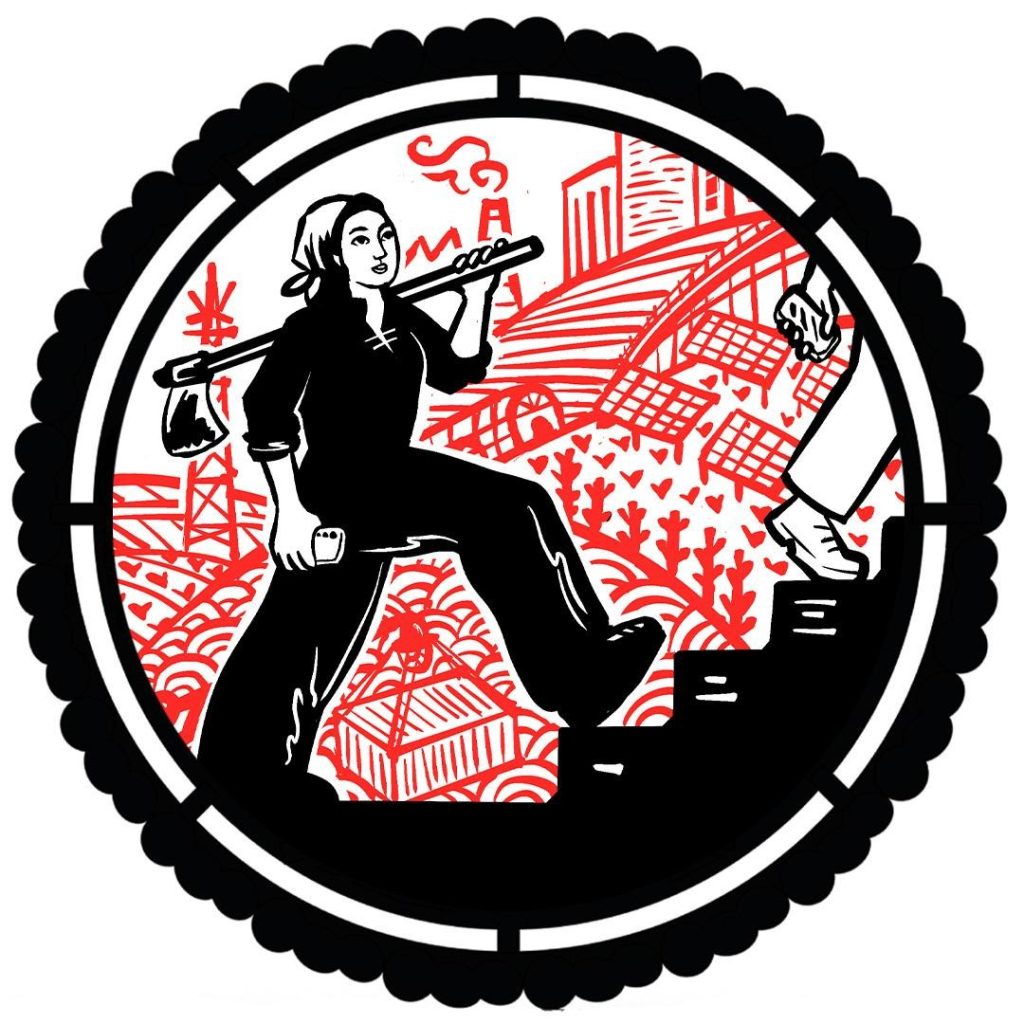
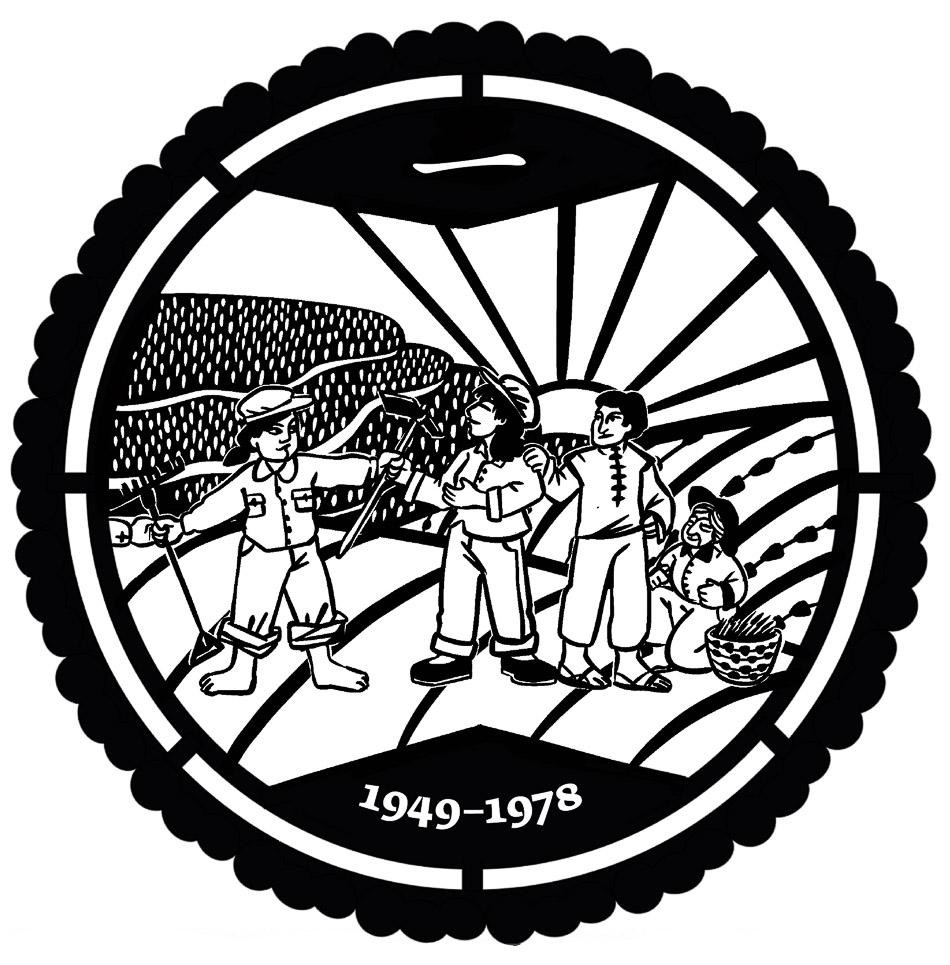
Our latest dossier, Walking on Two Legs: The Socialism of Chinese Modernisation, draws attention to the two inseparable tasks taken up by the Chinese Revolution: the transformation of social relations and the development of the productive forces. A poor country could not abolish deprivation merely by distributing it more equally – it required modern industry, science, technology, and infrastructure. But given the trap of the neocolonial system, how was China expected to accomplish this project? Could it do so without addressing fundamental questions of ownership and social emancipation? In our dossier, we divide modern Chinese history into three phases: 1949 to 1978, 1978 to 2013, and 2013 to the present.
Tricontinental: Institute for Social Research, Step 1, 2026. Featured in dossier no. 104, Walking on Two Legs: The Socialism of Chinese Modernisation, September 2026.
In 1949, China was among the poorest countries in the world: life expectancy was around thirty-five years, literacy was below twenty percent, industrial capacity was extremely limited, and the countryside remained dominated by feudal relations. The revolution’s first steps were therefore both social and material. By 1953, land reform had redistributed nearly forty-seven million hectares to approximately 300 million landless and land-poor peasants. The landlord order was broken, but something more profound also occurred. The peasants experienced fanshen (翻身) – literally, ‘to turn over’ or ‘turn the body’, but in the language of the revolution, to throw off servitude and stand upright as active participants in national development. Modernisation began not with a shopping mall but with land, dignity, and the end of servitude.
Mass literacy campaigns, public health systems, rural reading rooms, and the barefoot-doctor programme transformed society. By 1959, literacy had risen to fifty-seven percent; by 1978, life expectancy had climbed above sixty-three years. Meanwhile, socialist planning built the foundations of an integrated industrial economy: steel plants, power stations, automobile and tractor factories, railways, and bridges. These achievements were made under blockade, sanctions, and the constant threat of war. Sovereignty had acquired a material foundation, but it was still shaky.
Tricontinental: Institute for Social Research, Step 2, 2026. Featured in dossier no. 104, Walking on Two Legs: The Socialism of Chinese Modernisation, September 2026.
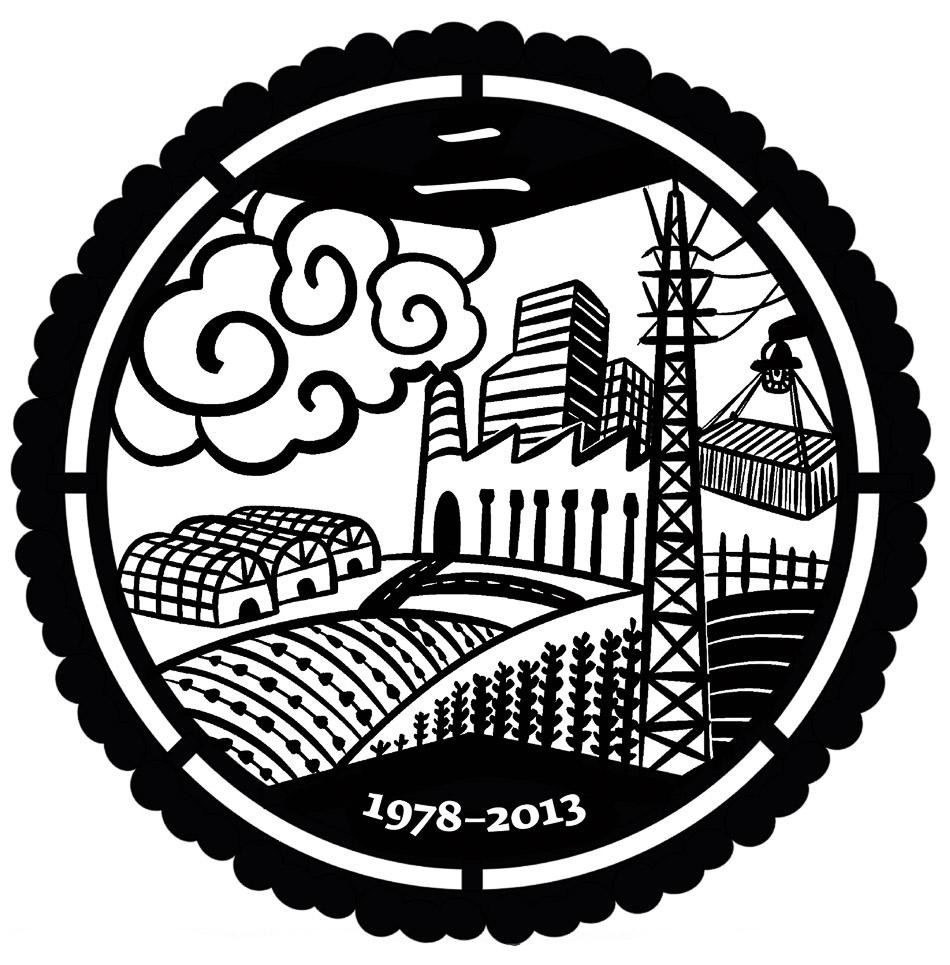
After 1978, the policy of reform and opening up changed tactics without abandoning the historical direction. Deng Xiaoping’s statement that ‘poverty is not socialism’ captured the essence of the problem. China used markets and foreign capital under state guidance to develop its productive forces, but it did not surrender the commanding heights of the economy. Public control over banking, energy, telecommunications, and transport allowed the state to guide investment and prevent the private sector from dictating society. The market was used as an instrument, not an end in itself.
This second period produced immense social wealth and lifted more than 765 million people out of poverty between 1978 and 2019. Yet it also produced serious contradictions: inequality, corruption, regional imbalances, pressure on workers, and ecological devastation. To recognise these contradictions is not to dismiss the reform period, just as recognising its achievements does not require concealing its costs. Socialist construction is not a straight line laid down in advance but a process of struggle in which new capacities generate new contradictions that must then be resolved.
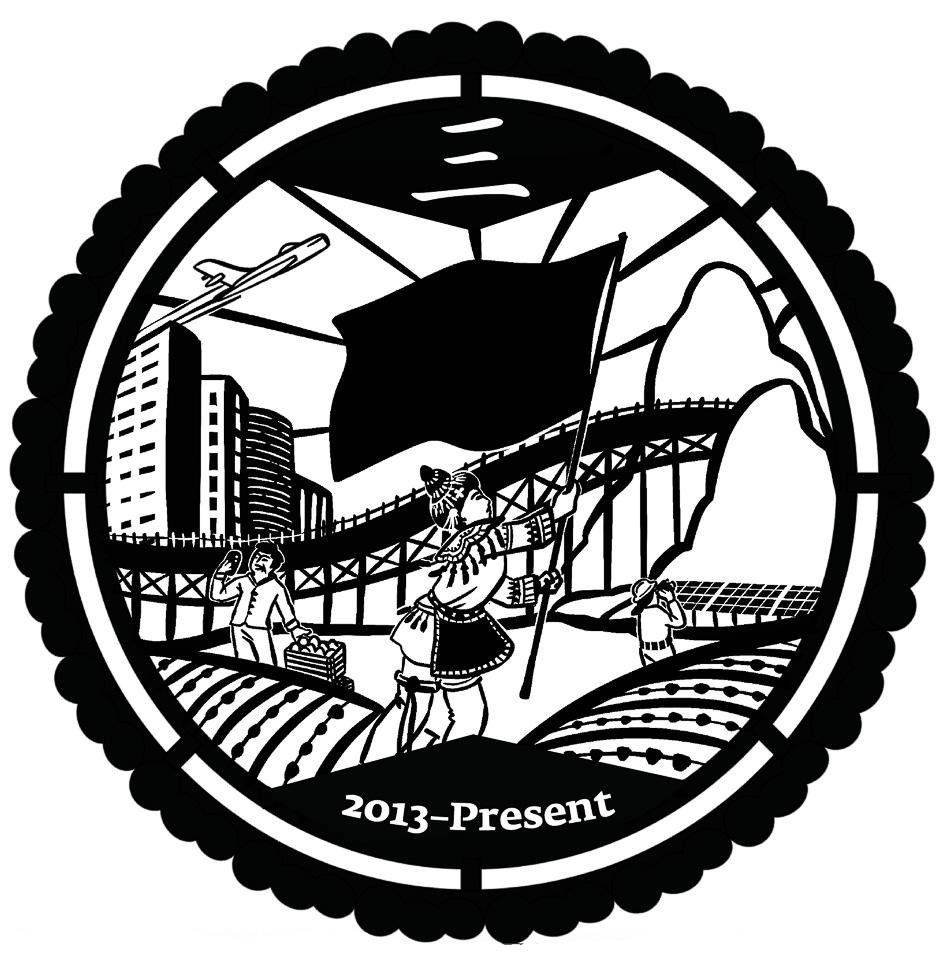
Tricontinental: Institute for Social Research, Step 3, 2026. Featured in dossier no. 104, Walking on Two Legs: The Socialism of Chinese Modernisation, September 2026.
Since 2013, China has entered a third stage, organised around three concepts: common prosperity, ecological civilisation, and high-quality development. The Targeted Poverty Alleviation campaign mobilised more than three million cadres of the Communist Party of China (CPC) to reach the remaining pockets of extreme poverty, guaranteeing a minimum income, adequate food and clothing, education, healthcare, safe housing, drinking water, electricity, and transport. Rather than wait for wealth to trickle down, the party went household by household to identify deprivation and overcome it. At the same time, the party moved against concentrations of private power, tightened regulation of tech corporations, restricted the private tutoring industry, and acted against property speculation under the principle that ‘houses are for living in, not for speculation’. China has directed credit away from speculative activity and towards strategic industry, public infrastructure, and technological development. These are not minor administrative adjustments; they concern the fundamental socialist question: whether capital governs society or society governs capital.
Chinese President Xi Jinping has described Chinese modernisation as ‘socialist modernisation pursued under the leadership of the Communist Party of China’. The concept of socialist modernisation is not hostile to tradition but allows China to draw upon its civilisational inheritance without submitting to either feudal hierarchy or Western cultural domination. Tradition is neither a museum piece nor an obstacle to be overcome; it is critically inherited and brought into dialogue with scientific reason and socialist ethics.
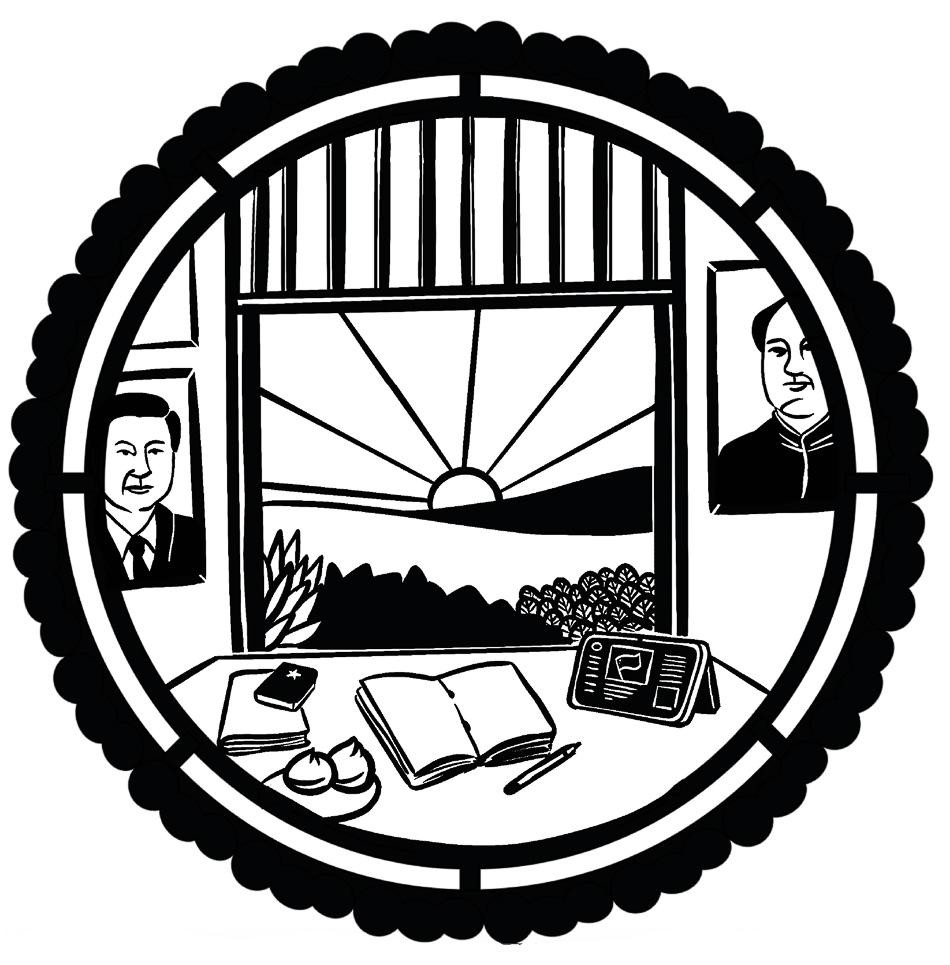
Tricontinental: Institute for Social Research, The Road Ahead, 2026. Featured in dossier no. 104, Walking on Two Legs: The Socialism of Chinese Modernisation, September 2026.
China’s memory of humiliation is sometimes treated in the West as a psychological grievance manipulated by the state. But humiliation is not merely a feeling. It refers to a material condition: the loss of sovereignty, the seizure of resources, the denial of technological development, and the subordination of a people’s future to foreign power. Today’s semiconductor restrictions, sanctions, trade barriers, and military encirclement remind the Chinese people that the old imperial desire to arrest their development has not disappeared. Technological self-reliance is therefore not narrow nationalism but the contemporary form taken by the defence of sovereignty.
China’s road cannot simply be copied by other countries. It arose from a revolution rooted in the worker-peasant alliance and from a party capable of planning across generations. But its history poses an urgent question to the Global South: can there be modernisation without sovereignty? Countries burdened by external debt, dependent on commodity exports, and stripped of control over data, finance, technology, energy, and transport are formally independent but prevented from determining their futures. Rostow’s ladder is given to them, but there are no rungs to climb.
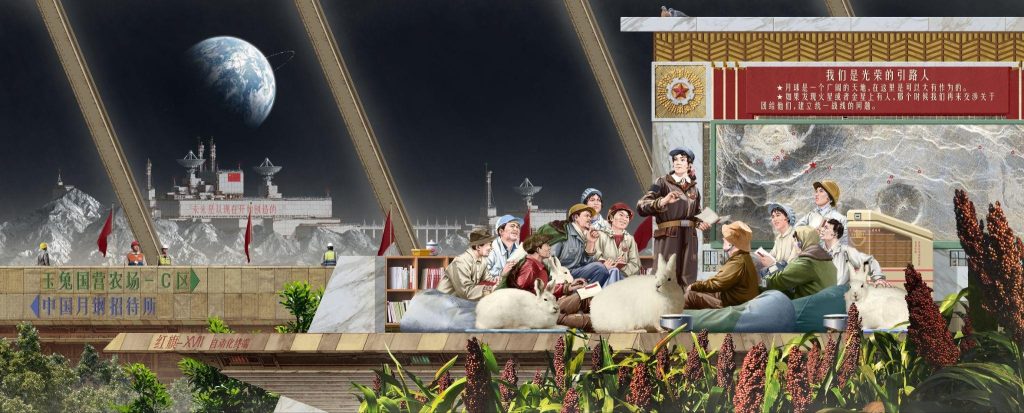
Fan Wennan, Comrade Chang’e (嫦娥同志), 2022. Cover image for Wenhua Zongheng, vol. 1, no. 2, ‘China’s Path From Extreme Poverty to Socialist Modernisation’, June 2023.
The Chinese Revolution did not seek permission to climb Rostow’s ladder; it forged its own path to development. China’s modernisation should not be measured by the volume of commodities or the number of billionaires; it should be measured by whether peasants can stand upright, whether children can read, whether people live longer and healthier lives, whether technology serves social needs, whether nature is protected, and whether a nation can face empire without bowing its head. China’s modernisation is not utopian; the resolution of each problem has generated new problems that must be faced. The truest test of Chinese modernisation has perhaps been its ability to adapt to changing times and face new challenges. We do not say that Chinese society has no problems, but that its socialist project is organised to recognise contradictions, change course, and struggle to resolve them.
China’s path of modernisation demonstrates that underdeveloped countries can forge a path distinct from the capitalist West while defending their sovereignty. The lesson is not that China can be copied, but that modernisation requires political organisation capable of turning sovereignty into planning, technological capacity, social welfare, and collective power. This is why the question of political parties matters. It is not possible to fully comprehend China’s path without analysing its party system, the structure of the CPC, and its relation to other parties, the state, and society. To follow this journey closely, please read our biannual journal, Wenhua Zongheng: A Journal of Contemporary Chinese Thought, published in association with The Global South Academic Forum (GSAF).
The 2026 edition of the GSAF conference will be held in Pudong, Shanghai, from 17 to 18 October under the theme ‘Global South Political Parties: Governance and Modernisation’. By bringing together political parties, social movements, and academic institutions from across the Global South, the forum creates a space to compare experiences of governance and modernisation and to ask how sovereignty can be translated into institutions capable of planning, development, and emancipation. At stake is whether the peoples of the Global South can define modernisation on their own terms, not as imitation but as the collective construction of a future beyond dependency.
Warmly,
Vijay