The UN Must Change to Serve the World
While five veto-holding powers decide questions of war and sanctions for all of humanity, Asia, Africa, and Latin America are left asking permission – it is time the Charter’s promise of equal sovereignty was honoured.

Ranbir Kaleka (India), Conference of Birds and Beasts, 2010.
Dear friends,
At a moment of war and genocide, when words such as Gaza and Sudan have become tragedies, it is easy to ask whether the United Nations (UN) has outlived its usefulness or can be reformed. But the better question is: reform what, and for whom?
The UN Charter (1945) promises that states must settle disputes peacefully, refrain from the threat or use of force, and cooperate on common problems. Powerful states’ violations are a reason to defend and enforce the UN Charter, not discard it. After all, every country in the world is a party to the UN Charter and therefore obliged to follow its rules.
The UN can be understood as at least three different entities.
The first, and most public, face of the UN is the Security Council, which has come to stand in as the executive of the UN body. The UN Security Council (UNSC) is made up of fifteen countries, five of them permanent members (the P5: China, France, Russia, the United Kingdom, and the United States) and the others elected by the UN General Assembly (UNGA) for two-year terms. The P5 hold veto power over the decisions of the UNSC, allowing any one of them to use their veto to scuttle a decision not to their liking. The non-permanent members are allocated on a fixed regional basis: three for African states; two each for Asia-Pacific, Latin American/Caribbean, and Western European states respectively; and one for Eastern European states. By tradition, one of the seats allocated to Asia or Africa (on a rotating basis) is held by an Arab state.
The UNSC stands in for the UNGA, whose 193 members are able to pass resolutions that try to set the tone for world opinion. However, these resolutions have often been ignored since the end of the Cold War. The relationship between the UNSC and the UNGA is fraught, with the former seeing itself as independently able to chart policy while the majority of the world’s states see the latter as the embodiment of a true democratic institution. The UNGA resolutions are unable to bind any discussion in the UNSC.
The second part of the UN is its myriad agencies, each set up to deal with the various crises of the modern age: there is the United Nations Children’s Fund (UNICEF), which advocates for the rights of children; the United Nations Educational, Scientific and Cultural Organization (UNESCO), which promotes respect for the world’s cultures, and so on. The third part comprises the UN staff and international civil servants across the globe, headed by a secretary-general.
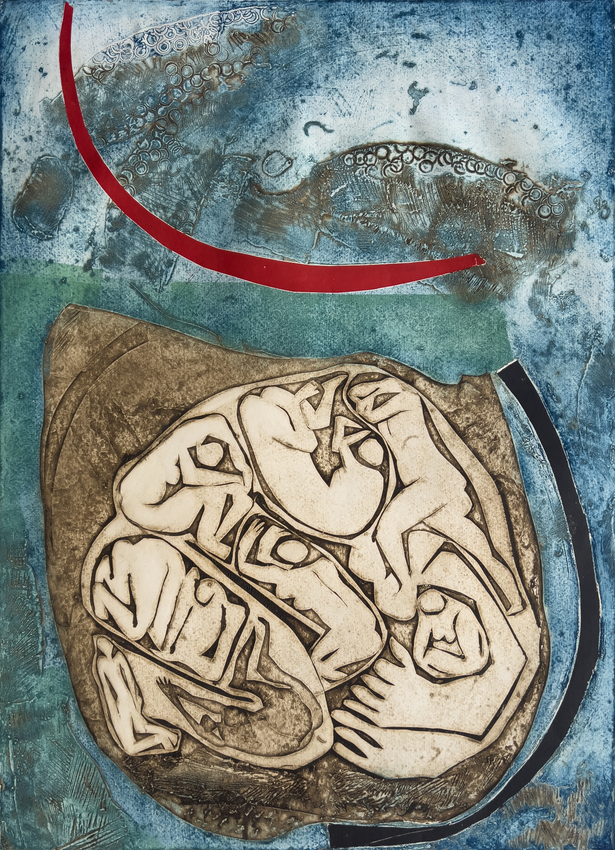
Anupam Sud (India), Composition, n.d.
The Asian Case for Reform
The UN is clearly hampered. Three of the permanent members (France, the United Kingdom, and the United States) are part of the Global North. They set the terms of the UN’s political branch due to their ideological and institutional domination of the UN’s political system. Decisions about wars, sanctions, and peacekeeping are made within a structure in which much of humanity must seek permission from powers whose position in that small club is guaranteed.
There are no permanent seats in the UNSC for Africa or Latin America, nor for India, now the world’s most populous country. But there are permanent seats for France and the United Kingdom, two former colonial powers with diminishing authority in the world.
Asia makes the case for reform vivid. The region includes enormous populations, nuclear powers, small island states, and countries living with conflict and climate danger. Yet ‘Asia’ is not one geopolitical voice, since South Asia, Southeast Asia, East Asia, and West Asia have different interests. Giving one more state – such as India – a permanent chair on the UNSC would not make those societies heard. Reform should expand long-term and elected representation and open Council deliberations to those living with the consequences of its actions. China and India are large states and can well represent Asia, but if India joins China as a permanent member of the UNSC, they should consult a future Asian Union to gauge continental opinion and not just act in national self-interest.
The opinions of the UNGA should be tested before an important matter goes to the UNSC. The large body – the parliament of the world – should be consulted before the UNSC makes its adjudication. Otherwise, the decisions totally ignore the vast majority of the world’s people, who have no access to the UNSC or to its veto power. When a majority of the UNGA votes to end Israel’s illegal occupation and colonisation of Palestine or the illegal US embargo on Cuba, the UNSC should act in accordance with that opinion or else international democracy is mocked. This should be central to any UN reform.
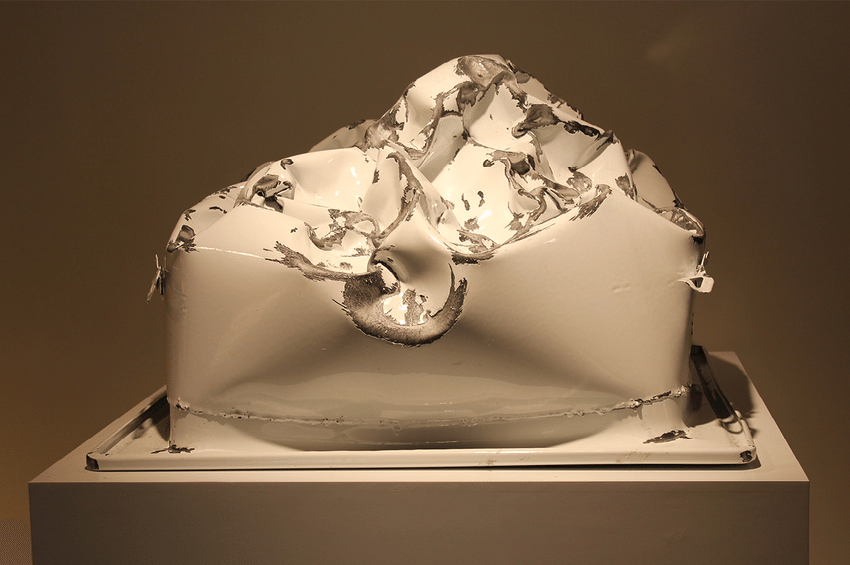
Erbossyn Meldibekov (Kazakhstan), Mountains of Revolution series, 2014.
Coalition for Reform
Every year, the United States mocks the UN by denying visas to country representatives trying to attend the UNGA sessions in New York in the opening week in September. This year, the US barred the Palestinian delegation and decided that Iran’s delegation had to be smaller. It is ridiculous that the US and UN welcomed Israel’s Prime Minister Benjamin Netanyahu – a man wanted by the International Criminal Court for war crimes and crimes against humanity – while denying visas to the victims of those crimes.
The UN should enforce its host-country agreement and develop credible arrangements for holding major meetings elsewhere when equal participation is obstructed. The UN week can be held in any number of places in the Global South, such as Nairobi, Kenya, which has already been positioned as the UN headquarters in the South, or one of the four cities in the South that host UN regional commissions – Addis Ababa, Bangkok, Beirut, or Santiago.
If Africa or Asia had the opportunity to develop an agenda for the United Nations, the continents might focus attention on more than drug trafficking and countering violent extremism – important agenda items for North America and Europe. They might focus on topics such as commerce in weapons, the exploitation of trafficked people, and fairer financial institutions.
The UN has an Arms Trade Treaty that establishes standards for weapons transfers, and it has a UN Office on Drugs and Crime that reports on trafficking of people. But these instruments need to be strengthened, and enforcement needs to be made a priority. A UN mechanism could track transfers to parties credibly implicated in grave abuses (such as in the Israeli genocide in Palestine), publish the corporate and state supply chains involved, and present evidence to competent authorities. The new book by Andrew Feinstein, Ruth Rohde, and Jack Cinamon, Making a Killing: How the West Profits from Slaughter in Gaza and Yemen (Verso, 2026), should have been a UN report that led to sanctions on a range of companies.
None of this work is abstract. As Making a Killing shows, weapons transferred into conflicts in West Asia can prolong civilian suffering far from the boardrooms and ministries that authorised their sale. Meanwhile, people have been trafficked into online scam operations and forced to commit crimes under threat, while migrant workers across the region face exploitation that crosses borders more easily than legal protection does.
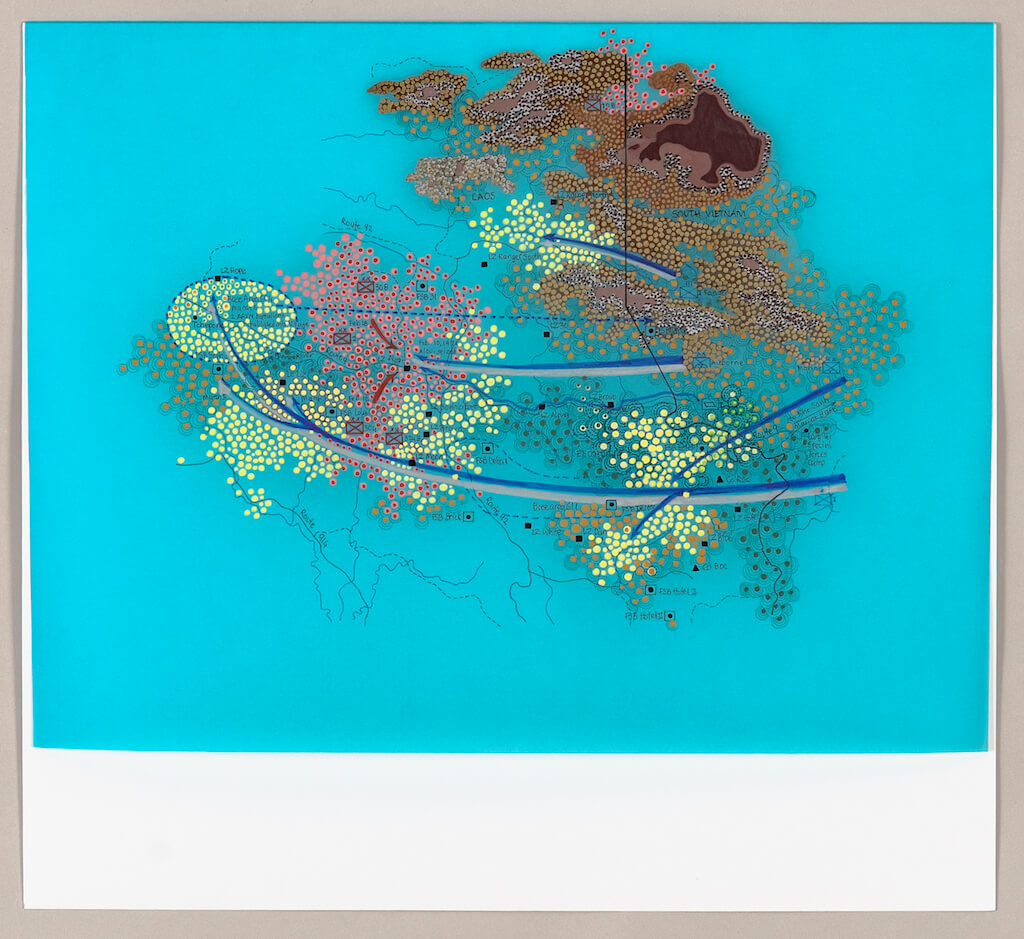
Tiffany Chung (Vietnam), Operation Lam Son 719, 2018.
A UN that listens chiefly when insecurity reaches wealthy countries has misunderstood the meaning of collective security. It must follow the money, the weapons, and the labour routes, while protecting and uplifting survivors rather than treating them as statistics or offenders.
The debate over UN reform must avoid a competition for prestige among aspirants to permanent membership. Countries such as India and Brazil have a powerful claim to a greater role, as do other underrepresented regions and states. Yet reform cannot simply add new privileges to the old ones. Asia’s largest states should use their influence to strengthen equal sovereignty and regional inclusion, including for smaller neighbours whose interests they do not automatically represent. Africa’s longstanding demand for fair representation and Latin America’s exclusion from permanent membership are part of the same argument. A coalition for reform must cross these regions rather than bargain them against one another.
We should be frank about the difficulties. The P5 can block changes to the Charter that reduce their own power and veto independent secretary-general candidates. But the Charter is also a common language with which the rest of the world can judge their conduct. That is why the UN remains worth struggling over. From Palestine to the Pacific, Asia’s peoples need an institution able to insist that law applies equally, that their voices count, and that the costs of violence are traced to those who profit from it. The purpose of reform is not a more impressive UN; it is a UN capable of serving those for whom its promises have so often been deferred.
Warmly,
Vijay Prashad and Karim Makdisi
The authors are the editors of Land of Blue Helmets: The United Nations in the Arab World (University of California Press, 2016). Karim teaches at the American University of Beirut and Vijay is the executive director of Tricontinental: Institute for Social Research.