

China Vetoes UN Hormuz Resolution, Citing US-Israel Attacks as the Root Cause, Beijing Also Help in Ceasefire Agreement
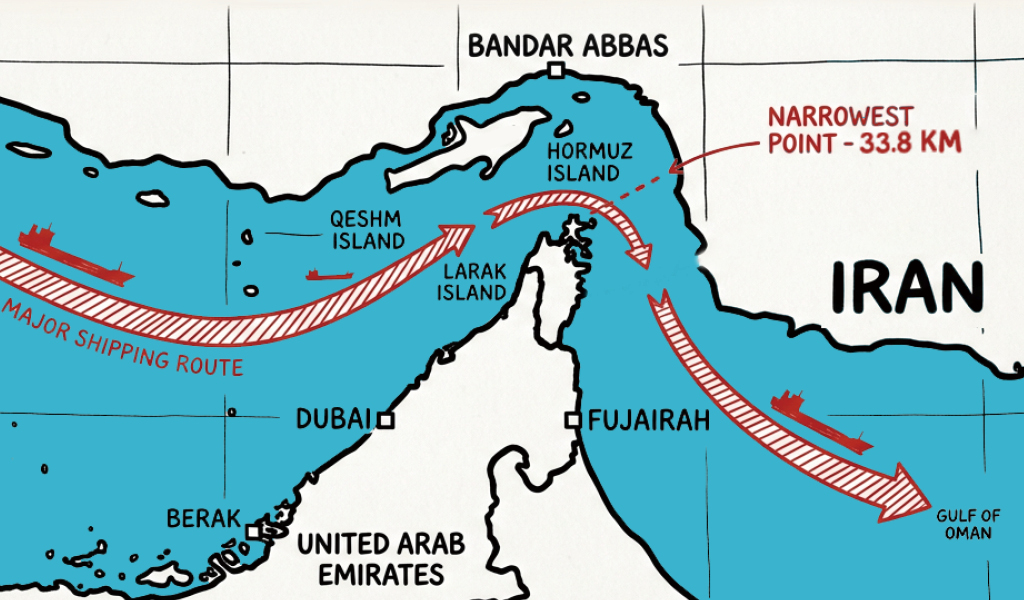
On 7 April 2026, China and Russia vetoed a Bahrain-led UN Security Council resolution on the Strait of Hormuz, arguing it reflected a biased approach that ignored the root causes of the crisis, the US-Israeli military actions against Iran. Beijing rejected attempts to militarise maritime security and defended a political solution based on dialogue and de-escalation. The vote exposed deep divisions within the Security Council, as China positioned itself against Western-led security frameworks in the Gulf. A ceasefire was announced shortly after the vote amid ongoing diplomatic engagement, with China reported to have played a key role in facilitating the process.
Read More:
China Leads Pakistan-Afghanistan Peace Talks as Both Sides Advance Toward a Solution
Cross-departmental delegations from China, Afghanistan, and Pakistan – including foreign affairs, defence, and security officials – met for a week of informal consultations in Xinjiang to de-escalate the most severe military confrontation since the Taliban’s return to power in 2021, with all parties agreeing to refrain from escalatory actions and explore a ‘comprehensive solution’ while Pakistan’s military operations continue and concrete breakthroughs on cross-border militant threats remain elusive.
Read More:

“We Are All Chinese,” Says Xi Jinping to Taiwan Opposition Leader in Beijing Meeting
Leading a fourteen-member delegation through Shanghai, Nanjing, and Beijing on a six-day visit dubbed the “2026 Journey of Peace,” the trip – made at the invitation of the Communist Party of China – is widely seen as a revival of party-to-party dialogue that had been largely suspended since 2016. In Beijing on 10 April, Xi Jinping held talks with Cheng Li-wun, chairwoman of Taiwan’s Kuomintang (KMT), at the Great Hall of the People. Xi said that “compatriots on both sides of the strait are all Chinese,” emphasising peace, development, and cooperation across the Taiwan Strait. The talks focused on stability, political communication, and expanding exchanges between both sides.
Read More:
Six Departments Issue Guidelines Steering E-Commerce Toward Quality Growth and Global Expansion
Six Chinese government departments jointly issued guidelines on 6 April aimed at steering the country’s e-commerce sector toward high-quality growth, deeper integration with the real economy, and global expansion. Covering 26 million domestic businesses in the world’s largest online retail market for thirteen consecutive years, the framework focuses on digital-real economy integration, SME and rural empowerment, AI-driven innovation, and cross-border expansion through Silk Road E-Commerce partnerships with 36 countries. It also strengthens platform governance and regulatory compliance, reflecting broader efforts to align China’s digital economy with international trade frameworks such as CPTPP and DEPA standards.
Read More:

Zero-Tariff Access for 53 African Countries Signals New Phase in China-Africa Economic Partnership
Set to take effect on 1 May 2026, the removal of import duties across all tariff lines for African countries with diplomatic ties to Beijing builds on the China-Africa Economic Partnership Agreement signed in February. Bilateral trade reached US $348 billion in 2025, while Africa’s US $102 billion trade deficit with China underscores the structural challenge of shifting exports beyond raw commodities and into higher-value-added sectors, according to trade data and analysts.
Read More:
Goods Trade Surges 18.3% in Early 2026 as Diversification Strategy Outlasts US Tariff Pressures
Goods trade rose 18.3% in the first two months of 2026, reaching 7.73 trillion yuan, according to customs data. Exports climbed 19.2% year-on-year, driven by expanding trade with ASEAN (+20.3%), Africa (+34.2%), and the European Union (+19.9%). By contrast, China-US trade fell 16.9% over the same period, amid broader shifts in global trade patterns and following a US Supreme Court ruling in February that struck down emergency tariff powers.
Read More:

Taklimakan Desert Afforestation Confirmed as Carbon Sink by PNAS Study as Spring Planting Scales Up
Targeting the rehabilitation of 2.23 million mu (148,700 hectares) of desertified land in Hotan Prefecture, the spring 2026 planting campaign employs BeiDou Navigation Satellite System-guided autonomous machines that set over 13,000 saplings per day – ten times the manual rate – alongside photovoltaic sand stabilisation panels, while a January 2026 study in the Proceedings of the National Academy of Sciences confirmed the afforested desert margins have transformed a ‘biological void’ into a carbon sink with atmospheric CO2 1–2 ppm lower.
Read More:
Chengdu’s 20-Layer Vertical Farm Achieves 120 Times Conventional Yield on Just 100 Square Metres
Operating 16 robots across an 8.8-metre-tall soilless cultivation system, the Chinese Academy of Agricultural Sciences’ Institute of Urban Agriculture produces 50 tonnes of pesticide-free lettuce annually in Chengdu – with a 30-to-35-day growth cycle half the duration of traditional open-field farming – while its production cost of 10–15 yuan (US $1.4–2.1) per kilogram highlights the ongoing challenge of electricity expenses, which account for roughly 70% of operating costs.
Read More:

First National Service Industry Conference Signals Strategic Shift Toward ‘China Service’ Brand and Technology-Led Growth
With the service sector now accounting for 57.7% of GDP and employing roughly half the national workforce, the two-day televised conference – the first national-level meeting on services in the new era – outlined four strategic pillars including demand-driven expansion and technological enhancement, while directing producer services toward greater specialisation, higher value chains, and expanded opening to foreign investment.
Read More:

China Caps Fuel Price Rises at Half the Market Rate to Shield Consumers from Hormuz Oil Crisis
Invoking emergency provisions dormant since 2013 for the second time in three weeks, the National Development and Reform Commission limited gasoline and diesel increases to 420 and 400 yuan per ton – roughly half the market-determined levels – saving private car owners some 15 yuan per tank and heavy truck drivers 150–200 yuan, while strategic petroleum reserves of 1.3 billion barrels and electric vehicle sales comprising half of new purchases provide structural resilience against the global energy shock.
Read More:
Police Investigate Organised Cyberbullying of Olympic Diving Champion Quan Hongchan as Authorities Pledge Zero Tolerance
Revelations that relentless online abuse had driven the 19-year-old three-time gold medallist to consider retirement and suffer insomnia prompted Guangdong’s Ersha Sports Training Centre to file a formal police report on 8 April 2026 after a dedicated WeChat group was found to have orchestrated systematic personal attacks, while the General Administration of Sport condemned the harassment and called for criminal accountability under dedicated cyberviolence regulations enacted in August 2024.
Read More: