Politics as the Engineering of Possibilities
Before the ‘cultural battle’ begins, the terrain is already tilted: Jorge Coulon and Jaime Bravo explore how power shapes what societies consider reasonable, imaginable, and possible – and how people can change it.
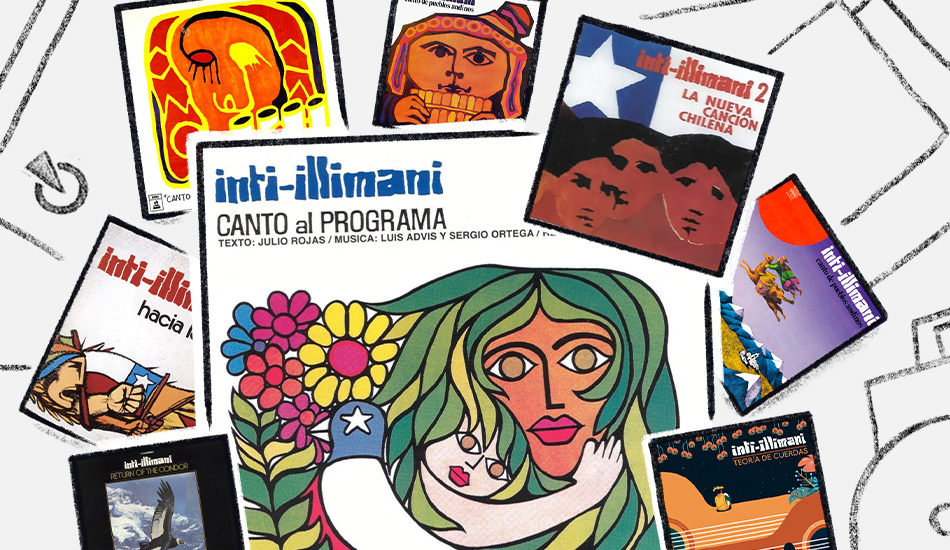
This art bulletin presents an abridged English translation of the essay ‘La política como ingeniería de posibilidades’ (Politics as the Engineering of Possibilities) by Chilean musician and writer Jorge Coulon, a founding member of Inti-Illimani, and economist and essayist Jaime Bravo. It was originally published in the Chilean edition of Le Monde diplomatique in September 2026.
Listen to ‘Palimpsesto’ (Palimpsest), the title track of Inti-Illimani’s 1981 album, recorded in Italy during the group’s exile from Chile following the 1973 military coup against Salvador Allende. A palimpsest is a text written over earlier inscriptions that remain visible beneath the surface – the sediment of earlier battles, in another register.
A recent column by Juan Carlos Monedero, a Spanish political scientist and co-founder of the left-wing party Podemos, explored the advance of authoritarian ideas and the need to confront them wherever they first take root. Monedero returned to an expression that has become commonplace: the cultural battle. The image is effective. Ideas clash, narratives compete for meaning, worldviews struggle to prevail.
But perhaps the metaphor arrives too late.
By the time the battle begins, the battlefield already exists.
Certain words are already available and others are not; some fears seem reasonable; certain desires have acquired legitimacy; some solutions appear imaginable and others absurd. Before ideas confront one another, something has already shaped the space in which that confrontation can occur.
We might call that the configuration of the symbolic field.
The traditional conception of political persuasion imagines ideas entering minds like arrows: propaganda, speeches, news, slogans. Someone sends a message; someone else receives it; they accept or reject what is proposed.
But perhaps power operates at a deeper level.
It does not necessarily push people in a particular direction.
It tilts the ground beneath their feet.
People still choose – with memory, experience, will, and the capacity to resist – but no longer on the same ground.
One possibility may now lie downhill, while another requires an exhausting climb. Some ideas circulate easily; others demand long explanations. Not necessarily because some are true and others false, but because the field favours certain trajectories.
Hegemony does not dictate the path. It tilts the terrain.
To condition a trajectory is not to determine it.
To curve the field is not to compel.
This distinction avoids two opposite simplifications: individuals freely choosing ideas in a kind of intellectual supermarket, or human beings as mere products of the structures, discourses, and relations of power that surround them.
We are active trajectories within a geometry not entirely of our choosing – but neither are we merely its effects.
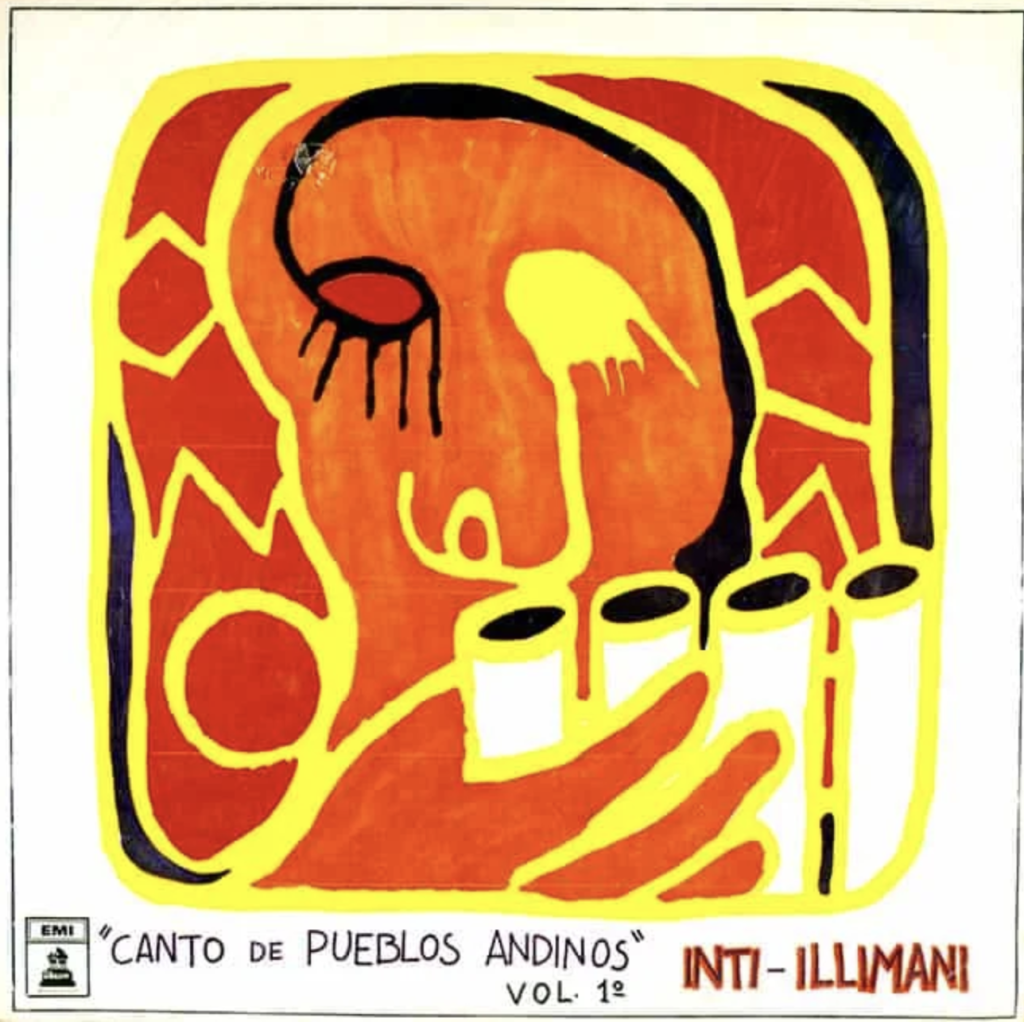
Inti-Illimani, Canto de pueblos andinos, vol. 1 (Song of Andean Peoples, Volume 1), 1973.
The Field Has a History, but It Also Has a Geology
There is a temptation we should resist.
If we say that the field conditions what we think, desire, and consider possible, we may end up attributing to it an omnipotence it does not possess – replacing one determinism with another.
People once sought to explain all of history through economics; today we might fall into the opposite temptation of explaining it entirely through language, culture, or relations of power.
But not everything is discourse.
There are bodies, needs, territory, hunger, illness, pleasure, pain, production, and physical limits that no operation of language can make disappear.
The meaning of those realities can be contested; their existence does not depend entirely on that contestation.
Power may intervene in the way we interpret a body. It cannot make the body infinitely malleable.
It may determine which narrative explains an experience – until experience no longer fits inside the narrative.
Reality resists.
And that resistance matters politically because it prevents the field from becoming a total explanation.
Not everything is power.
Not everything is economics.
Not everything is language.
Not everything is biology.
Human trajectories emerge from the interference between these dimensions.
That is precisely why they can surprise us.
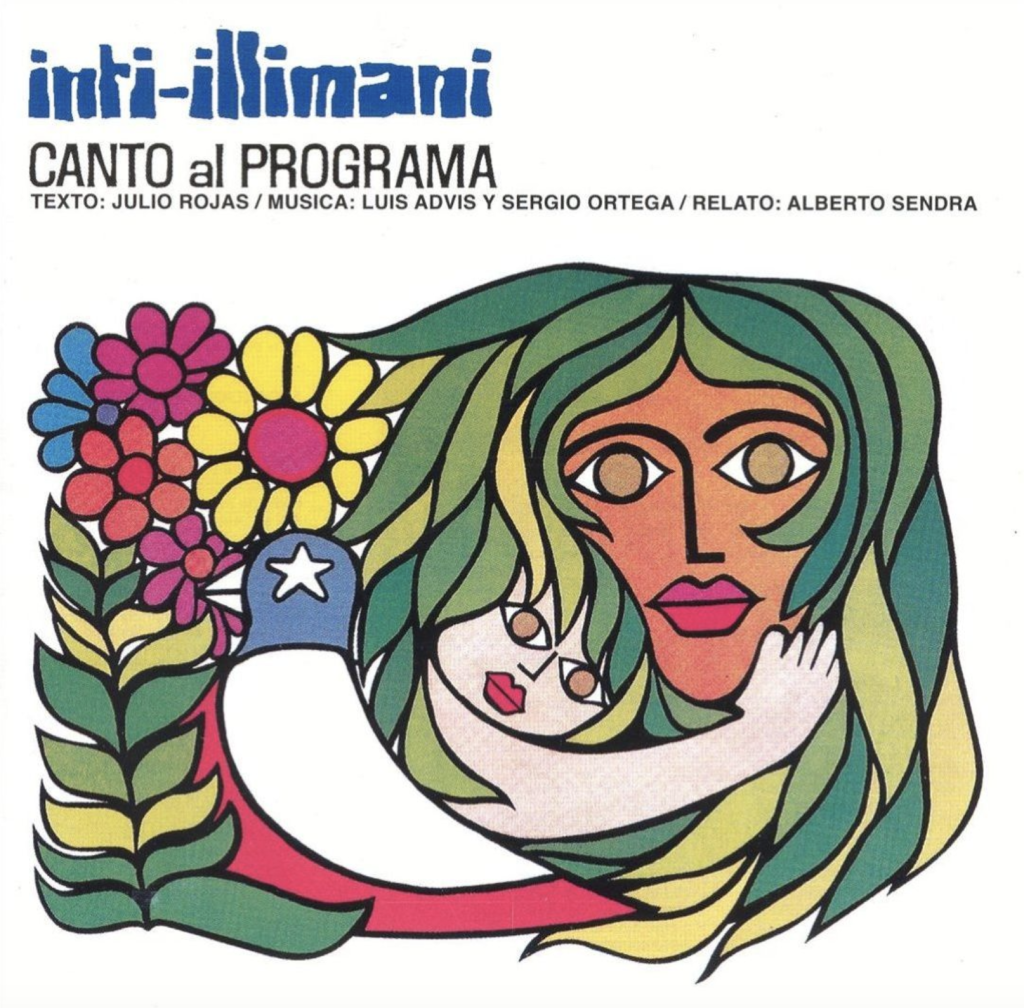
Inti-Illimani, Canto al programa (Song to the Programme), 1970.
The Field Is Also Sediment
But the historical part of the terrain did not fall from the sky either.
Every slope in the present contains earlier battles.
What we now call natural, inevitable, reasonable, or impossible is often the sediment of past conflicts, victories, defeats, institutions, and customs that have lost the appearance of having been constructed.
An idea that seems absurd today may once have seemed self-evident. A right we now regard as elementary may once have been presented as a threat to order. An institution that appears natural may have been born out of historical confrontation.
Cultural victories possess an extraordinary characteristic: over time, they erase the traces of the struggle that produced them.
History becomes landscape.
Every generation receives ground already tilted and participates – consciously or not – in tilting the ground later generations will inherit.
Here Gramsci remains especially fertile: hegemony attends not only to state coercion but to the production of consent within civil society, to common sense, and to the institutions through which a conception of the world takes root in everyday life.
Here we encounter what we might call the epochal algorithm.
The epochal algorithm does not tell us what to think; more quietly, it defines what can be thought.
We think the thinkable.
We desire the desirable.
We fear the fearsome.
We tolerate the tolerable.
And we might add:
We consider impossible whatever the field has expelled from the imagination.
Because governing the imaginable is often more effective than prohibition.
When a society comes to believe that a solution is inevitable, that a form of inequality is natural, and that certain alternatives are fantasies, then hegemony has achieved something deeper than winning an argument.
It has transformed a historical construction into landscape.
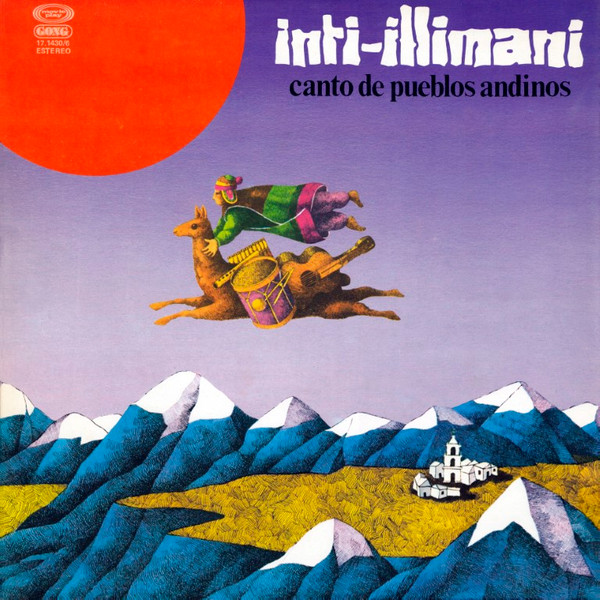
Inti-Illimani, Canto de pueblos andinos (Song of Andean Peoples), 1978.
Who Tilts the Terrain?
But if the terrain is tilted, we must ask:
Who tilts it?
The answer cannot simply be ‘power’, as though someone sat at a console pulling levers.
Nor can we say that everything happens spontaneously.
There are actors, interests, institutions, relations of property – and profoundly unequal capacities to speak and to be heard.
Media, companies, universities, technological platforms, political organisations, trade unions, schools, churches, social movements, families, and cultural communities all intervene in the production and circulation of meaning.
The field emerges from this interaction.
But these forces do not intervene on equal terms.
Some have megaphones.
Others barely have a voice.
The geometric image might conceal this: the unequal capacity of different actors to shape the field.
Foucault showed that power does not act only from a centre or through prohibition: it runs through everyday practices and institutions and participates in the very constitution of subjects. But relations of power are unstable and contain resistances.
Our question begins precisely there:
Where does that resistance draw its strength?
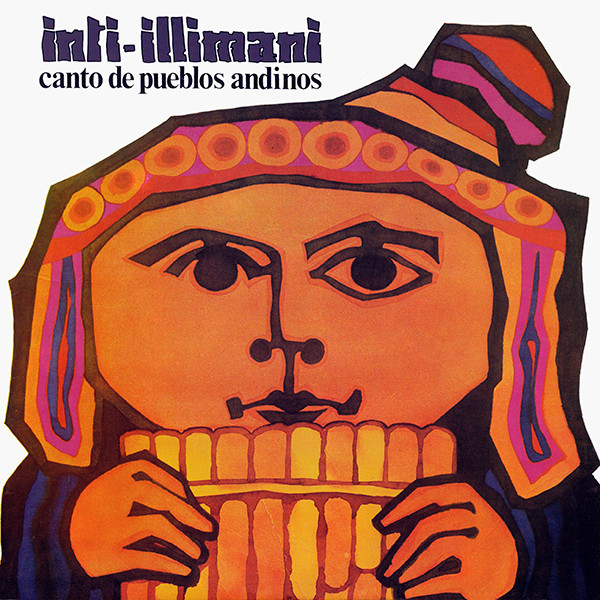
Inti-Illimani, Canto de pueblos andinos (Song of Andean Peoples), 1981.
When Experience Disobeys Discourse
Perhaps part of the answer lies in what no hegemony can ever fully control.
Experience.
A discourse may insist for decades that those who work hard will prosper.
But someone may work more and more and live worse and worse.
Something may be declared impossible until someone does it.
Then something elementary and revolutionary happens:
Reality stops obeying the narrative.
The slope is still there.
But the walker stumbles over a stone the map never drew.
History is also born from such stumbles.
The subject can never be reduced entirely to what the field has made of them.
They receive words, categories, prejudices, fears, desires, and narratives.
But they also live, experience, remember, suffer, love.
They contradict themselves.
They encounter others.
And they may discover that what was presented as natural was merely one historical way of organising the world.
That is where another trajectory begins to open.
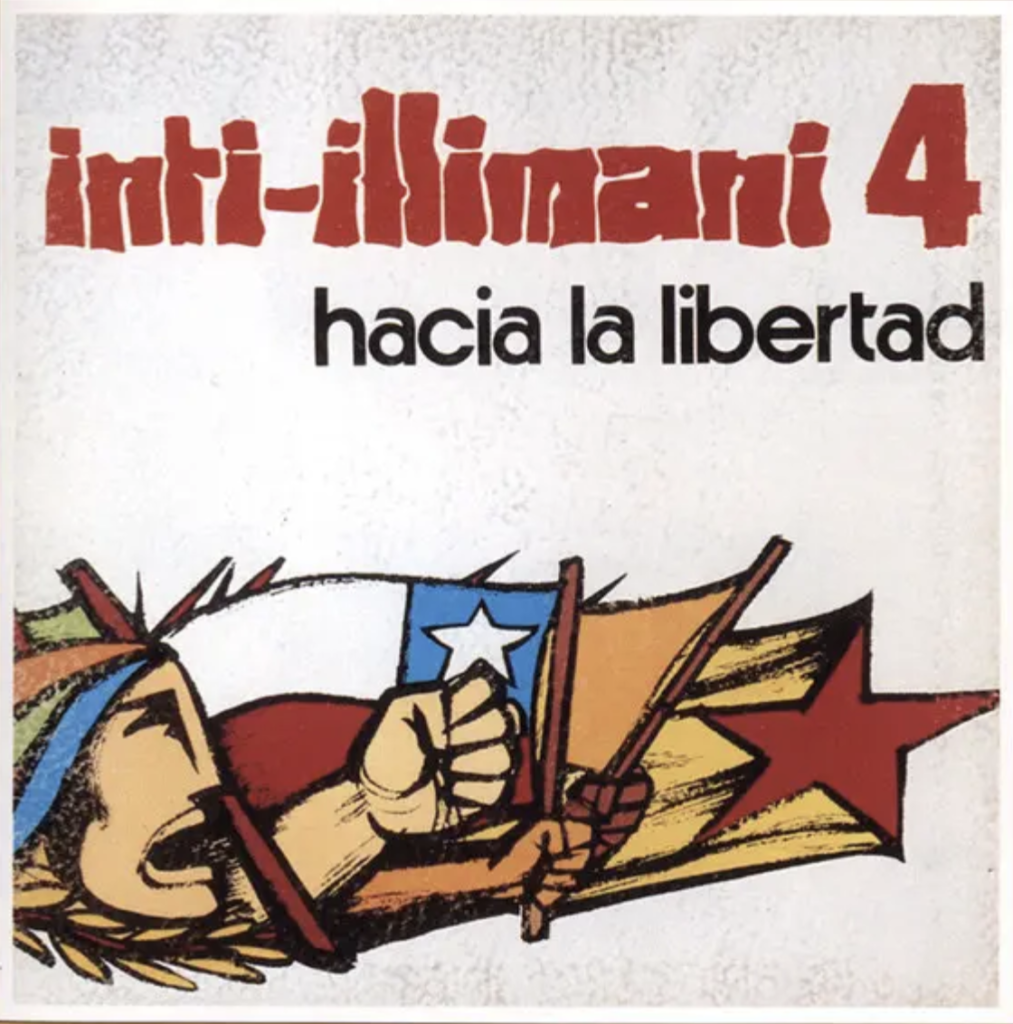
Inti-Illimani, Hacia la libertad (Towards Freedom), 1975.
Who Are the Fighters?
But a limitation appears within our own metaphor.
We could study the slope carefully and forget those who walk across it.
Who changes the field?
Where does a collective actor come from, capable of uttering what common sense has declared impossible?
Here politics returns.
Historical transformations do not happen merely because new ideas appear.
They require people capable of coming together around those ideas, discussing and modifying them, organising around them, and turning them into lived experience.
But neither should we imagine the construction of a political subject as the manufacturing of a new human being through an ideological mould.
An emancipated subject wholly designed by someone else already contains a contradiction.
That is why we must make a decisive distinction:
Creating possibilities is not the same as manufacturing people.
A transformative politics can alter institutions, redistribute resources, democratise knowledge, expand rights, create spaces for organisation, and make new experiences possible.
It can change the conditions of freedom.
What it cannot do without negating freedom is determine in advance what human beings must do with it.
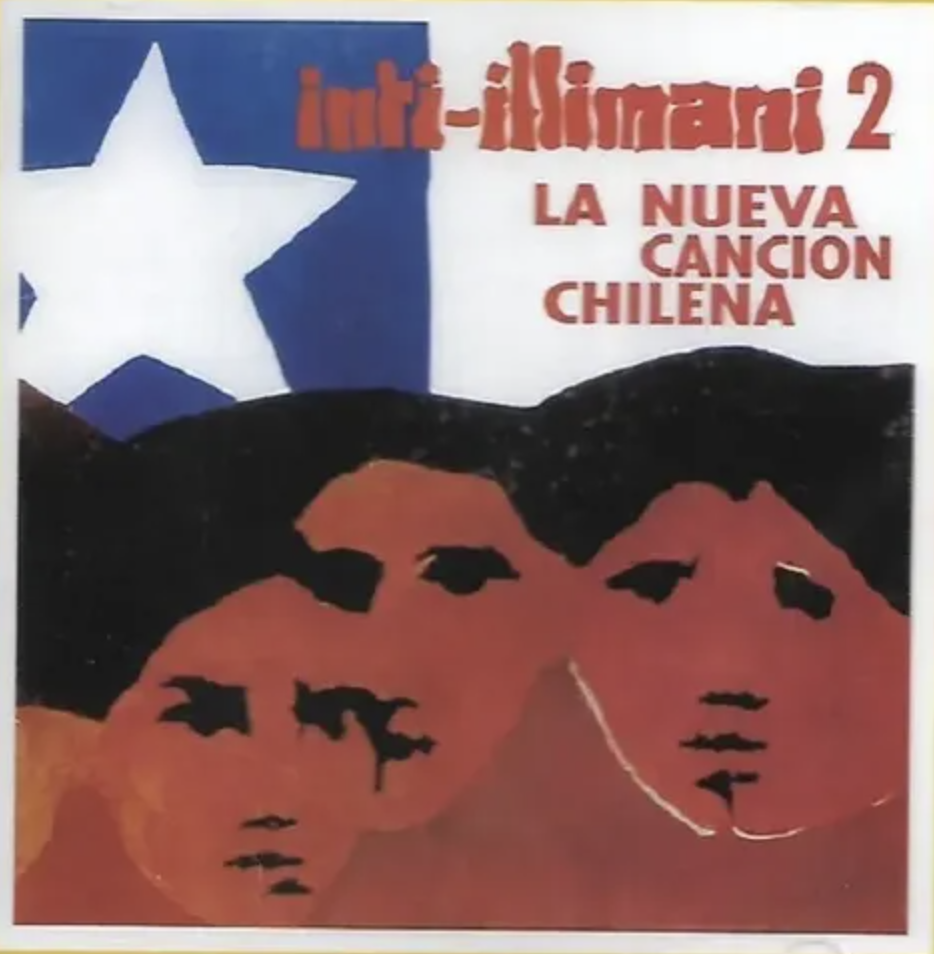
Inti-Illimani, Inti-Illimani 2: La nueva canción chilena (Inti-Illimani 2: The New Chilean Song), 1974.
Anticipating the Possible
There is, however, one especially powerful way to alter the field.
To bring into existence, even partially, what has been declared impossible.
A cooperative.
A school.
A publishing house.
A trade union.
An artistic community.
A different way of producing, sharing, teaching, or deciding.
These are small places where what has not yet become the general order begins to appear as experience.
They do not prove that the future is written.
They prove something more important:
That the present was not written either.
A new order gains strength when it ceases to exist only as a promise and starts appearing in concrete scenes.
These scenes are not yet the future world.
They are cracks in the supposed inevitability of the present one.
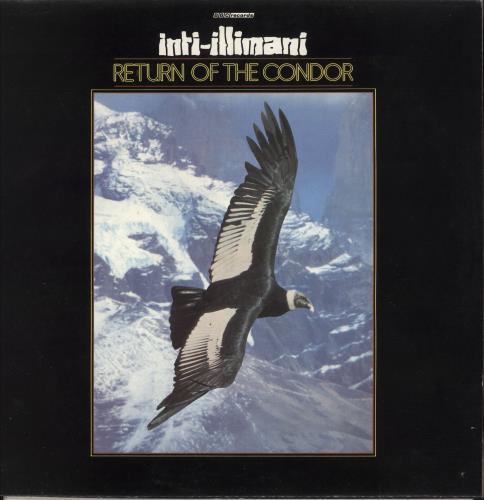
Inti-Illimani, Return of the Condor, 1984.
The Monsters and the Field
The question is no longer only when fascism appears or who embodies it.
There is an earlier question:
What had to happen for what seemed intolerable yesterday to begin to seem reasonable today?
A word slowly changes meaning.
A prejudice loses its shame.
An exception is repeated.
Cruelty finds justification.
A right begins to be presented as a privilege.
The adversary becomes an enemy.
None of these, taken separately, constitutes the final event.
But their interference alters the field.
Goya’s monsters then begin to converse once more with Gramsci’s interregnum.
History represents its crises through individuals: faces, names, dates, speeches.
Representation is inevitably particle-like.
But perhaps the phenomenon is also wave-like.
The monster is visible.
The interference that made it possible, far less so.
The monster does not appear when it opens the door.
It appears when the door has ceased to seem like a boundary.
Understanding this process does not absolve anyone of responsibility; it distinguishes between the person who commits an act and the conditions that allowed the act to gain legitimacy.
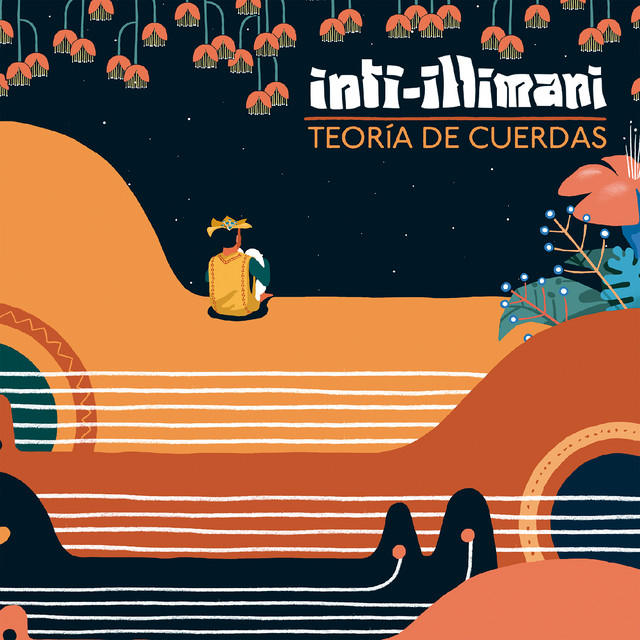
Inti-Illimani, Teoría de cuerdas (String Theory), 2014.
Engineering Possibilities
If power alters the field of possibilities, a transformative politics cannot limit itself to persuading people to choose a different trajectory.
It must also intervene in the field.
It must expand what can be imagined, said, experienced, and done.
It must allow subjects to emerge who are capable of intervening in that field.
But these subjects are not raw material to be moulded by someone from outside.
They too transform and are transformed.
That is why engineering possibilities is very different from engineering people.
The latter seeks to manufacture human outcomes.
The former alters the conditions so that more than one outcome can exist.
One prescribes.
The other opens.
Politics then ceases to be merely a contest of opinions.
It becomes a transformation of the space of the possible.
Freedom, too, does not consist in living outside every field.
No such place exists.
Perhaps being free means something more modest and, at the same time, more difficult:
To recognise the slope and decide whether we wish to follow it.
But politics adds further questions:
Can we alter that slope?
With whom?
And toward what, without turning our own horizon once again into someone else’s prison?
No democratic engineering of possibilities can be the work of an engineer standing outside the field.
Those who transform the terrain are also within it.
Before every cultural battle, there is a field.
But the field itself is the provisional memory of countless battles, the meeting point between historical constructions and the resistances of the real.
To do politics, then, is something more difficult than imposing another narrative.
It means preventing a narrative from passing itself off as nature.
But it also means preventing ourselves, fascinated by narratives, from forgetting that nature, bodies, experience, and reality continue to exist even when our words cannot contain them.
Perhaps that is where freedom truly begins.
Warmly,
Jorge Coulon and Jaime Bravo
Jorge Coulon is a musician, writer, and cultural manager. He is a founding member of Inti-Illimani. He has published several books, including Al vuelo (On the Fly, 1989); La sonrisa de Víctor Jara (Víctor Jara’s Smile, 2009); Flores del mall (Flowers of the Mall, 2011); and, most recently, En las cuerdas del tiempo: Una historia de Inti-Illimani (On the Strings of Time: A History of Inti-Illimani, 2024), co-authored with Italian writer and anthropologist Federico Bonadonna.
Jaime Bravo is president of Corporación Encuentro Ciudadano, a Chilean civil society organisation. He is an economist with training in government planning and management and a background in psychology. He advises public and private institutions in Chile and abroad on situational planning and organisational development.