What Stays? Five Plain Truths About Africa’s Surplus
For a century, Zambia has been developed as a mine. Speaking at the Global South Academic Forum in Shanghai, Akende M’membe Chundama of Zambia’s Socialist Party asks the question every miner and market woman already understands: of the wealth we produce, what stays?
Dear friends,
On 18 October 2026, I spoke at the Global South Academic Forum (GSAF) in Shanghai, which East China Normal University hosts each year together with Tricontinental: Institute for Social Research and the University of Johannesburg. Our panel was asked to think about a new development theory – one that goes beyond the old paradigms and explores development pathways for the Global South. I had six minutes. What follows is what I said there, set down here with some minor revisions for you.
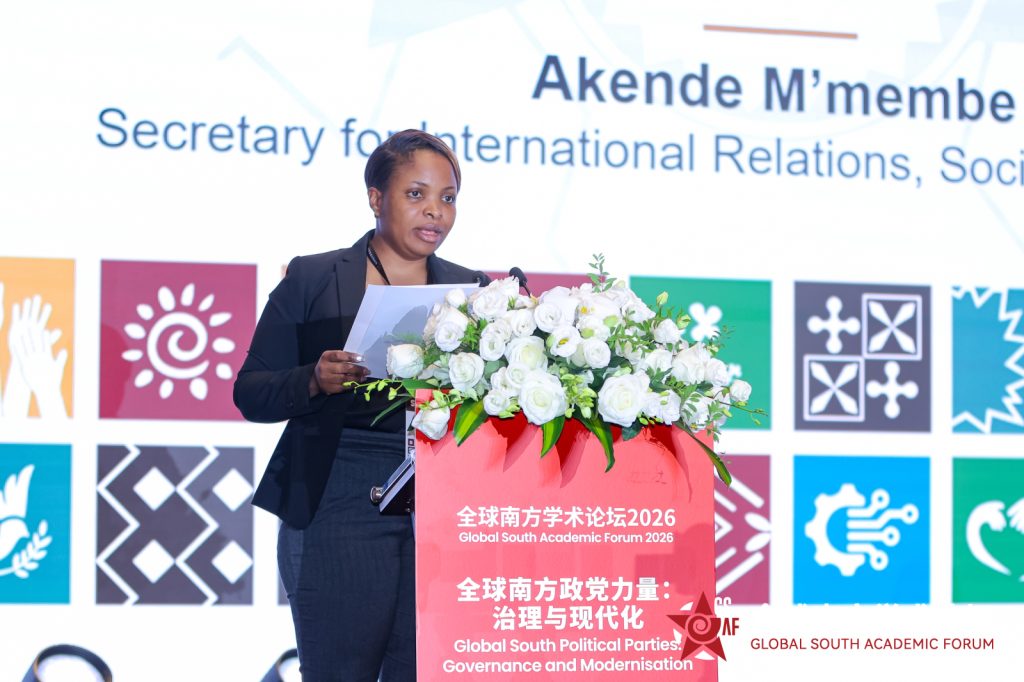
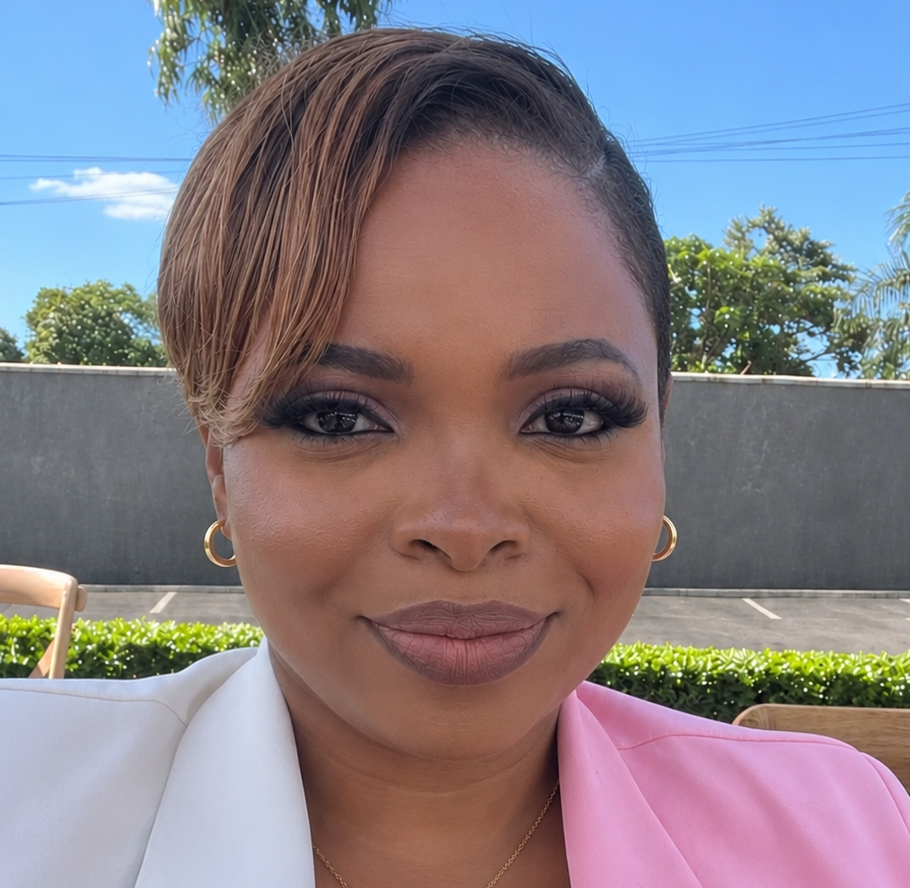
Akende M’membe, Secretary for International Relations of Zambia’s Socialist Party, speaks on a panel on new development theory at the Global South Academic Forum, 18 October 2026, themed ‘Global South Political Parties: Governance and Modernisation’.
Two Railways
I come from Zambia, a landlocked country in southern Africa of over twenty million people, more than half of them under eighteen. We are Africa’s second-largest copper producer, and copper makes up about 70% of everything we export.
Fifty years ago, China helped us build the Tanzania–Zambia Railway (TAZARA) to the Indian Ocean, to break our dependence on white-minority Rhodesia and apartheid South Africa; in 2024, China agreed to spend about US$1 billion revitalising TAZARA itself. Today a second railway is being promoted, this time running west to the Atlantic: the Lobito Corridor, backed by Washington and Brussels.
But we ask: what stays?
Every miner and every market woman already understands what lies behind that question: who does the work, who takes the wealth, and where does it end up? Economists call it the surplus.
I am not an economist; my colleagues on the panel are. I am an organiser. So let me put it the way we put it in the villages: as five plain truths.
We Were Not Left Behind. We Were Put Below
First. In the 1960s, US economist Walt Rostow told us that development is a ladder, and that we are on the bottom rung. Walter Rodney and Samir Amin answered him: we are not behind; we are below. Zambia did not fail to develop. It was developed – as a mine.
We are not poor because we are stupid. We are poor because we are exploited.
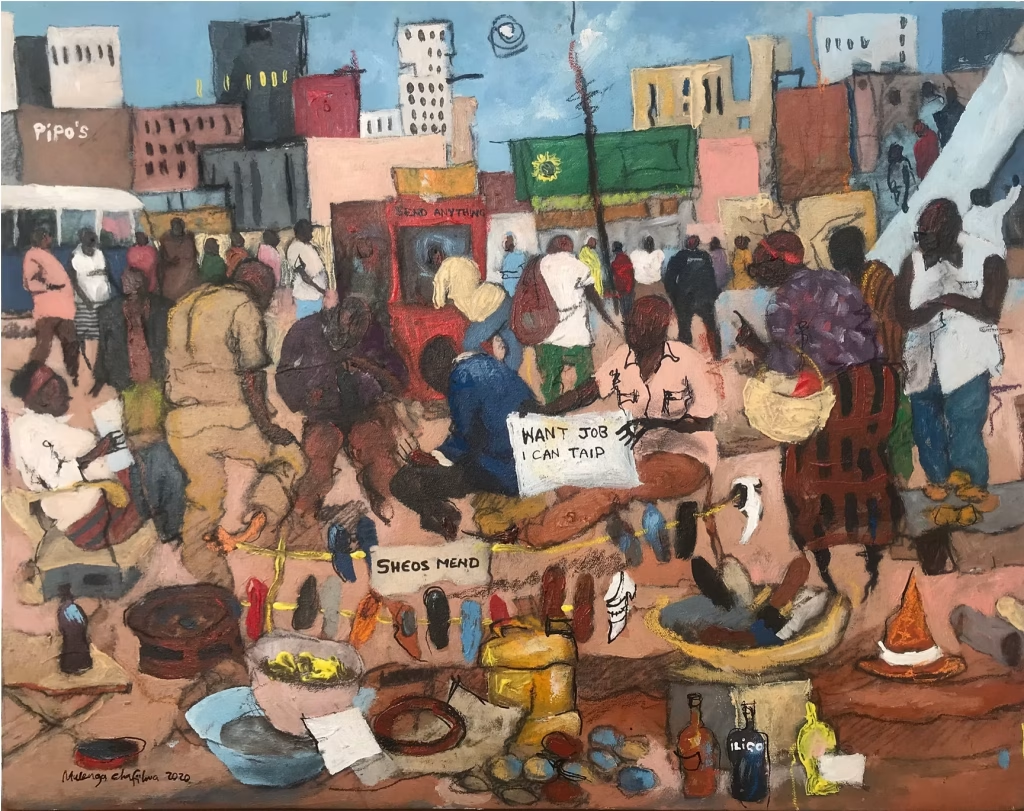
Mulenga Chafilwa (Zambia), Anything Goes, 2020.
The Wealth Leaves by Three Roads
Second. Our wealth leaves by three roads.
The first road is rent. Copper is a gift of nature. The surplus it yields above normal profit is rent, in Karl Marx’s sense, and whoever owns the mine takes it. On our Copperbelt, nearly every major mine is foreign-controlled, and for years the money from our copper did not even have to pass through a Zambian bank.
The second road is labour. The Brazilian Marxist Ruy Mauro Marini called it superexploitation: labour paid below its value, alongside intensification and lengthening of the working day. The contract miner earns less than it costs to keep his family. The difference is made up by his wife, farming a plot beside the mine, unpaid. Her unpaid work is a subsidy to the mining company.
The third road is finance. Whatever rent and wages leave behind, finance collects. My compatriot on the panel, Associate Professor Grieve Chelwa, shows with Vijay Prashad in their new book, How the International Monetary Fund Strangles Africa (July 2026), that an African country goes back to the International Monetary Fund (IMF) roughly every five years – and is told each time that this is when its fortunes will turn. In 2020, Zambia became the first African country to default in the pandemic era. Austerity was the answer. It always is.
The Old Master Changes Clothes
Third. In 1965, Kwame Nkrumah warned us that neo-colonialism is when the flag comes down and the control remains. First, that control wore the Washington Consensus. Then it wore ‘good governance’, which moved the cause of our poverty inside our own states. Now it wears the ‘green transition’. And it is defended with blockades and bombs, from Havana to Gaza. Tricontinental: Institute for Social Research, one of the forum’s co-hosts, has named it hyper-imperialism.
Comparative advantage tells Zambia that our advantage is copper. That is not an advantage. It is a sentence. For a century, we dug copper for the North’s wires. Now we are asked to dig copper and cobalt for its batteries, and to offer our forests as carbon credits so that others can keep polluting. A transition built on the old division of labour is not a transition. It is a continuation.
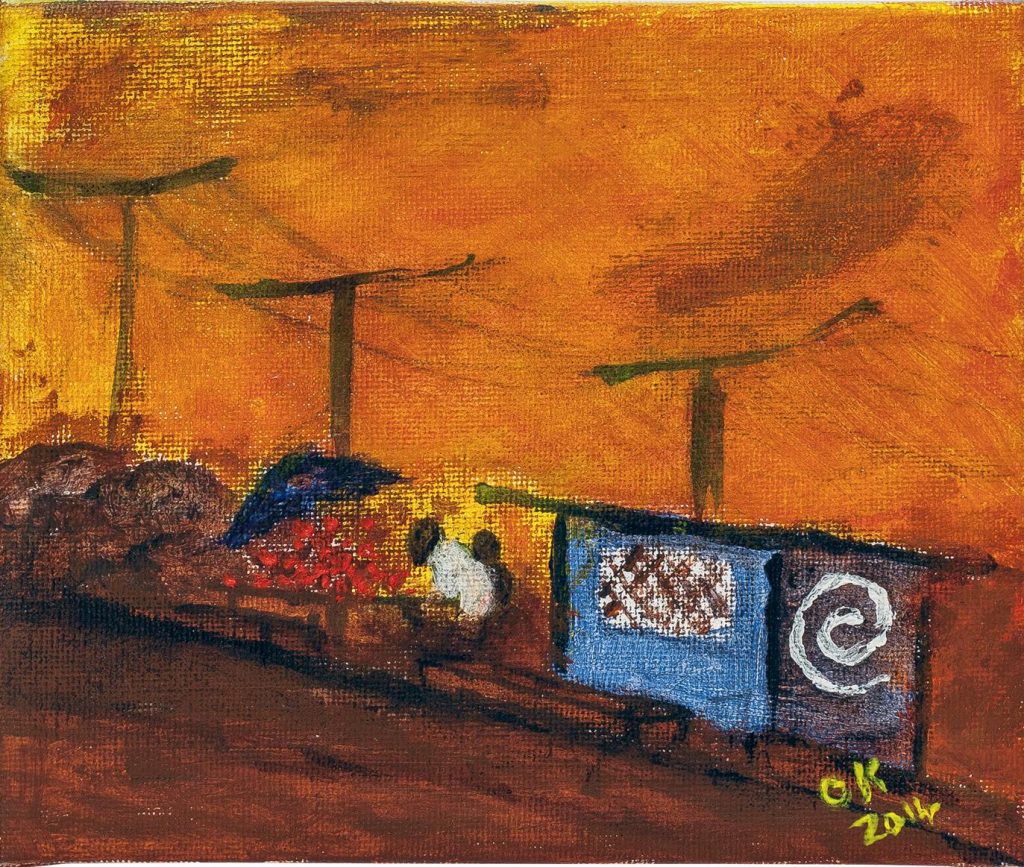
Othiniel Lingwabo (Zambia), Road Side, 2014.
Sovereignty Means Keeping the Surplus
Fourth. Samir Amin called it delinking: not closing the door, but subordinating our relations with the world to the needs of our own accumulation.
That is the deepest lesson of China – not only its results, but its method. The state kept command over land, finance, and planning, and opened to the world on its own terms. Our Chinese hosts did it with Chinese characteristics. We must do it with African characteristics. It begins with one principle: our minerals are processed where they are mined, as a condition of access.
The old paradigm asked: how does Africa attract capital? A new development theory must ask: how does Africa keep its surplus?
Only an Organised People Can Do It
Fifth. Sixty years ago, at the Tricontinental Conference in Havana, Amílcar Cabral spoke of the weapon of theory. But theory is a weapon only in the hands of an organised people. The surplus question is not settled in a seminar. It is settled in struggle – by the miner, the farmer, and the market woman, organised, and by a party that turns their experience into a programme.
So I gave the forum one piece of work. Let its three co-hosts – East China Normal University, Tricontinental: Institute for Social Research, and the University of Johannesburg – build a ‘What Stays’ Index. It would measure value added at home, the share of mineral rent captured by the public, wages against productivity, and debt service against schools and clinics, and it would be published every year. Let us produce our own evidence, measured by us, and checked by us. Advancing our interests and aspirations.
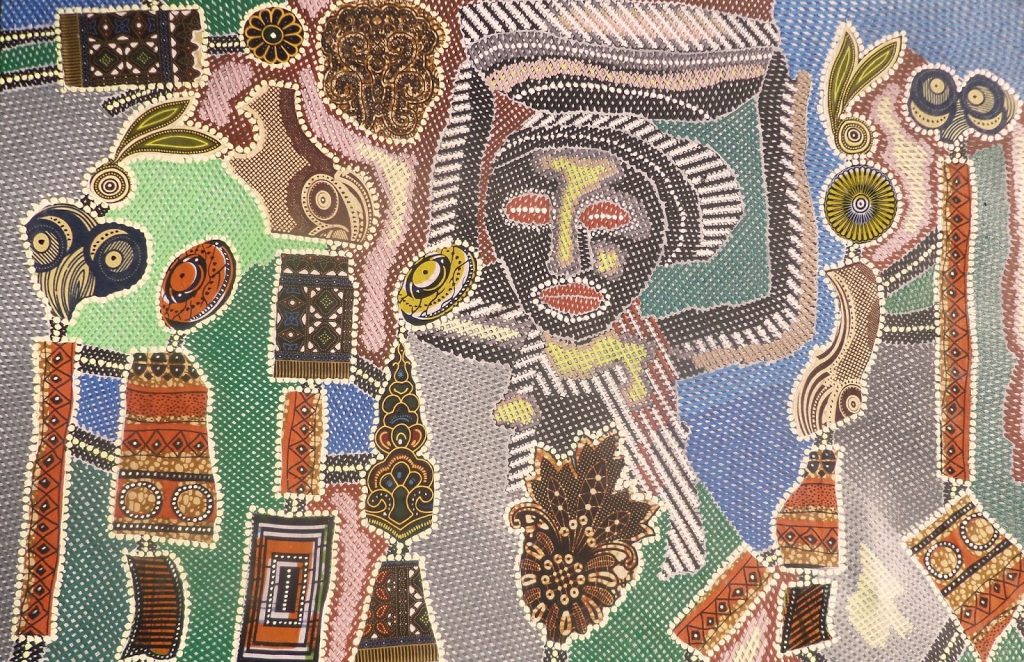
Aubrey Chali (Zambia), Togetherness, 2015.
A Different Sun Is Rising
I am a mother. When I leave my children at home to go into the villages, I know whose future the surplus is building. It must start building theirs.
By 2050, one in four people on Earth will be African. A different sun is rising over the Global South. I am honoured to be alive in such a time as this.
Warmly,
Akende
 | Akende M’membe Chundama |