Power Grows Out of the Organisation of People: The Forty-Seventh Newsletter (2026)
Moments of mobilisation can shake the system without transforming it; what endures is the patient work of organisation, through which working people build institutions, exercise collective authority, and gain the capacity to shape their lives.
Dear friends,
Greetings from the desk of Tricontinental: Institute for Social Research.
Four decades ago, in a rural town in West Bengal, I was sitting inside a local self-government office (panchayat) when a woman appeared at the door and began to rebuke a municipal official. The woman, an agricultural worker, had brought a matter before the local office and had not heard back from the officials (I forget the exact nature of her complaint or request). She was accompanied by a member of the local committee of the agricultural workers’ union (a communist mass organisation), who joined her to scold the official. The elected official, from the local communist movement, was courteous; he apologised and stepped away to deal with the matter. The woman left pleased with the outcome. The official explained that the office was often behind in fulfilling its duties because it was short-staffed, that the woman’s request or complaint was just, and that it would be sorted out immediately.
What interested me about this encounter was not the office’s difficulties or the official’s promise but two other facts: first, the woman’s confidence in going to the office to put her case before the official, and second, the presence of the representative of the mass organisation who had accompanied her there. A woman accustomed to following orders had gone with her comrade to insist on a say in what happened next. The trouble that befell her might not have vanished, but what could have been a private frustration to be endured (and festered into fatalism, perhaps) had become something that could be transformed through collective activity or even individual action with the collective behind her. The incident remains with me because it reveals something about one of the foundations of socialist power – what we call social power.
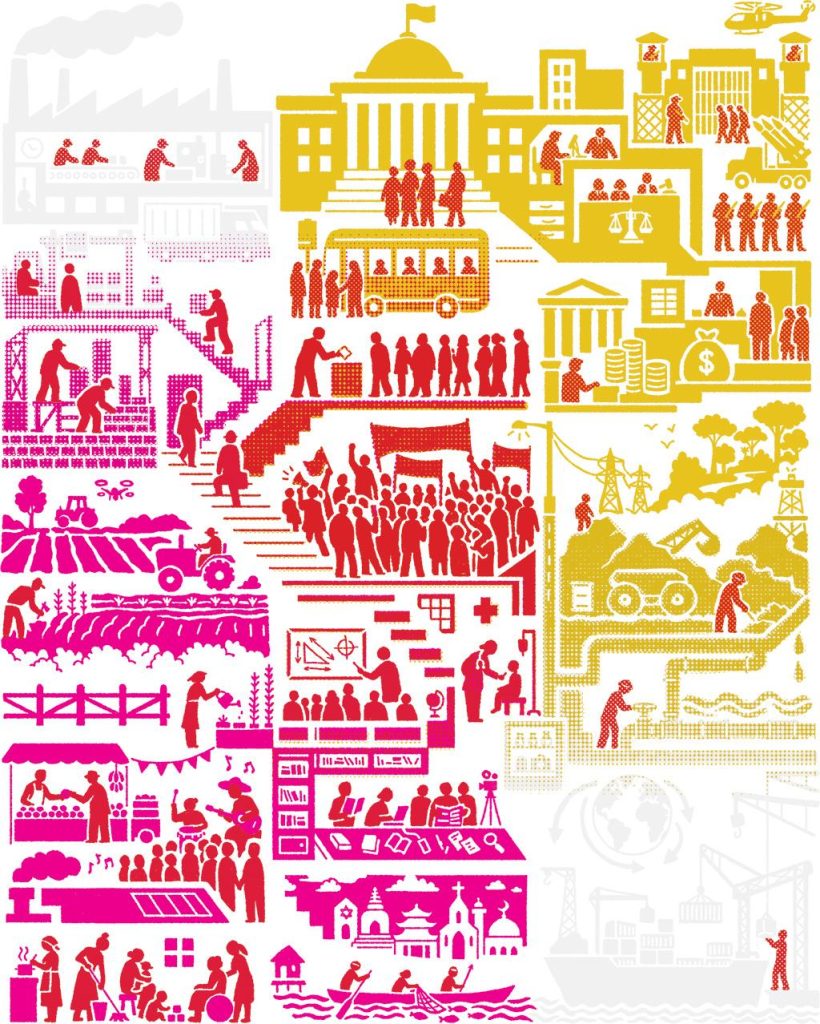
Our latest dossier, Socialist Strategy within the Architecture of Power, distinguishes between three interconnected forms of power:
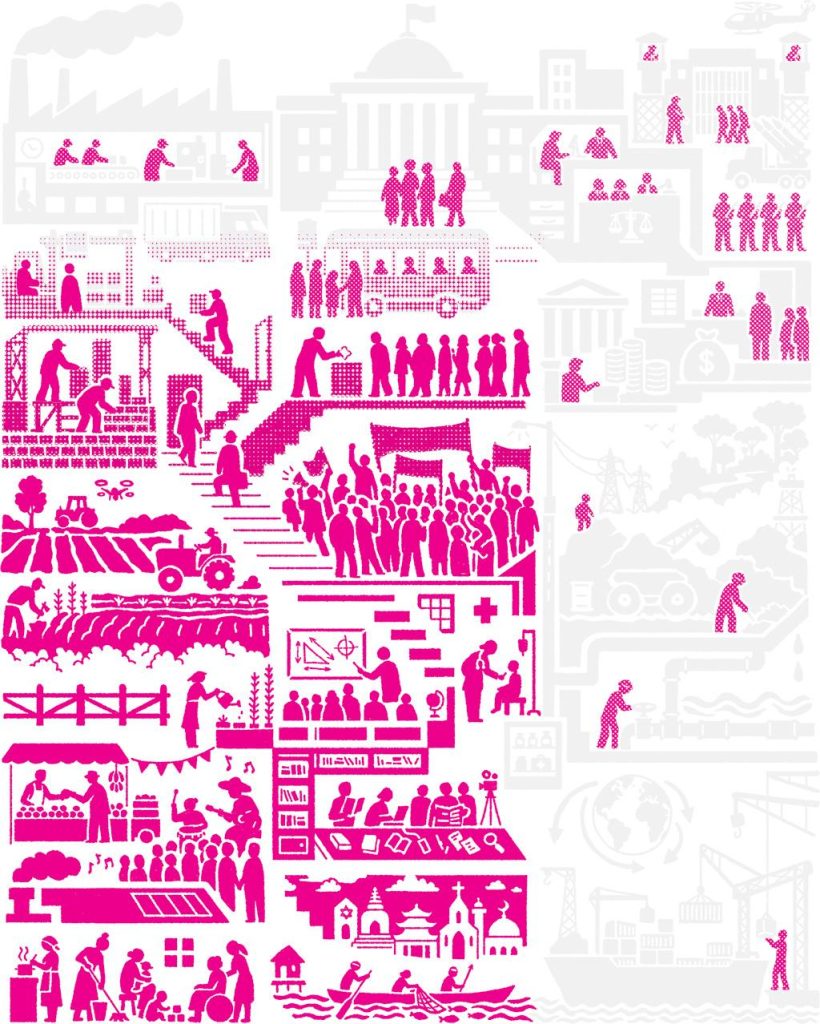
- Social power, which grows through the organisations and collective capacities of working people.
- Governmental power, which provides access to the institutions of public administration and policy through which a programme can be pursued.
- Systemic power, through which there is a transformation of the class character of the state and the fundamental relations that organise production, property, and social life.
This multilayered understanding of power allows us to ask a central question of socialist strategy: how do people, through popular organisation, become strong enough to govern their lives and transform society? This dossier is published in the midst of a cycle of major protests from Europe to India that bring popular anger to the streets. However, without the patient work of organisation, these protests can easily dissipate, as they did during the Arab Spring, for instance. The dossier asks what kinds of organisations, institutions, and political capacities can turn moments of mobilisation into durable social power and connect that power to the struggle for governmental and systemic transformation. It is this organisational infrastructure of emancipation that we want to examine. We invite you to think through these questions with us.
At Tricontinental, we have been studying some of the more concrete forms of social power, including Kerala’s communist-led cooperative movement and the settlements of Brazil’s Landless Workers’ Movement (MST). Both examples show us that social power is not built merely through isolated moments of mass action. What social power requires is organisations rooted in a theory of social change that build popular campaigns and create strong popular institutions. Through these institutions, oppressed and exploited people develop the capacity to meet material needs, coordinate action, exercise collective authority, and continue struggle over time. The Kerala example illustrates how social power rooted in class struggle can work in concert with governmental power to sustain and expand cooperative institutions. The MST experience extends this point, showing how social power is built and reproduced through collective decision-making, political education, and continued struggle. The practices of the MST keep families organised even after they win land and help build democratic habits of speaking, listening, and carrying out decisions together.
Building a cooperative or establishing a settlement is not the goal in itself but part of a longer process. A victory becomes the starting point for further organisation, sometimes to deepen social power and at other times to advance a claim to governmental power – with each material gain enlarging people’s capacity to win the next struggle. When people win land rights, for instance, they may withdraw to their individual plots. Maintaining organised activity therefore requires rooted organisation – such as the MST’s base groups, where members make decisions about and coordinate the work of their settlements, or the mass organisations that sustain Kerala’s cooperative movement – alongside political education and consistent work. Capitalism teaches workers and peasants that their survival depends on competition with their neighbours. Yet their own experience shows that everyday cooperation is essential, as the settlements and cooperatives demonstrate in institutional form. Collective activity gives solidarity a material basis by meeting working people’s needs and puts socialist values into practice in everyday life. Social trust, eroded by the stresses of capitalist reality, is strengthened through shared responsibilities and demonstrated commitment.
We are continuing this line of inquiry through studies of the South African Communist Party’s People’s Red Caravan, the work of Mtandao wa Vikundi vya Wakulima Tanzania (MVIWATA, National Network of Small-Scale Farmers’ Groups in Tanzania), Venezuela’s communes, and rural revitalisation projects in China such as the Village Super League. Publications on these are forthcoming.
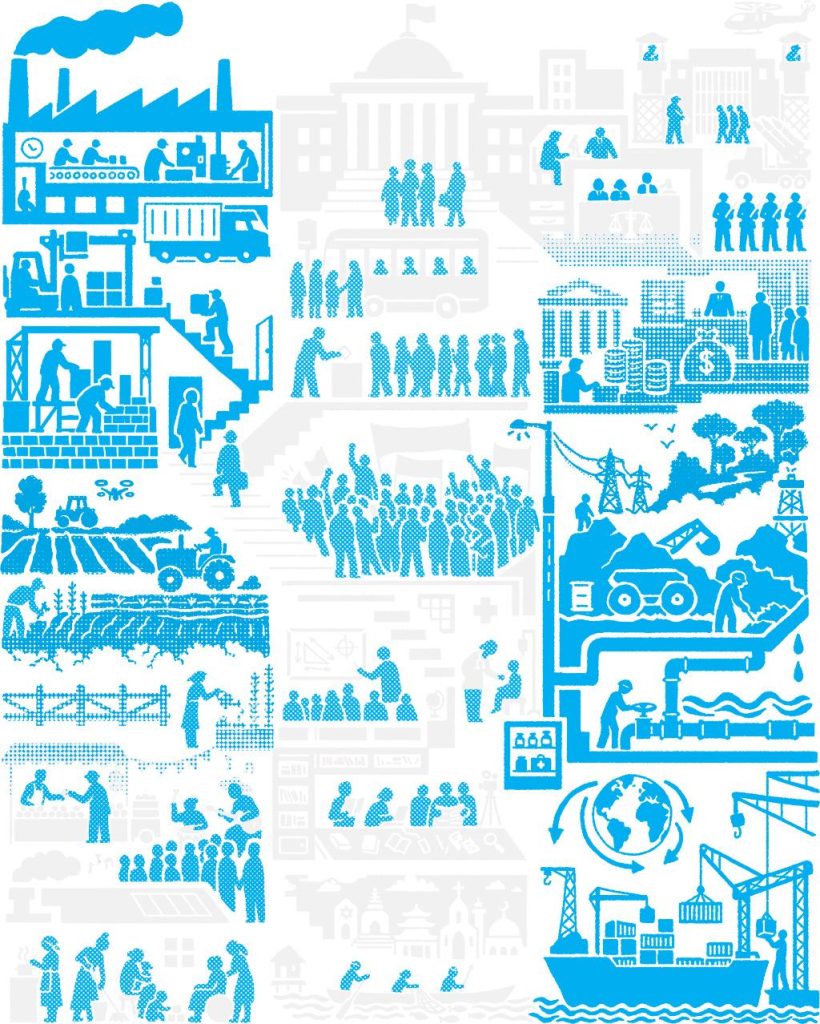
These examples illuminate how social power can be strengthened by governmental power: when a left government comes to office, it can defend and entrench popular institutions and direct public resources towards expanding their work. At the same time, governmental power remains constrained by deeper structures of the state and economy that it does not control. These operate both within and beyond national borders through the immense power of finance and corporations – as we wrote about in our dossier Beyond Polarity: For a Marxist Theory of the World Order – as well as through the international institutions and mechanisms of hyper-imperialism.
Under capitalism, these structures reproduce the power of the ruling class and erode the capacity of the immense majority to exercise their democratic authority. In the Global South, attempts to use governmental power to advance national sovereignty confront not only international and neocolonial pressures but also domestic class forces that benefit from dependency. That is why the deep roots of social power are necessary for the protracted struggle to change the system.
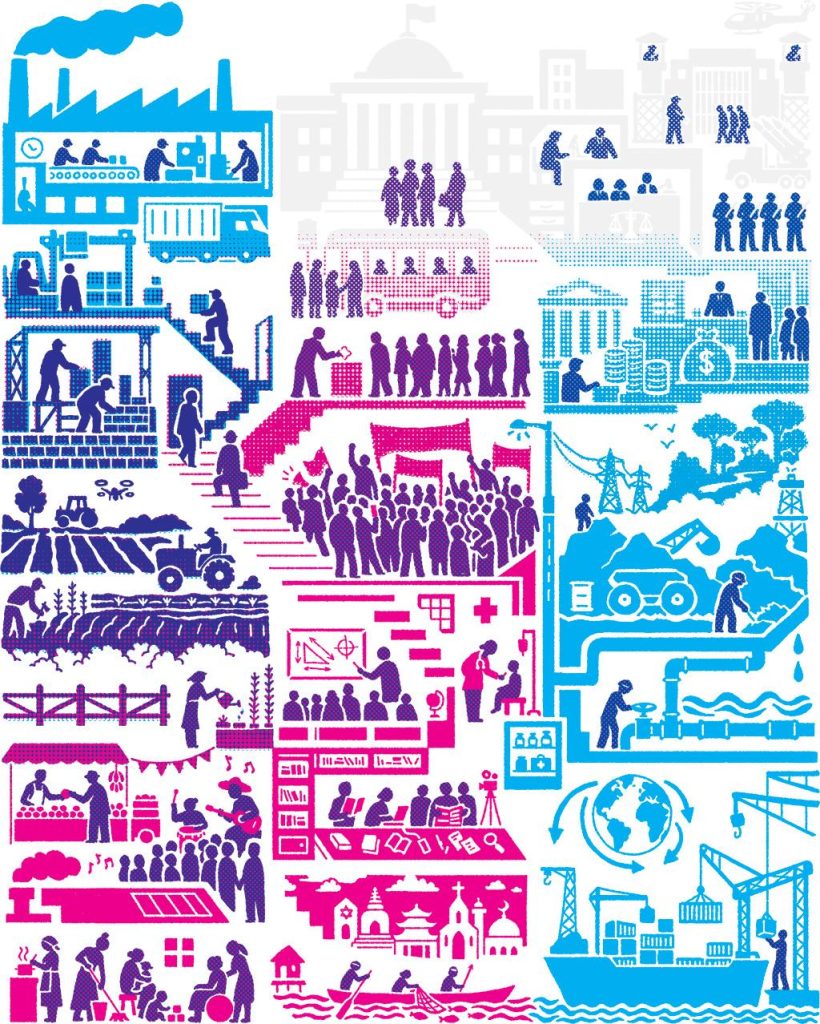
The agricultural workers’ union in West Bengal accompanied the woman worker to challenge an official from her own political movement. Their shared commitment did not remove the need for her to make a demand, but it provided the basis on which she could insist that the demand be taken seriously and what she took home from that interaction. The woman’s confidence and the official’s willingness to respond teach us about the importance of continually renewing the relationship between working people and those elected to serve them. Working people need organisations through which they can exercise collective authority and hold their representatives to account.
Such a relationship becomes much more difficult when the pressures of administration draw the most experienced organisers of a left movement away from the neighbourhoods and workplaces where their political strength was built. The urgency to defend a government against the right can make every criticism appear dangerous, and it can foster habits of deference and hierarchy. If working people are asked only to vote, applaud, and wait, then the social power that brought the government into office begins to weaken. A left government needs the organised initiative of the people, including their capacity to identify failures and demand that they be corrected.
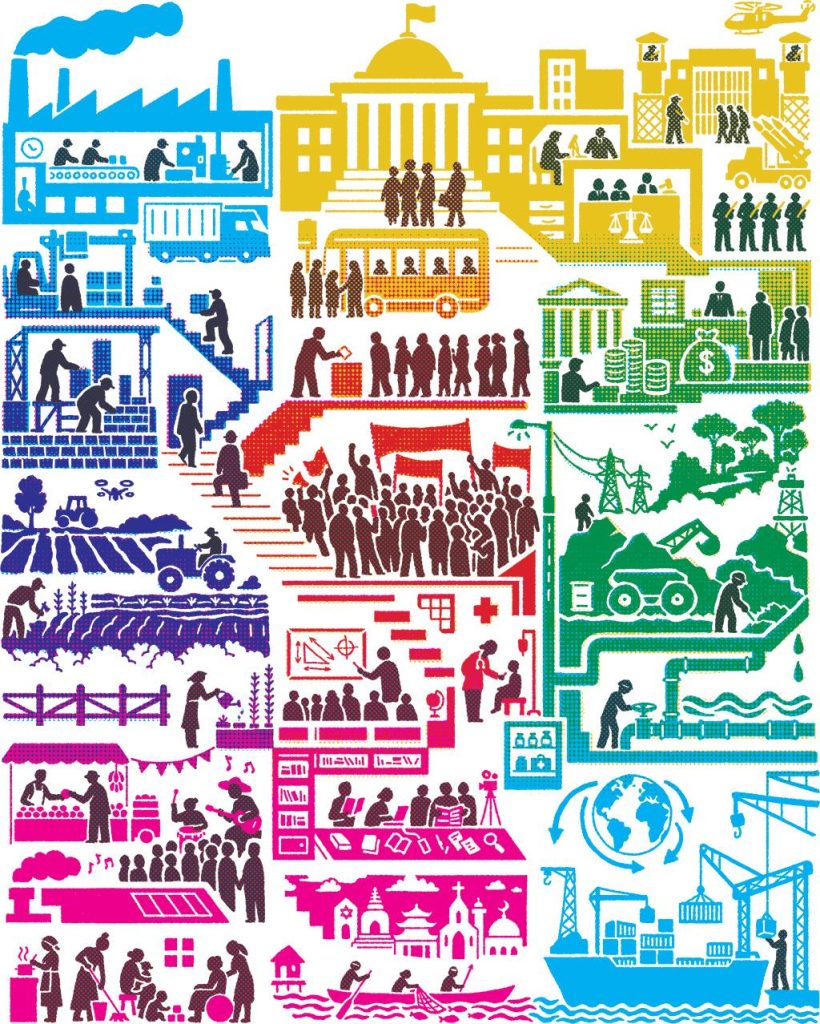
Each advance in social and governmental power and each step towards the project of systemic transformation bring new responsibilities and new contradictions. Political education, criticism, and honest assessment help movements navigate these contradictions while keeping popular power rooted in the people themselves. The patient work of organisation takes shape through everyday practices that build knowledge and give working people the confidence to take on larger responsibilities. A new world is built when working people gain the capacity to exercise authority over the institutions and conditions that shape their lives.
Four decades later, I still remember the woman who appeared at the office door. She had a grievance, an organisation behind her, and the confidence to demand an answer. The question for socialist strategy is how that confidence can grow into the organised power of millions capable of changing the conditions that produce such grievances for billions of people.
That woman’s confidence did not come from nowhere. It rested on the organisation that stood behind her and on the knowledge that her grievance did not have to be accepted as fate. The Guatemalan revolutionary poet Otto René Castillo captures something similar under far harsher conditions in ‘Lo más importante de todo’ (The Most Important Thing of All). After the army crushes a railway workers’ strike for more bread, some of the workers begin to resign themselves to defeat. But one of them refuses to let defeat become fatalism. His revolutionary optimism is not simply a matter of hope. It grows from the experience of collective struggle and the conviction that a setback does not extinguish the capacity to organise and fight again:
Do not forget it,
comrades,
time brings
a red smile
with the scent of a mandate from the masses.
If not today, then tomorrow.
If not tomorrow, then later.
There is always an after
for every defeat.
And those who are persecuted today
will be the pursuers tomorrow.Here, then, is the most important thing:
to always speak with the people.
Even in the hours
of the bitterest defeats
and the gravest disappointments,
never forget it,
comrades:
the word revolution
is always joined
to the word hope.
Warmly,
Vijay