Voices of 1927: Africa, Echoes of Resistance, Futures of Liberation
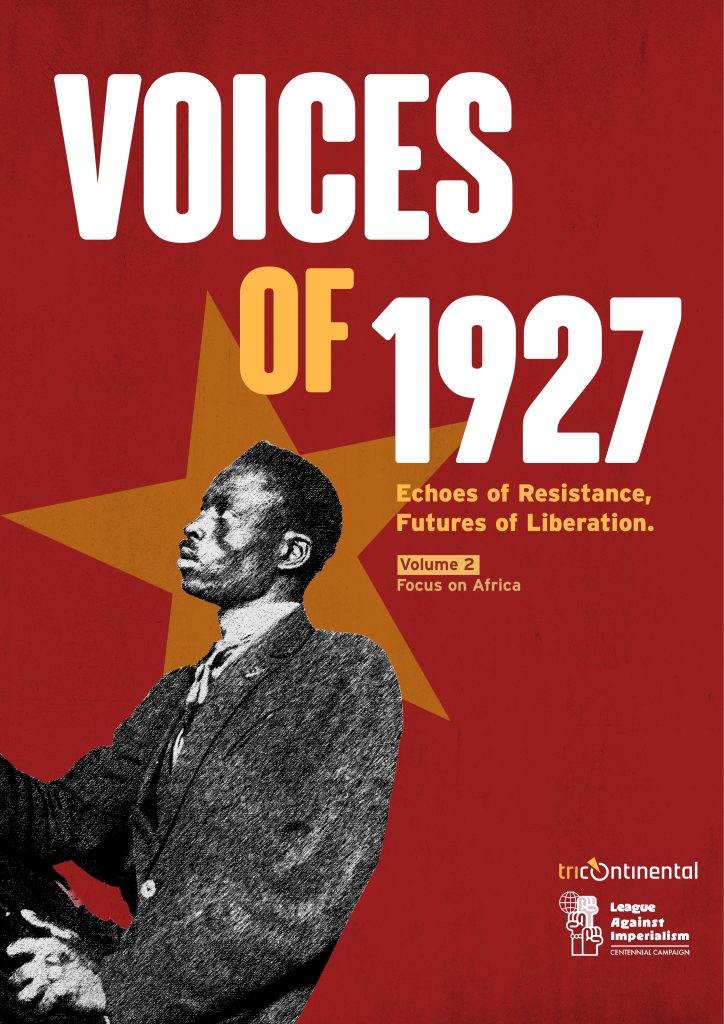
As war, militarisation, austerity, and imperialist aggression intensify, people continue to organise and resist. From Palestine to Latin America, from Africa to Asia, movements are confronting occupation, exploitation, and colonial domination in all its forms. In this context, the centennial of the 1927 Congress against Colonial Oppression and Imperialism offers an opportunity not only to remember a historic moment, but also to draw lessons from it for the challenges of the present.
Held in Brussels in 1927, the Congress brought together anti-colonial leaders, trade unionists, intellectuals, and activists from across the world in one of the first attempts to build a common front against imperialism. The gathering forged new links between liberation movements and helped lay the foundations for international solidarity and coordination that would influence anti-colonial struggles for decades to come.
The League Against Imperialism Centennial Campaign (LAI27) marks one hundred years since this landmark event. More than a commemoration, it is a collective effort to recover this history and place it in dialogue with the realities of today. The campaign brings together movements, trade unions, researchers, artists, and activists from different regions to exchange experiences, strengthen relationships, and create spaces for political and cultural collaboration.
Throughout 2026 and leading up to the centennial gathering in Brussels in March 2027, LAI27 is organising publications, educational initiatives, and international meetings. By connecting organisations and initiatives across continents, the campaign seeks to highlight shared histories of resistance, strengthen international solidarity, and contribute to the renewal of anti-imperialist and anti-colonial internationalism for the twenty-first century. Beyond commemorating the past, LAI27 aims to serve as a platform for coordination, political exchange, and joint action, providing movements with opportunities to collaborate, organise common initiatives, and build stronger links across regions and struggles. These efforts will culminate in an international gathering in Brussels in March 2027, bringing together movements, trade unions, researchers, artists, and activists from across the world to reflect on a century of anti-imperialist struggle and discuss the challenges and tasks that lie ahead.
Voices of 1927
Voices of 1927 is one of the campaign’s flagship projects. Through a series of three pamphlets published during 2026, it revisits some of the most important speeches delivered at the Brussels Congress and explores their relevance for the present.
Combining historical texts with archival materials, biographical sketches, reflections from organisations and movements participating in the LAI27 campaign, and newly commissioned artworks, the project places the voices of 1927 in dialogue with contemporary struggles. It introduces readers to figures such as Lamine Senghor, Jawaharlal Nehru, and Carlos Quijano, whose interventions emerged from different political and geographical contexts yet shared a common commitment to liberation, international solidarity, and resistance to imperial domination.
The aim is not simply to preserve these speeches as historical documents, but to reclaim them as part of a living tradition of resistance. By making these materials available in both print and digital formats, Voices of 1927 seeks to connect past and present struggles and contribute to the renewal of anti-imperialist internationalism for a new generation.
About the Contributors
David Murphy is Professor of French and Postcolonial Studies at the University of Strathclyde in Scotland. He has published widely on various aspects of modern and contemporary Francophone West African culture, including the monograph Sembene: Imagining Alternatives in Film and Fiction (2000) and numerous edited volumes, including Postcolonial Thought in the French-Speaking World (2009) and The First World Festival of Negro Arts, Dakar 1966 (2016). His most recent research projects have focused on Black radicalism in the interwar period. He is currently writing a biography of Lamine Senghor, having previously published an edition of his collected writings, La Violation d’un pays et autres écrits anticolonialistes (2012).
Boubacar Tassiou is a Nigerien student activist and pan-Africanist organiser. He is President of the Force des Héritiers Panafricains pour l’Appui à l’Agenda 2063 (PANAF-2063), an NGO founded in Niamey in February 2026 dedicated to youth conscientisation around the African Union’s Agenda 2063 and the ideals of pan-African sovereignty. He is also a member of the Centre Thomas Sankara Niger, a political education centre grounded in pan-Africanism, anti-imperialism, scientific socialism, and women’s emancipation. He holds a bachelor’s degree in Agronomy from the Université Abdou Moumouni de Niamey, where he has served in multiple student leadership roles.
Akhator Joel Odigie is the General Secretary of the African Regional Organisation of the International Trade Union Confederation (ITUC-Africa), which brings together and represents trade union federations across the African continent.
A Nigerian Pan-Africanist and humanist, Odigie is deeply committed to advancing the rights and interests of African people, both on the continent and globally. He is a passionate advocate for social justice, workers’ rights, solidarity, and transformative social change.
Introduction: Lamine Senghor and the Black Radical Tradition
David Murphy
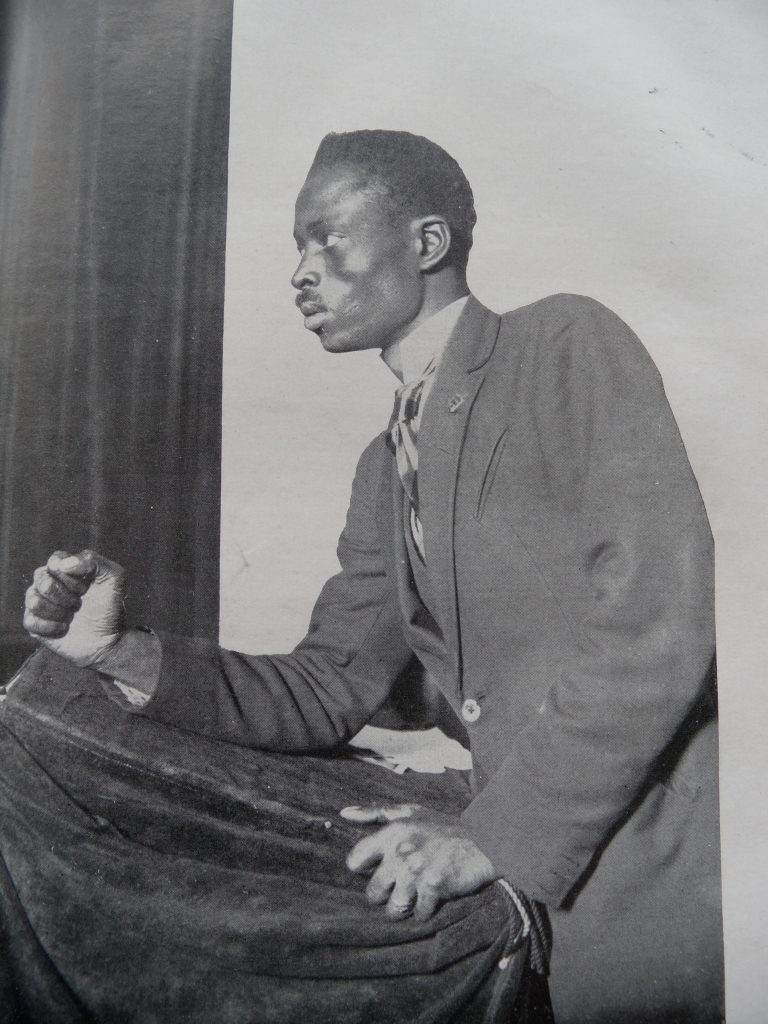
In the mid-1920s, Lamine Senghor was a leading figure in the emerging anti-colonial movement. He was born a subject of the French colonial empire in Senegal in 1889 and received a primary school education. In 1915, he volunteered to serve in the Great War, saw action at the Somme, Chemin des Dames and Verdun, and was twice awarded medals for bravery. In September 1917, he suffered lung damage in a gas attack, which led to an early discharge. He returned to Senegal for just 18 months, long enough to fraudulently obtain French citizenship, which would entitle him to a far more generous disability pension from the French state and ease his return to France.
Senghor found work with the French national postal service which had reserved posts for war veterans. In 1923, he married a Frenchwoman, Eugénie Comont, with whom he would have two children, and they settled in in the Goutte d’or neighbourhood of northern Paris. His health gradually worsened, however, and his anger at the colonial state’s indifference to his suffering and that of his fellow colonial soldiers politicised him. After brief membership of a self-help group, La Fraternité Africaine, he joined the Communist-aligned Intercolonial Union (UIC), where Ho Chi Minh had cut his teeth.
In November 1924, Senghor was a witness for the defence in a libel trial centring on the contribution of African troops to the French war effort. The black newspaper, Les Continents, had published an article in which Blaise Diagne, French parliamentary deputy for Senegal, a key player in the recruitment of African troops during the war, was accused of having received ‘a certain commission for each soldier recruited’. Senghor’s experience at the witness box, confronted by a man synonymous with failed promises about the rights and rewards that would flow from the sacrifice of France’s African soldiers, radicalised him.
In the aftermath of the trial, Senghor became the leading black radical voice in France and a mainstay of UIC activities. In 1925, the French communist movement launched a campaign of support for Abd el-Krim and the Moroccan rebels in the Rif Mountains who were fighting French and Spanish imperialism. Senghor spoke at many rallies against the Rif War and proved to be a skilled orator. The Rif campaign’s collaboration between colonial subjects and the European left would serve as a model for the League against Imperialism.
In March 1926, Senghor launched the Committee for the Defence of the Negro Race (CDRN), frustrated that the concerns of black people were being neglected by his white Communist allies. The CDRN sought to defend the interests of the entire black community in France, uniting radicals and moderates. Senghor crisscrossed the country, visiting major port cities such as Bordeaux and Marseille but also the small town of Fréjus, which still housed several large camps of African troops. Even the colonial authorities were impressed by his efforts estimating that, by late 1926, he had recruited 1,000 members from a black population of around 20,000.
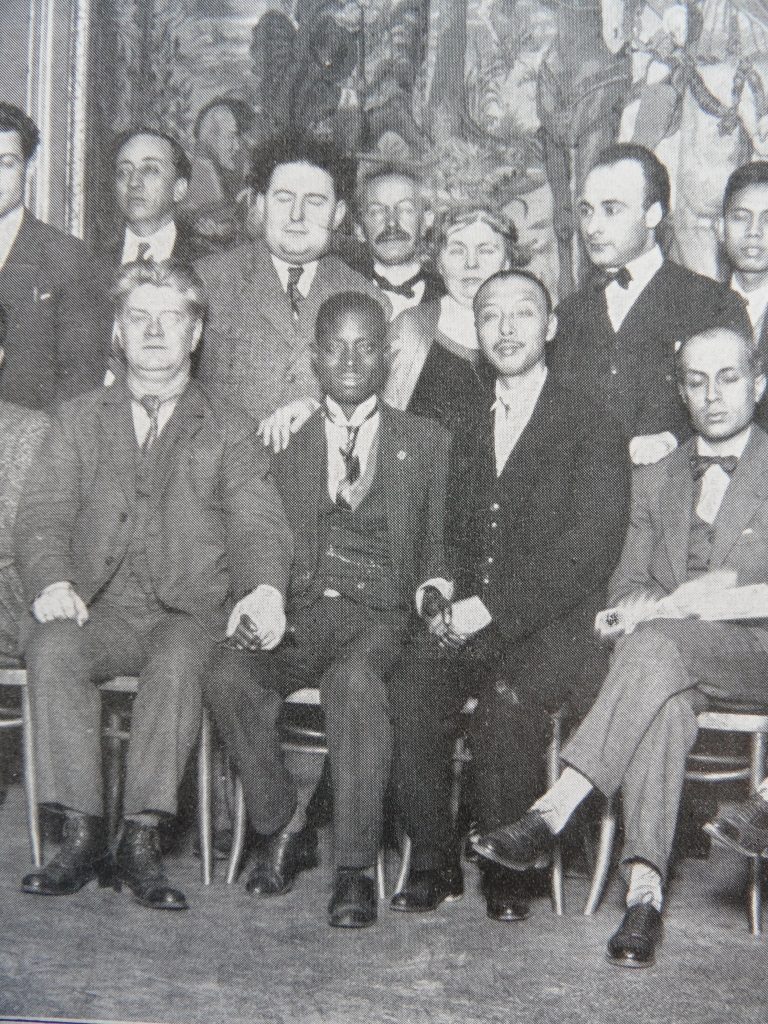
In January 1927, the CDRN was enduring a rancorous split driven by political differences and personal rivalries when it received an invitation to send two delegates to the League against Imperialism’s inaugural congress in Brussels. Senghor’s passionate speech, in which he felt liberated from the need to appeal to the moderate wing of the CDRN, was greeted rapturously by the audience. The CDRN proudly published the speech in full in its newspaper, La Voix des Nègres, and, within months, it had been translated into English and published in the US. Prominent black radicals such as George Padmore would continue to cite from it in numerous publications over the following decades.
After the CDRN split, Senghor launched the more radical League for the Defence of the Negro Race. (LDRN). In June 1927, he published a political pamphlet, La Violation d’un pays, which took the form of a fable, revisiting many of the themes and language from his Brussels speech, condensing accounts of slavery, colonialism and the coming global revolution into 30 pages. That summer, however, his health began to fail. He was suffering from tuberculosis, and his body was wasting away. He died in Fréjus on 25 November 1927.
A Black Man’s Protest
Lamine Senghor, League Against Imperialism and Colonial Oppression, Brussels, 10 February 1927
Ladies and gentlemen, and beloved comrades! I bring you the fraternal greetings, the hearty good-will, and a cry for freedom from the Defense Committee of the Negro Race [Comité de défense de la race nègre].
What is that Committee? It represents a world-wide organization of young Negroes who are devoting their lives to emancipating their brethren. You know that the black race has been the most oppressed of all the peoples of the earth. Over its members the world’s imperialists exercise the right of life and death. We are rallying our forces, nevertheless, to assert our equality with the races that pretend to be superior to us. We challenge that superiority.
Permit me to dwell a moment, by way of introduction, upon the word ‘colonization.’ What does it mean? It means usurping the right of a nation to direct its own destinies. Any nation that is deprived of that right is, in the strict meaning of the word, a colony. The whites have come to us colored people professing to bring us civilization. When the French came to my countrymen in Africa it was with this profession on their lips. But instead of teaching us the French tongue, and giving us the education that they call ‘la lumière universal’ they said: ‘Ah, no. We mustn’t educate the blacks.’ This was because, if we were educated, they couldn’t use us as they wished. That is the way French imperialists have civilized the Negroes. But let me make this point even more precise. I will quote to you some passages from a report made by a former colonial administrator of France and published in several newspapers of that country. It relates to typical colonial abuses.
‘I accuse M. Hutin, who was at that time a colonel and is now a general and a commander of the Legion of Honor, of having ordered the looting of the trading station at Molenga and of having shared the loot.’ A list of stolen articles follows — case of jam for his personal use, pictures, cartridges, a shotgun, a Browning, high-priced cloth, and so on. The author of the report continues: ‘I accuse the Assistant Chief of the post at Bania of having brought before him a chief of the Gana tribe, who refused to tell him where certain Mauser rifles, captured by his men from the German deserters, were hidden. He first caused the chief’s hand to be crushed in an iron copying press. He then had him flogged with lashes containing bits of steel, and, after honey had been rubbed upon his wounds, exposed him in the sun to be stung by bees.’
Who is there that does not shudder with horror at the thought that Frenchmen in the twentieth century still commit atrocities that would shame the worst barbarism of the Middle Ages? A recent decree of the Governor-General of French West Africa provides that the natives shall be compelled to labour upon works necessary for the public welfare whenever the Government so orders. Official regulations prescribe the conditions under which such labor shall be performed. Article 3 says: ‘The working day shall be ten hours, plus two hours for rest.’ Article 9 provides: ‘The minimum daily pay of each worker shall be as follows: women and children, one and one-half francs; adults, two francs.’ This labor is compulsory. The people are forced to toil ten hours a day under the burning sun of Africa for two francs. The women and children work the same number of hours as the men. Yet they tell us that slavery has been abolished, that the Negroes are free, that men are equal. People who say that are imbeciles.
It is true that you can no longer sell a Negro to a white man or a Chinaman [sic] or even to another Negro. But it is a familiar sight to see one imperialist Power sell a whole Negro nation to another imperialist Power. What did France actually do with the Congo in 1912? She simply turned a great territory there over to Germany. Did she ask the people of the country if they wanted to belong to the Germans? Some French politicians write in their press that their West Indian Negroes are beginning to demand too many privileges and that it would be better to sell them to America and get something out of them. It is a lie that slavery has been abolished. It has only been modernized.
You saw during the war how every Negro who could be caught was put into the army, to be taken away and killed. So many were forced to serve that the French governors in Africa began to protest, fearing that the natives would rebel. But since cannon fodder must be had at any cost, France found a tractable Negro, heaped honors upon him, called him ‘commissioner-general representing the French Republic in Africa,’ gave him an escort of French officers and of Negroes decked out in gorgeous uniforms, and sent him back to his native land. There he was received with the most exalted honors. French administrators and colonial governors greeted him, soldiers presented arms to him. So this Negro managed to get eighty thousand more men to add to the half-million already fighting in France.
My fellow countrymen were led off to slaughter during the first Morocco war. Later, during the World War, they were again forced to serve. Even today they are being killed in Morocco and Syria. They have been sent to Madagascar. They have very recently been dispatched to Indo-China, because that country borders on China, and revolution is abroad across the border.
Ah, you Chinamen [sic] among my auditors here, I embrace you as comrades. You are setting a grand example of revolt for all the oppressed peoples. I only hope that they will catch the inspiration from you.
French imperialists, I say, have sent Negro troops to Indo-China to shoot down the natives of that country in case they rebel against French oppression. They tell these troops that they are of a different race from the people whom they are ordered to kill, in case the latter venture to revolt against their so-called ‘Mother Country.’ Comrades, the Negro race has slept too long. But beware; they who have slept long and soundly, when they once awaken, will not fall asleep again.
Now let us see how this ‘Mother Country’ rewards the services of the black soldiers who have been wounded in her defense, the men who have been crippled by the bullets of pretended enemies and can no longer labor to support themselves. They are treated very differently from the French wounded who fought shoulder to shoulder with them on the battlefield, and in defense, as we are told, of the same ‘Mother Country.’ I will cite to you only two examples. Here is a wounded French soldier, graded with ninety-per-cent disability — that is, in the second class. He has one child. The French Government grants him a pension of 6,888 francs a year. Here, on the other hand, is a Negro soldier of the same class, married, the father of one child, wounded in the same way, wounded in the same army, also graded with ninety-per-cent disability. He receives 1,620 francs. Then take a war cripple with one-hundred-per-cent disability. That is to say, he cannot move himself; he must be carried wherever he goes. If he is a white Frenchman he receives 15,390 francs a year; if he is a Negro he gets only 1,800 francs.
Comrades, it is against such injustices, such atrocities as I have just described, that we have organized to defend ourselves. Our young Negroes now have their eyes open. We have been shown that, when we are needed to be slaughtered or to perform heavy labor, we are Frenchmen. But when it comes to giving us our rights, we are no longer Frenchmen — we are Negroes.
Source: Lamine Senghor, ‘A Black Man’s Protest,’ The Living Age, 332:4306 (15 May 1927), 866–8; translation of a speech that appeared in L’Indépendance Belge, 24 March 1927.
From Brussels 1927 to Contemporary Anti-Imperialist Struggles: Rereading Lamine Senghor
Boubacar Tassiou, President of PANAF-2063 / Member of the Centre Thomas Sankara Niger
Introduction
 The centenary of the 1927 Brussels Conference constitutes a major occasion to revisit an important moment in the history of the struggle against imperialism and colonial oppression. This conference took place in a context in which a large part of Africa, Asia, and other regions of the world was subjected to the domination of colonial powers.
The Brussels meeting had a particular significance: it brought together militants, intellectuals, and representatives of colonised or dominated peoples around a single demand — to combat imperialism and defend the right of peoples to self-determination.
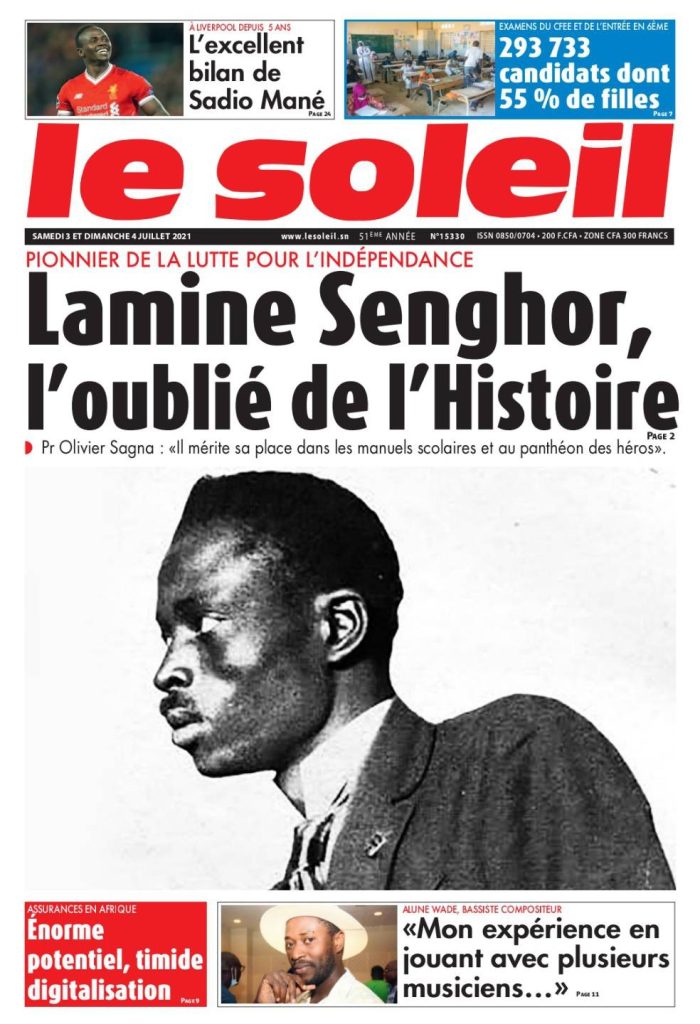
It was in this context that Lamine Senghor, a Senegalese militant and president of the Committee for the Defence of the Black Race, delivered his speech entitled ‘The Black Man’s Struggle for Freedom.’ This speech constitutes a powerful testimony to colonial reality, but also a genuine political reflection on freedom, sovereignty, and solidarity among oppressed peoples.
Lamine Senghor: Exposing the Reality Behind Colonial Discourse
The first merit of Lamine Senghor’s speech is that it lays bare the fundamental contradiction between colonial discourse and the reality experienced by African peoples.
The colonial powers claimed to be bringing ‘civilisation.’ Senghor responds by showing that this supposed civilising mission was accompanied by violence, exploitation, and the deprivation of freedom. He denounces in particular the violence committed by certain colonial agents, forced labour, and discrimination.
His analysis of forced labour is particularly revealing. Although slavery was officially presented as abolished, African populations could still be compelled to work long hours for derisory wages.
Senghor thus shows that domination can change form without disappearing in essence. This is why he states that ‘slavery […] has modernised itself.’ His speech also denounces the unequal treatment reserved for African soldiers who had fought for France during the First World War. They were considered sufficiently French when it was necessary to defend the interests of the colonial power, but became ‘Blacks’ when it was a matter of granting them the same rights.
Colonisation as the Negation of Sovereignty
One of the most important ideas in the speech concerns the definition of colonisation. For Senghor, ‘to colonise is to deprive a people of the right to manage its own affairs as it sees fit.’
This definition extends well beyond the context of 1927 alone. It places the question of sovereignty at the centre of the colonial problem. Colonisation is therefore not merely a territorial occupation. It means that a people no longer fully controls its political decisions, its economy, its resources, and its future.
Senghor also rejects the notion that a people could be considered free while a foreign power controls an essential part of its affairs. His example of Egypt and British control of the Suez Canal allows him to affirm that there can be no true freedom without a real capacity for decision-making.
This conception makes Senghor’s speech a profoundly political text: true freedom presupposes the right of peoples to self-determination.
From Black Struggle to International Solidarity
Lamine Senghor does not, however, confine his struggle to the African cause alone. He expresses solidarity with the peoples of Asia and notably salutes Chinese resistance. He holds that peoples who are victims of imperialism must understand that their struggles are linked.
This idea constitutes one of the most modern aspects of his speech. For him, Africans must not fight in isolation. They must build solidarity with all peoples subjected to domination.
He also establishes a link between colonialism and imperialism. In his conclusion, he states that ‘the imperialist oppression that we call colonisation at home, and that you call imperialism here, is one and the same thing.’
His message is thus clear: oppressed peoples must unite their forces to bring domination to an end and to build a new form of international relations founded on the freedom of peoples.
The Contemporary Relevance of Lamine Senghor’s Thought
A century after Brussels, the world has changed profoundly. The majority of African states have achieved political independence. Yet the question of sovereignty remains central.
To reread Senghor today is not to claim that the realities of 1927 are identical to those of the twenty-first century. It is, rather, to interrogate contemporary forms of dependency.
His questions can still challenge us: who controls natural resources? Who decides the major economic orientations? Do African peoples sufficiently master their resources, their economies, their security, their diplomacy, and their development? What place do we give to our own intellectual and cultural production?
Contemporary anti-imperialist struggle must therefore be conceived around political, economic, military, cultural, and intellectual sovereignty.
Senghor’s legacy also reminds us that sovereignty cannot be built in isolation. African unity, cooperation among peoples, and international solidarity remain essential instruments for defending the independence of nations.
Conclusion
The speech delivered by Lamine Senghor in Brussels in 1927 thus transcends its own time. It constitutes at once a denunciation of colonial violence, a defence of the right of peoples to self-determination, and a call for unity among the peoples who are victims of imperialism.
His fundamental message remains highly relevant: a people can be truly free only when it is capable of deciding its own destiny.
On the occasion of this centenary, our responsibility is therefore not merely to commemorate Lamine Senghor. It is to understand his struggle, to draw lessons from it, and to reflect on contemporary forms of domination and dependency.
As in 1927, the fundamental question remains that of freedom. But today, this freedom must translate into real sovereignty, mastery of our resources, independence of thought, and a strengthened solidarity between African peoples and the peoples of the world.
To remember Lamine Senghor is thus to keep his demand alive: the freedom of peoples is not proclaimed — it is built and defended.
We Have Woken Up.
We Must Not Sleep Again
A contemporary reflection on Lamine Senghor’s 1927 speech
Akhator Joel Odigie, General Secretary, ITUC-Africa1
Nearly a century ago, Lamine Senghor stood in Brussels and asked an unfinished question: if all human beings are equal, why is equality suspended when African labour, land and wealth are at stake? He did not ask colonialism to become kinder. He exposed its contradictions and called the oppressed to organise. For organised labour, answering him means organisation, resistance and vigilance.2
Equality
We are told colonialism is over and the modern world rests on equality. Where is it? Oxfam reports that Africa’s richest men hold more. The richest 1% of the continent dwarfs the poorest half, while global billionaire wealth reached $18.3 trillion in 2025. Lamine Senghor’s question survives: who works, who owns and who decides?3
Colonisation
Lamine Senghor defined colonisation as denying a people the right to govern themselves. Sovereignty weakens when minerals leave unprocessed, tax bases are drained, and productive futures are designed elsewhere. Patrice Lumumba and Kwame Nkrumah understood that Africa’s political independence was incomplete without economic emancipation and unity. Amílcar Cabral insisted that liberation must release a people’s productive forces. Frantz Fanon warned that elites could squander the meaning of independence by acting as intermediaries for foreign capital.4 These African liberation champions eloquently agreed with the arguments of Lamine Senghor, which, sadly, are still relevant today.
Civilisation
Lamine Senghor ridiculed the colonial claim to civilisation. Its hypocrisy still has bureaucratic descendants. Britain spread the English language through empire. The coloniser demanded that the colonised learn his language; his bureaucracy may still demand proof that the lesson was learned, as seen by the United Kingdom’s insistence that nationals of former colonies pass an English proficiency test before accepting them for academic and job opportunities. Chinua Achebe warned of the danger of living inside another people’s story. Léopold Sédar Senghor answered the same arrogance with a civilisation of the universal, built through encounter rather than hierarchy.5
Forced Labour
Lamine Senghor next turned to labour. That is where trade unions must remain. In parts of the Gulf, sponsorship systems associated with Kafala can severely restrict African migrant workers’ ability to leave employers and create risks of forced labour and a semblance of modern slavery.
Africa must also look inward. In South Africa, migrant workers have been scapegoated for unemployment, crime and failing services, while vigilante groups have blocked foreigners from healthcare and education. In Kenya, in September 2026, President William Ruto called for a crackdown on foreigners in small-scale trade, later clarifying that documented foreign workers and investors were welcome.6,7
This is the colonial slumber returning as Afrophobia: an African becomes a foreigner in Africa. Failed politics point workers toward other African workers, while far-right forces weaponise grievance to fracture and estrange society, as is the case of South Africa. Fanon warned that nationalism could decay into chauvinism. ITUC-Africa’s answer is organisation: recruit migrant, informal, domestic, mining, platform and unemployed workers; build working-class consciousness; mobilise for action. Nationality must never become an employer’s weapon.8
Slavery
Senghor was told slavery had been abolished. He replied that it had been modernised. Today, chains may be contractual, financial and technological. Africa loses an estimated $88.6 billion each year through illicit capital flight. Kleptocracy must be confronted at home, but stolen money does not evaporate. It is transferred, hidden and banked somewhere. The imperial-capitalist policeman is alert when African debts fall due, yet strangely sleepy when African wealth disappears. Why?9,10
The New Extraction
Now we are promised salvation through green minerals. Cobalt, copper, lithium, graphite and manganese will power the energy transition. If Africa again exports raw materials and imports finished technology, extractivism will merely have changed colour. In the Democratic Republic of Congo, UN experts have documented mineral production and smuggling under AFC/M23 control. The European Parliament called for suspension of the EU–Rwanda raw-materials memorandum amid concerns over minerals from M23-controlled areas. Europe cannot preach due diligence while its mineral hunger outruns traceability.11
Nor should Africa exchange one external master for another. China’s rise has widened Africa’s choices, but ITUC-Africa has documented labour-rights problems in some Chinese-owned enterprises.12 Burkina Faso’s 2024 reforms increased state participation and local content. The African Mining Vision (AMV) points further: beneficiation, value addition, industrial linkages and integration into a single African market. Africa cannot keep exporting minerals and jobs. Workers must be part of the policy-shaping processes. Industrialisation must be judged by decent work, collective bargaining, community benefit and whether production and distribution improve socio-economic well-being. This requires energy justice: reliable, affordable, sustainable public energy for industry and people.
Artificial intelligence raises the same question. Africa must not provide minerals for data centres, hidden digital labour and consumers for technologies whose rules are written elsewhere. Workers must shape those rules as the algorithm continues to penetrate the workplace.13
War and Imperialism
Lamine Senghor exposed Africans being used in imperial wars against other colonised peoples. Today, conflicts remain entangled with minerals, arms, corporate interests and foreign power. The Congo shows how local violence connects to regional actors and international supply chains. Unequal rules also appear in unilateral coercion. In 2025, 165 states voted at the UN to call for an end to the US embargo on Cuba. Venezuela remains under extensive US sanctions; Washington framed them as accountability measures, while UN human-rights mechanisms warn of wider human consequences. Multilateralism cannot mean rules for the weak and discretion for the powerful.14
Awakening
Lamine Senghor ended with a warning: those who have slept too long and then awaken will not sleep again.15
We must not sleep through imperialism, stolen wealth, union busting, migrant exploitation and Afrophobia, conflict minerals, extractivism or AI without workers’ rights. Neither should we mistake a change of investor for liberation. Africa’s future cannot be written without Africans, nor the future of work without workers.
Lumumba demanded dignity. Cabral demanded control over productive forces. Achebe demanded the right to tell our own story. Fanon warned against the colonial mind reproduced after independence. Léopold Sédar Senghor imagined a universal civilisation without hierarchy. Nkrumah called the unity of the oppressed as a weapon of resistance.
Lamine Senghor gives labour the discipline that joins them: wake up, organise, educate, mobilise and resist. The price of freedom is eternal vigilance. We have woken up. We must not sleep again. The struggle against imperialism continues until we attain victory. Forward to social justice!
Notes
1 ITUC-Africa (African Regional Organisation of the International Trade Union Confederation), www.ituc-africa.org.
2 Lamine Senghor, ‘The Struggle for Freedom of the Negroes’ [Speech], Congress Against Colonial Oppression and Imperialism, Brussels, 1927; reproduced in ‘Voices of 1927 – Anti-Colonial Speeches Revisited’ project materials.
3 Anjali Kamande and Chloe Hallum, ‘Africa’s Inequality Crisis and the Rise of the Super-Rich’ (Oxfam International, 2025), https://doi.org/10.21201/2025.000078; Oxfam International, ‘Billionaire Wealth Jumps Three Times Faster in 2025 to Highest Peak Ever, Sparking Dangerous Political Inequality’, 19 January 2026, https://www.oxfam.org/en/press-releases/billionaire-wealth-jumps-three-times-faster-2025-highest-peak-ever-sparking.
4 Patrice Lumumba, Speech on Zaire’s Independence Day, 30 June 1960, Marxists Internet Archive, https://www.marxists.org/subject/africa/lumumba/1960/06/independence1.htm; Amílcar Cabral, ‘National Liberation and Culture’ [Speech], 1970, Marxists Internet Archive, https://www.marxists.org/subject/africa/cabral/1970/cabral-nat-lib-culture.html; Frantz Fanon, The Wretched of the Earth, trans. Constance Farrington (New York: Grove Press, 1963; orig. 1961).
5 UK Home Office, ‘Prove Your Knowledge of English for Citizenship and Settling: Who Does Not Need to Prove Your Knowledge of English’, GOV.UK, n.d., https://www.gov.uk/english-language/exemptions; John Brooks, ‘Chinua Achebe, the Art of Fiction No. 139’, The Paris Review, 133 (1994), https://www.theparisreview.org/interviews/1720/the-art-of-fiction-no-139-chinua-achebe; UNESCO, ‘Celebrating the World Day for African and Afro-Descendant Culture 2024’, 24 January 2024, https://www.unesco.org/en/articles/celebrating-world-day-african-and-afro-descendant-culture-2024.
6 Human Rights Watch, ‘South Africa: New Waves of Xenophobic Attacks’, 20 May 2026, https://www.hrw.org/news/2026/05/20/south-africa-new-waves-of-xenophobic-attacks; ITUC-Africa, ‘ITUC-Africa Statement on the Rule of Law, the Protection of Migrant Workers, and African Solidarity in South Africa’, 6 July 2026, https://www.ituc-africa.org/ITUC-AFRICA-STATEMENT-ON-THE-RULE-OF-LAW-THE-PROTECTION-OF-MIGRANT-WORKERS-AND.html; Faith Kipkemoi, ‘Ruto Orders Crackdown on Foreigners in Small Business Sector’, The Star, 2 September 2026, https://www.the-star.co.ke/news/2026-09-02-ruto-orders-foreigners-out-of-small-trade; Kevin Gachie, ‘Ruto Says Kenya Remains Open to Foreign Investors, Workers Who Follow the Law’, Citizen Digital, 12 September 2026, https://citizen.digital/article/ruto-says-kenya-remains-open-to-foreign-investors-workers-who-follow-the-law-n390049; Alternative Information and Development Centre, ‘AIDC Statement on the Rising Tide of Afrophobia and Xenophobia in South Africa’, 11 June 2026, https://aidc.org.za/aidc-statement-on-the-rising-tide-of-afrophobia-and-xenophobia-in-south-africa/.
7 International Labour Organization, ‘Sponsorship Reform and Internal Labour Market Mobility for Migrant Workers in the Arab States’, 23 July 2023, https://www.ilo.org/resource/other/sponsorship-reform-and-internal-labour-market-mobility-migrant-workers-arab.
8 Fanon, The Wretched of the Earth, esp. ‘The Pitfalls of National Consciousness’.
9 United Nations Conference on Trade and Development, Economic Development in Africa Report 2020: Tackling Illicit Financial Flows for Sustainable Development in Africa (United Nations, 2020), https://unctad.org/publication/economic-development-africa-report-2020.
10 Senghor, ‘The Struggle for Freedom of the Negroes’.
11 United Nations Security Council, Final Report of the Group of Experts on the Democratic Republic of the Congo (S/2025/446) (United Nations, 2025), https://digitallibrary.un.org/record/4085466/files/S_2025_446-EN.pdf; European Parliament, ‘Escalation of Violence in the Eastern Democratic Republic of the Congo’, 13 February 2025, https://www.europarl.europa.eu/doceo/document/TA-10-2025-02-13_EN.html.
12 Henry Mote, ‘Chinese Investments in Africa: Whose Fooling Who?’, ITUC-Africa, 14 July 2018, https://ituc-africa.org/Chinese-Investments-In-Africa-whose-fooling-who.html; Ministry of Energy, Mines and Quarries, Burkina Faso, ‘Exposé sur la situation de la Nation 2024: le Gouvernement renforce son engagement dans les secteurs minier et énergétique’, 17 March 2025; Présidence du Faso, https://www.presidencedufaso.bf/; African Union, Africa Mining Vision: Transparent, Equitable and Optimal Exploitation of Mineral Resources to Underpin Broad-Based Sustainable Growth and Socio-Economic Development (African Union, 2009), https://au.int/sites/default/files/documents/30984-doc-africa_mining_vision_english.pdf.
13 International Labour Organization, ‘Generative AI and Jobs: A 2025 Update’, 20 May 2025, https://www.ilo.org/publications/generative-ai-and-jobs-2025-update.
14 United Nations General Assembly, ‘Necessity of Ending the Economic, Commercial and Financial Embargo Imposed by the United States of America against Cuba’ (A/RES/80/4) (United Nations, 2025), https://digitallibrary.un.org/record/4091600; US Department of the Treasury, ‘Treasury Sanctions Venezuelan Officials Supporting Nicolas Maduro’s Repression and Illegitimate Claim to Power’, 10 January 2025, https://home.treasury.gov/news/press-releases/jy2778; United Nations Human Rights Council, ‘The Negative Impact of Unilateral Coercive Measures on the Enjoyment of Human Rights’ (A/HRC/RES/61/6) (United Nations, 2026), https://searchlibrary.ohchr.org/record/35381.
15 Senghor, ‘The Struggle for Freedom of the Negroes’.