The Global Left’s Mood of Resignation Must Be Lifted: The Forty-Sixth Newsletter (2026)
The far right can be defeated, and the openings multiplying from Brazil to India and the United States demand that movements exchange defeatism for confidence that can become a material force through organisation.
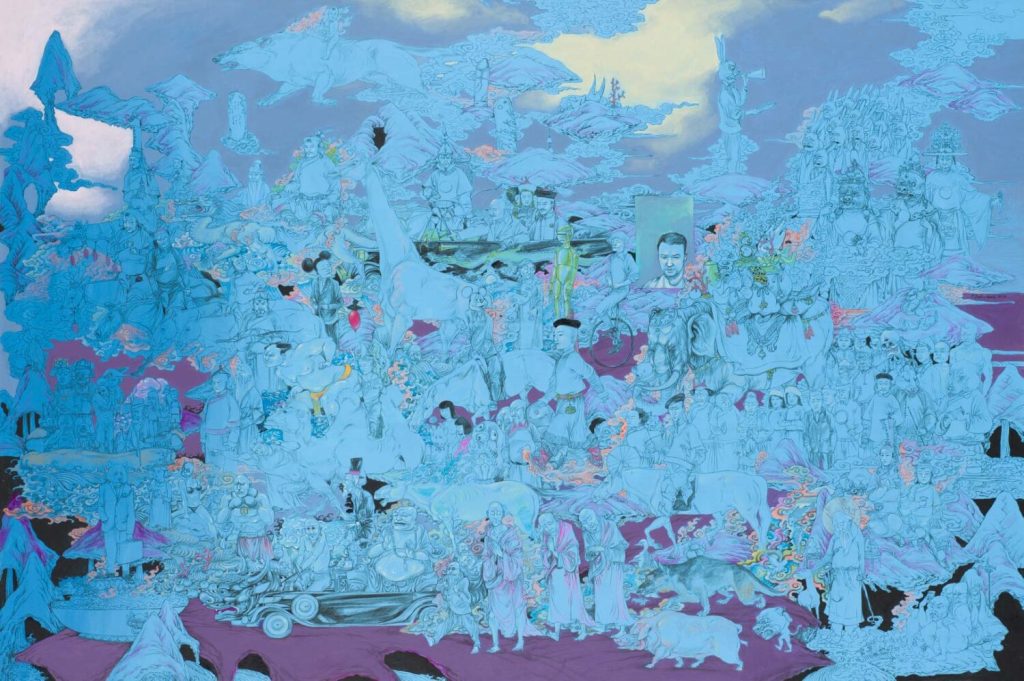
Batjargal Baatarzorig (Mongolia), Nomads, 2014.
Dear friends,
Greetings from the desk of Tricontinental: Institute for Social Research.
Earlier this year, the axis of politics appeared to favour the far right of a special type and its hyper-imperialist ambitions. The United States, led by President Donald Trump, conducted a blitzkrieg against Venezuela, abducted its president Nicolás Maduro and his wife and National Assembly member Cilia Flores, illegally imprisoned them in New York, and effectively handed the country’s oil to US multinational corporations. Then, about two months later, the United States and Israel began a war of aggression against Iran, which appeared to repeat the Venezuela story. However, Iran’s strikes against US military bases in the Persian Gulf and against Israel itself transformed the global balance of forces and exposed the limits of hyper-imperialism’s military power.
After the military strike on Venezuela, Trump’s hunger to seize all Latin American countries seemed to extend to the world. But Iran’s retaliation sent him back to Latin America, where he set his focus on fomenting the Angry Tide. Elections in Costa Rica, Peru, and Colombia delivered victories for the far right, whose real prize was always Brazil – the largest country in Latin America, with a landmass half the size of South America. After the first round of elections on 4 October, it appeared that the far right’s candidate, Flávio Bolsonaro, would prevail over President Luiz Inácio Lula da Silva. However, millions of people mobilised to prevent this outcome in the second round on 25 October, and Lula prevailed. His victory establishes a crucial social-democratic defensive line against the Angry Tide in Latin America. A Bolsonaro victory would have emboldened the continent’s reactionary forces and given confidence to neo-Nazi currents far beyond Brazil. Preventing that outcome matters enormously. Democratic space, public institutions, and social protections are material conditions for working-class organisation. Their defence cannot be dismissed as a distraction from the struggle for socialism.
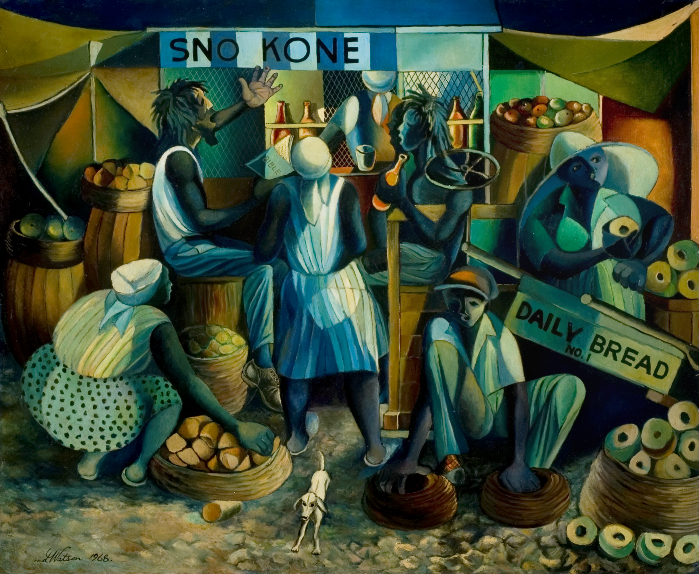
Osmond Watson (Jamaica), City Life, 1968.
Lula’s victory came alongside massive mobilisations in India and Europe against austerity and for social justice. These developments have different histories and possibilities, but together they demand that we reconsider the mood of resignation that has settled over too much of the global left. By early November, the focus of possibility had shifted to the United States, where Trump’s Republican Party suffered a decisive defeat in the midterm elections. This defeat has dented the ambitions of US hyper-imperialism because it has deepened divisions within the institutions through which US power operates. Disputes over budgets, investigations, and political authority will complicate the administration’s freedom of manoeuvre.
These fissures create openings for struggle, particularly since there will now be eight members of the US Congress affiliated with the Democratic Socialists of America. The average age of these representatives is 38 (the youngest, Melat Kiros, is 29 and the oldest, Chris Rabb, is 56). If they fall in line with the Democratic Party leadership’s habit of war and austerity, these members will face pressure from grassroots forces that can turn popular exhaustion with war into demands against the institutions and interests that sustain it.
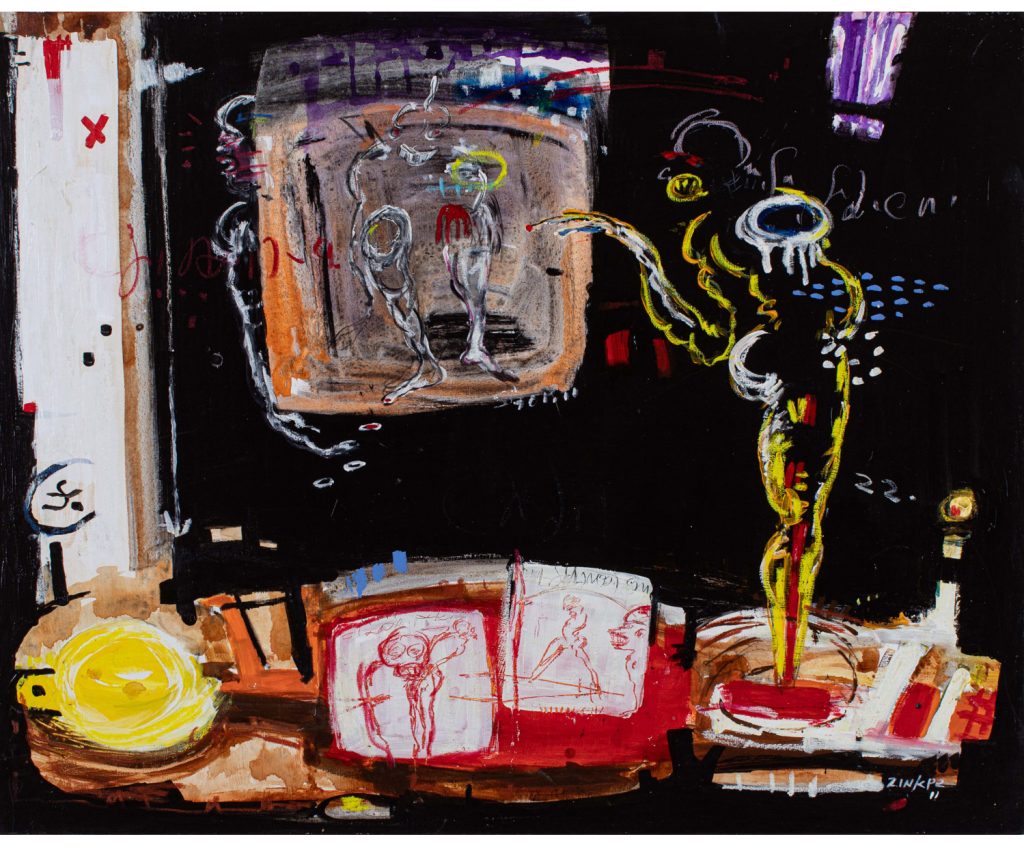
Dominique Zinkpè (Benin), Untitled, 2011.
In South Africa, the Communist Party (SACP) contested democratic elections independently under its own name for the first time since 1994. The SACP has exceeded its own expectations, receiving more than 700,000 votes and winning over 260 seats across the country. The fact that the party of the working class asserted itself electorally is a political act of the highest significance. The SACP’s manifesto connects electricity, employment, housing, and water to questions of property ownership, capital, and power. The SACP’s electoral intervention has helped create political space for an African left that joins social emancipation with national sovereignty and is unembarrassed to stand alongside the anti-imperialist aspirations expressed in the Alliance of Sahel States, including through Burkina Faso’s President Ibrahim Traoré. Such solidarity requires political engagement and independent judgement.
The upsurge of students and workers is gathering force in India and rebounding through other parts of Asia and Africa as peasant and other oppressed communities feel the immensity of the opportunity. Brazil’s example travels right through these encounters: it demonstrates that the far right can be defeated. That fact matters to people worn down by repression and repeated disappointment. Confidence becomes a material force when knowledge of Lula’s victory brings a new person to a meeting, persuades a workplace to organise, or sustains a village through another difficult week of struggle.
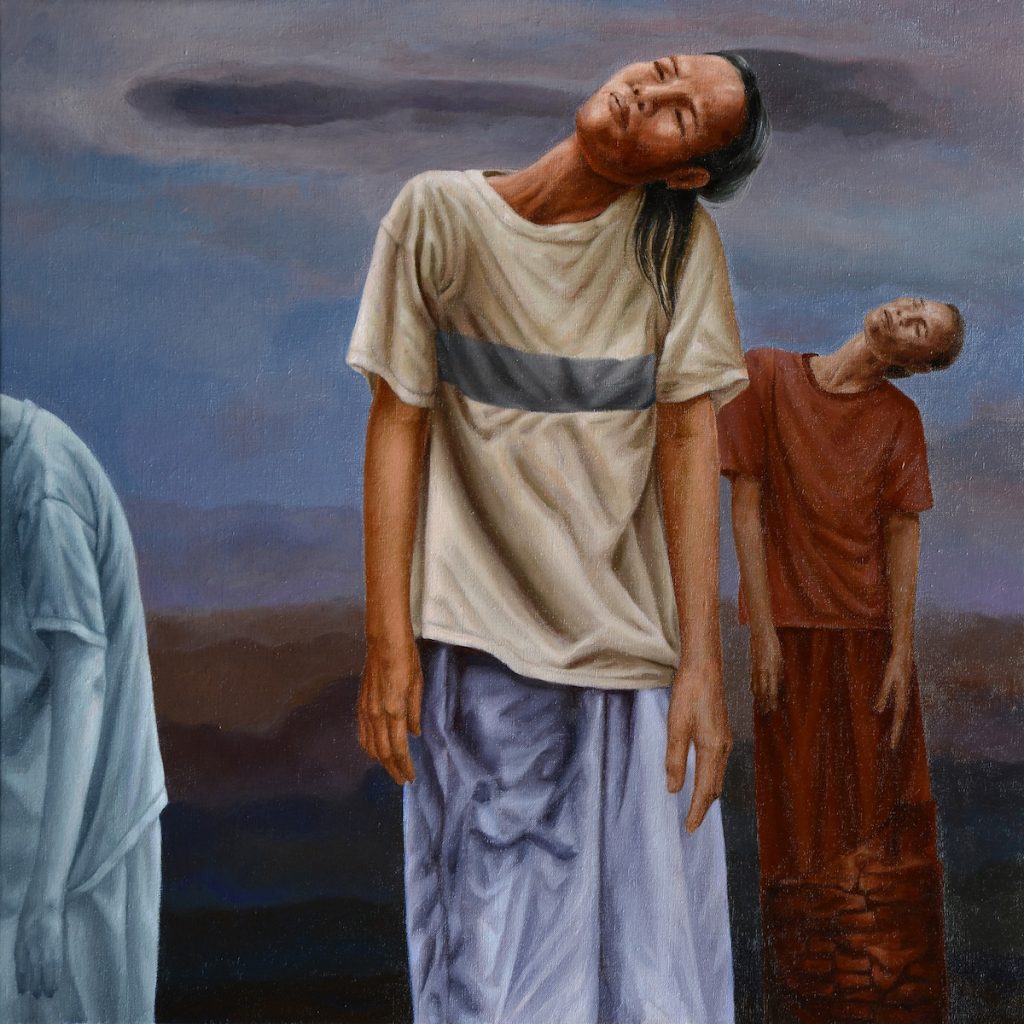
Ivan Sagita (Indonesia), Is It as Simple and as Easy as This?, 2014.
For years, we have been clear that the objective conditions favour the left far more than the right. The United Nations Conference on Trade and Development (UNCTAD) published an important report called A World of Debt 2026 that shows that developing countries paid $995 billion in net interest on public debt in 2025. In many developing countries, home to 3.7 billion people, interest payments on debt exceed spending on either education (in 20 countries) or health (in 46 countries), with many countries falling into both categories. These figures describe a hierarchy of priorities enforced by the power of finance capital. Creditors demand payment while children in our countries sit in classrooms without teachers and patients suffer without medicine. If developing countries borrowed at rates available to developed countries, UNCTAD estimates that they would save around $500 billion annually. Countries that most urgently need investment face higher costs for obtaining it and then must curtail the very expenditures that could improve living conditions and strengthen productive capacity.
The International Monetary Fund’s October 2026 World Economic Outlook report registers some of these facts and then urges governments to provide temporary, targeted income support during cost-of-living crises. A temporary payment is necessary but insufficient. Humanity needs public systems that can guarantee essential goods, direct investment, and reduce dependence on volatile markets. Even extreme liberals cannot address these issues, since they defend an economic framework that subordinates public provision to private accumulation and then express bewilderment when its victims lose confidence in the institutions administering it. At that point, they ask people to defend democracy, even though they have narrowed the economic choices democracy is permitted to make. The far right of a special type enters this breach with a counterfeit rebellion. It directs anger toward migrants, minorities, women, and the left while protecting the power of those who own the banks, the land, and the largest corporations.

Pauline Kahurangi Yearbury (Aotearoa), Noah’s Famous Cream Trip, 1966.
For years, we have asked why the working class drifts toward the far right and what the left must do to gather its forces and provide an alternative. Working people are neither permanently reactionary nor automatically revolutionary. Our political direction develops through struggle, through the organisations available to us, and through our experience of whether collective action can change our lives.
Gathering our forces therefore takes on a concrete meaning, which begins by assembling trade unions and peasant organisations, women’s platforms and youth groups, movements of the oppressed and the discouraged. These forces, sometimes hidden in unexpected corners across the world, require each other. They also require an assessment that goes beyond defeatism and shows us how the world is indeed in motion. That is what the International Peoples’ Assembly (IPA) has been building, and that is what Tricontinental: Institute for Social Research studies and writes about. Subscribe to the IPA’s newsletter and our weekly newsletter. If you are part of a movement, write to the IPA to find a way to get involved in its global campaigns.
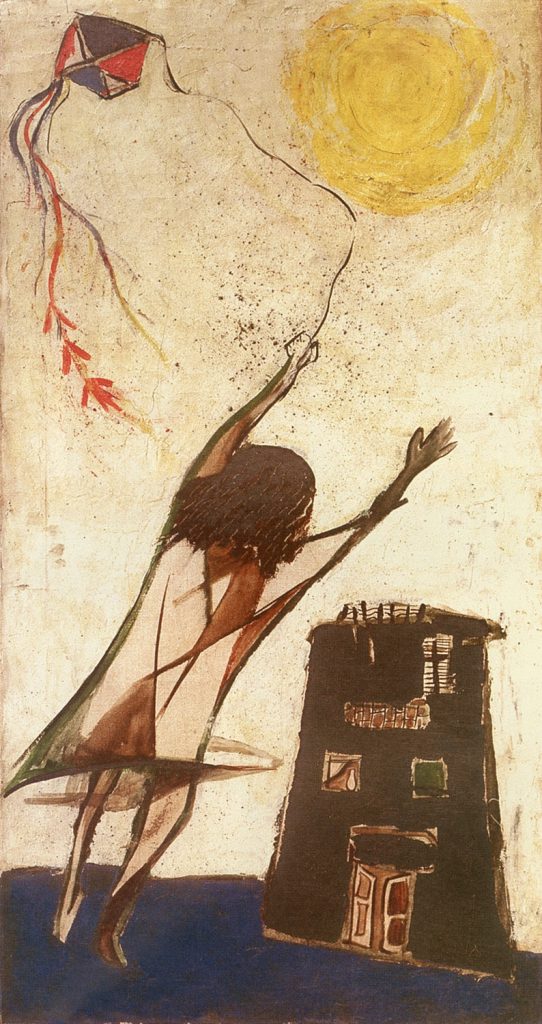
Gazbia Sirry (Egypt), The Kite, 1960.
We have been building an analysis toward a left programme. It begins in the present, with a strong programme to improve people’s lives and defend social gains. It then develops toward the socialist future, built on productive forces enhanced through democratic planning. What is clear to us is that whatever the programme, peace and anti-imperialism must be at its centre. War destroys productive capacities, raises the cost of living, and diverts resources from human development. Across borders, these struggles require cooperation among movements and governments willing to challenge the privileges of creditors and the coercion of imperial power.
There is no single electoral formula for this work. In one country, a broad alliance may be necessary to block the far right. In another, independent communist intervention may become essential to restore a working-class voice. The test is whether a tactic strengthens popular organisation and advances the capacity to act beyond the next election. Alliances must be judged by the social forces they mobilise, the commitments they secure, and the room they create for further struggle. Our internationalism must make these experiences available to one another, without pretending that Brazil supplies a ready-made model for India, or that South Africa’s choices can be copied across a continent shaped by distinct histories of liberation and unfinished struggles over class power. None of the openings before us guarantees an advance. Each places a responsibility upon organised forces. The question is whether the left can turn relief into confidence, confidence into organisation, and organisation into lasting power. The world is in motion. We must move with our people, carrying a programme they can make their own.
With that on my mind, here is a little poem from me to you, called ‘A Century, a Struggle’:
From mine and mill, from fields of cane,
They came to break the rule of gold,
To claim the bread, to end the pain,
And build a world no crown could hold.A hundred years: the flags have flown,
Yet debt still binds the hands that sow.
The fruit is theirs, the seed our own.
Our children starve where harvests grow.No throne will grant the world its bread.
No bomb can teach the seed to bloom.
We march with those who dreamed and bled
To give the unborn nations room.
Warmly,
Vijay