Lula and the Terrible Realities of the Era of Counterrevolution: The Forty-Fifth Newsletter (2026)
This October, millions of Brazilian workers mobilised to defeat the far right; now the essential task begins: strengthening mass movements and forging a sovereign economic policy that develops Brazil’s productive forces.
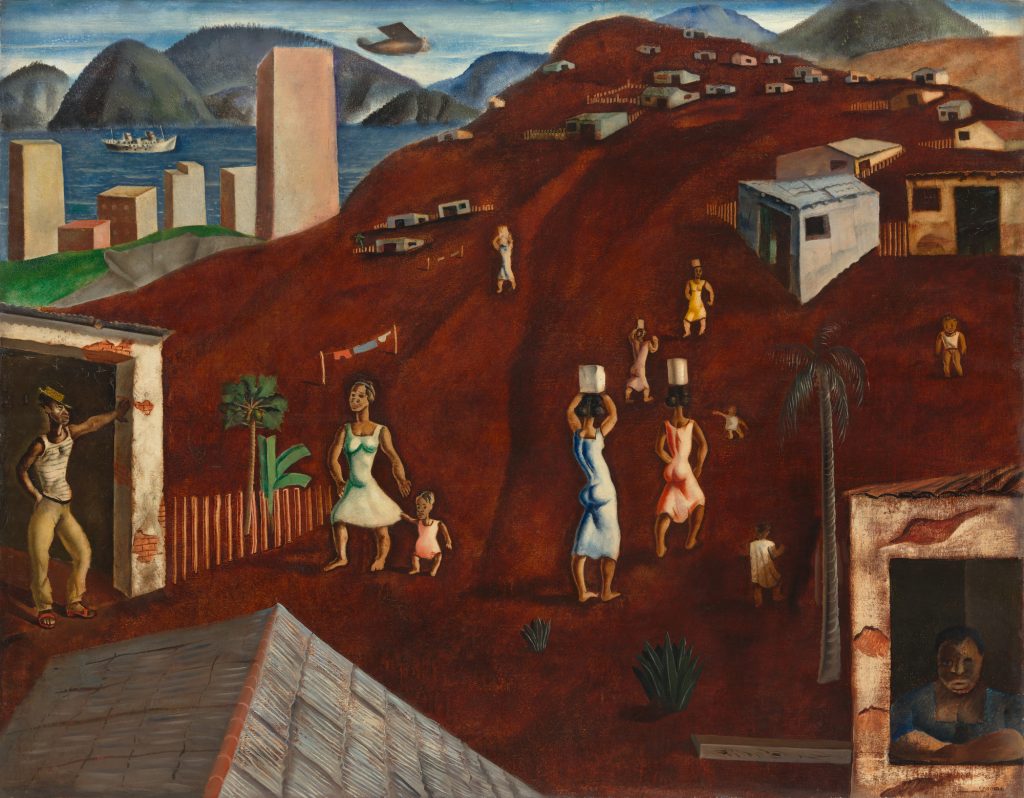
Cândido Portinari (Brazil), Morro (Hill), 1933.
Dear friends,
Greetings from the desk of Tricontinental: Institute for Social Research.
Luiz Inácio Lula da Silva, known as Lula, has sought the presidency of Brazil eight times since 1989. He has won the presidency four times (2002, 2006, 2022, and 2026), most recently at the age of eighty. Throughout Lula’s political career – from his election to the leadership of the metalworkers’ union in São Bernardo do Campo and Diadema in 1969 to this most recent victory – Brazil has been either under a military dictatorship (1964–1985) or under a democratic order in which the old ruling classes and their allies in Washington have retained the upper hand. This balance of forces has constrained what Lula could achieve in office.
Bora Lula – ‘let’s go, Lula’ – was the slogan of this election. But go where? Brazil’s workers and peasants, its inhabitants of peripheral neighbourhoods, and its movements for land and housing flooded the streets before the second round of the election to prevent the return of the far right represented by Flávio Bolsonaro and to press their own demands. After three previous Lula presidencies, however, these limits are not abstract. Winning office alone cannot dissolve the power of finance, carry out agrarian reform, end precarious work, or dismantle the institutions through which the wealthy exercise their authority. Lula’s victory protects hard-won democratic and social gains from the far right, but it does not alter the difficult terrain of this era of counterrevolution.
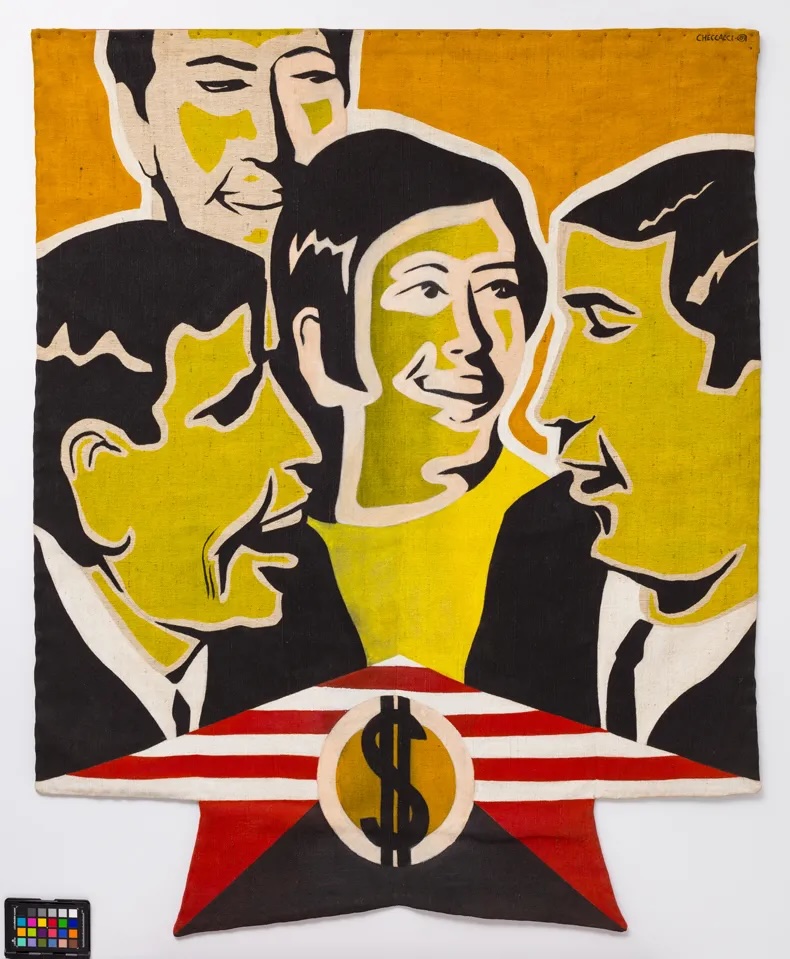
Pietrina Checcacci (Brazil), Dinheiro (Money), 1967.
Since the early 1990s, counterrevolutionary forces have enjoyed a new degree of global predominance during a period we have euphemistically named neoliberalism or globalisation. Cycles of military dictatorships and coups in previous decades had already sought to crush the forces of national liberation and socialism. The debt crisis of the 1980s and the destruction of the USSR then decisively altered the international balance of forces, allowing this counterrevolutionary offensive to consolidate. Imperialism, constrained in part by the Soviet Union, now acquired greater freedom to punish governments that defied its authority. The names given to this period, neoliberalism and globalisation, describe important aspects of its policies and economic integration, but they can obscure its political substance. Counterrevolution, as a concept, describes the organised reversal of the gains made through socialist, working-class, and national liberation struggles and clarifies which forces advanced and which were compelled to retreat.
The establishment of the World Trade Organisation (WTO) in 1995 expressed the ambition to consolidate a single global commercial order. Common rules disciplined countries with radically unequal histories and productive capacities in ways that favoured powerful corporations, while new intellectual property restrictions narrowed access to technologies needed to develop the productive forces. Capital-account liberalisation accelerated, while the 1997 Fifth Protocol to the General Agreement on Trade in Services (GATS) opened financial markets further to foreign financial firms. As capital became more mobile, states faced growing pressure to compete for investment while neoliberal reforms weakened capital controls, public control over finance, and central planning. At the same time, transnational finance expanded enormously. BlackRock illustrates the extraordinary expansion of asset management: its assets under management grew from $165 billion in 1999 to $15.5 trillion by September 2026 – nearly ninety-four times its 1999 level in nominal terms. Goldman Sachs similarly illustrates the expansion of banking and investment management, with total assets rising from about $250 billion in 1999 to $1.81 trillion in 2025, a sevenfold increase.
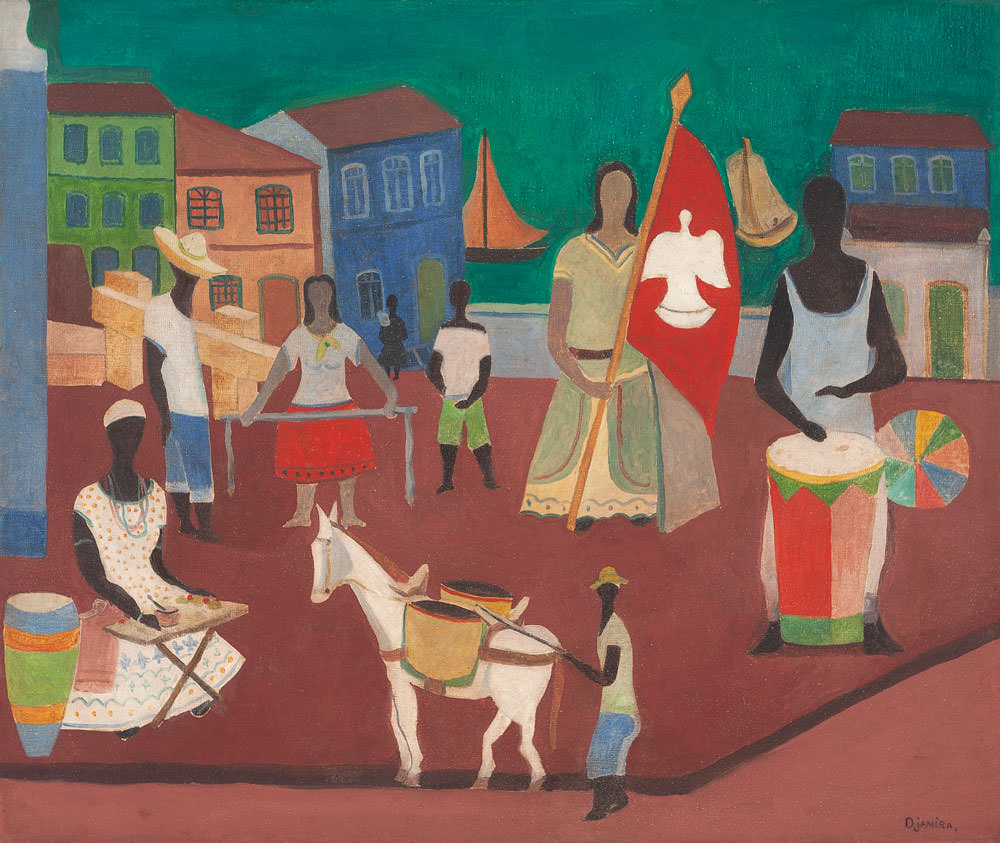
Djanira da Motta e Silva (Brazil), Festa do Divino – Paraty (Feast of the Divine in Paraty), 1960.
Across much of Europe and North America, social-democratic and liberal parties increasingly accommodated the neoliberal turn, retreating from earlier commitments to expand social welfare and working-class power. This meant that forces further to the left had to carry much of the struggle for democratic rights and social welfare, even as they were weakened by direct attacks from US imperialism and by the restructuring of production and the growth of precarious work from the 1980s onward. With the destruction of the USSR, many communist and left parties disbanded, changed course, or sharply declined, while armed movements were weakened by sustained military offensives (India’s Maoists) or went into a long process of demobilisation (Colombia’s FARC-EP and Turkey’s PKK). There were indeed several important breakthroughs in this period, such as the end of apartheid rule in South Africa in 1994, the start of the Bolivarian process in Venezuela in 1998, and the end of the monarchy in Nepal in 2008. In each of these cases, however, national-democratic transformations occurred while capitalist property relations largely survived. The Bolivarian process went furthest, transforming the political order, including through the construction of socialist communal institutions, but it did not overcome Venezuela’s dependence on crude-oil exports.
Under these conditions, practical programmes across much of the left developed along three connected axes: the defence of democratic institutions, the defence and expansion of social welfare, and the construction of multilateral institutions that might widen the room for sovereign development. Brazil’s experience under Lula must be read within this broader context.
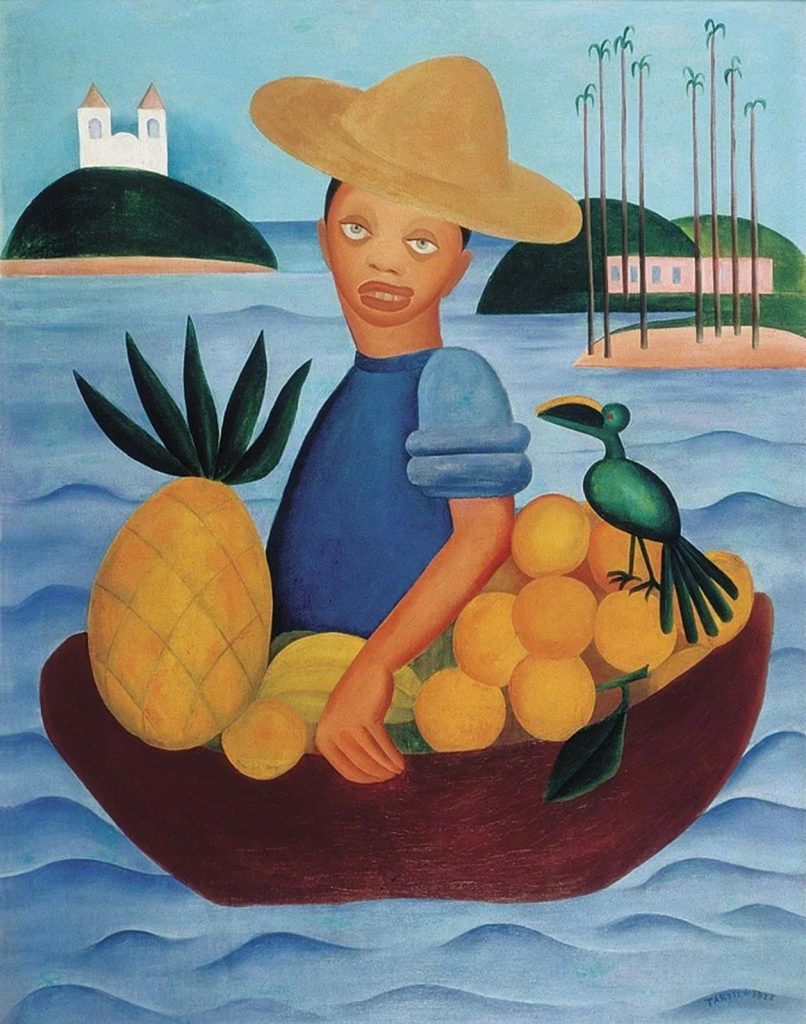
Tarsila do Amaral (Brazil), O Vendedor de frutas (The Fruit Vendor), 1925.
Democracy. In 1975, Lula was elected president of his union and soon became a leading figure in the labour movement’s confrontation with the military dictatorship. It is now forgotten that the wave of strikes between 1978 and 1980 and the founding of the Workers’ Party (PT) in 1980, in which Lula played a leading role, helped weaken the dictatorship and accelerate the struggle for redemocratisation. These struggles were part of a much broader opposition movement that eventually brought military rule to an end in 1985. Working-class mobilisation, together with peasant struggles that would coalesce nationally in the Landless Workers’ Movement (MST), founded in 1984, expanded the fight for the right to organise unions, publish newspapers, build political parties, and contest elections. Across Latin America, the far right and its allies have used a range of instruments against the left to roll back democratic gains, from lawfare – including the 2016 impeachment of Dilma Rousseff in Brazil and the recent arrest of Ecuador’s former presidential candidate Luisa González – to direct military intervention, as in the US attack on Venezuela in January 2026 and the kidnapping of President Nicolás Maduro and first lady and National Assembly member Cilia Flores. Lula’s re-election preserves hard-won democratic gains, but by itself does not enlarge popular participation between elections. The MST and other mass organisations, along with youth groups and digital initiatives such as the WhatsApp channel Exército do Lula (Lula’s Army), which attracted more than 10 million followers, played an active role in mobilising voters during the campaign, particularly before the second round. Over the course of the next few years, trade unions, neighbourhood organisations, peasant movements, and movements of the urban poor will need to grow in social strength to ensure that democratic procedures are made less vulnerable to money, manipulation, and organised intimidation. They must also spearhead the battle of ideas and of emotions in terrains where ultra-right forces have developed strongholds, such as social media and faith-based communities.
Social welfare. In his three previous terms in office, Lula has fought to expand social welfare through healthcare, pensions, education, housing, and income support. Brazil’s statistical agency (IBGE) reported that poverty fell from 27.3% in 2023 to 23.1% in 2024 – still an unacceptably high share of the population, but the third consecutive annual decline. Behind those percentages stand people able to purchase necessities, children with greater security, and households recovering a measure of dignity. Redistribution that does not transform economic power and build the productive forces is necessary but limited. Over the post-dictatorship period, Brazil has experienced continued deindustrialisation alongside persistently low levels of investment, particularly in infrastructure. Without a stronger productive base and expanding public revenues, social programmes remain more vulnerable to fiscal and political bargains with wealthy interests rather than being anchored in sustained income growth and a broader tax base. Lula’s three terms in government secured significant social advances, but the political compromises that enabled those advances also set limits on how far they could go and exhausted the alliances needed to fight for each inch of state goodwill. The far right grows within this exhaustion, converting the humiliation of insecure work into resentment against migrants, women, minorities, and the left. Without transforming the social relations that reproduce insecurity, it remains difficult to protect and expand human dignity. On this difficult terrain of everyday emotions, the simplistic and dangerous explanations of the far right can take hold.
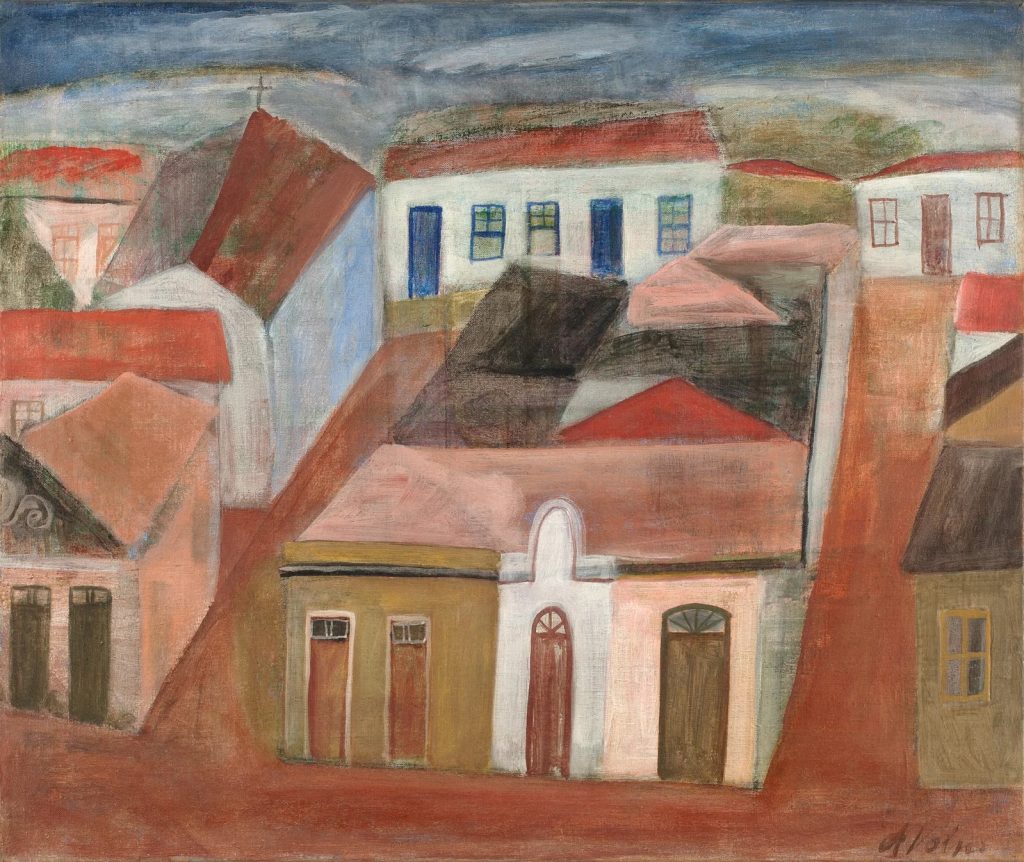
Alfredo Volpi (Brazil), Casario de Itanhaém (Houses in Itanhaém), late 1940s.
Multilateralism. From his first term, Lula has been a champion of South-South trade and cooperation as a means of widening the sovereign space available to countries of the Global South. Brazil did not join Cuba and Venezuela in the ALBA process in 2004, but it worked with Venezuela to build the Union of South American Nations (UNASUR) in 2008 as part of its commitment to regional integration. The formation of BRIC in 2009 brought together the major Southern countries into a trade bloc that has since expanded and become increasingly engaged in debates over the reform of global governance. Just before the election, Brazil joined Australia, Barbados, Canada, the European Union, India, and Kenya as an initial co-sponsor of Partners for Multilateralism (P4M), an initiative to defend and reform the multilateral system. Together, these initiatives reflect Lula’s understanding that Brazil should act as a bridge between the West and the South and have an ‘active and proud foreign policy’ (política externa ativa e altiva), which means that it should not merely react to Western proposals but help shape multilateral platforms itself. Such cooperation brings together governments with different class projects and therefore does not in itself imply a common programme of social transformation. Its more limited but important purpose is to defend sovereign space and expand access, for instance, to development finance through institutions created by countries of the South, such as the New Development Bank, currently led by former Brazilian president Dilma Rousseff.
These three axes have preserved indispensable gains during this era of counterrevolution. If these defensive programmes harden into the entire political horizon, as they often do, their limits become dangerous. People need not only to escape hunger but to understand why insecurity keeps returning and to build the political strength needed to overcome the structures that reproduce it. Otherwise, frustration can be captured by forces that promise a faux rebellion while strengthening the owners of wealth, which is almost what happened in this tight election in Brazil. Counterrevolution reproduces itself partly by teaching the oppressed that emancipation is impossible.
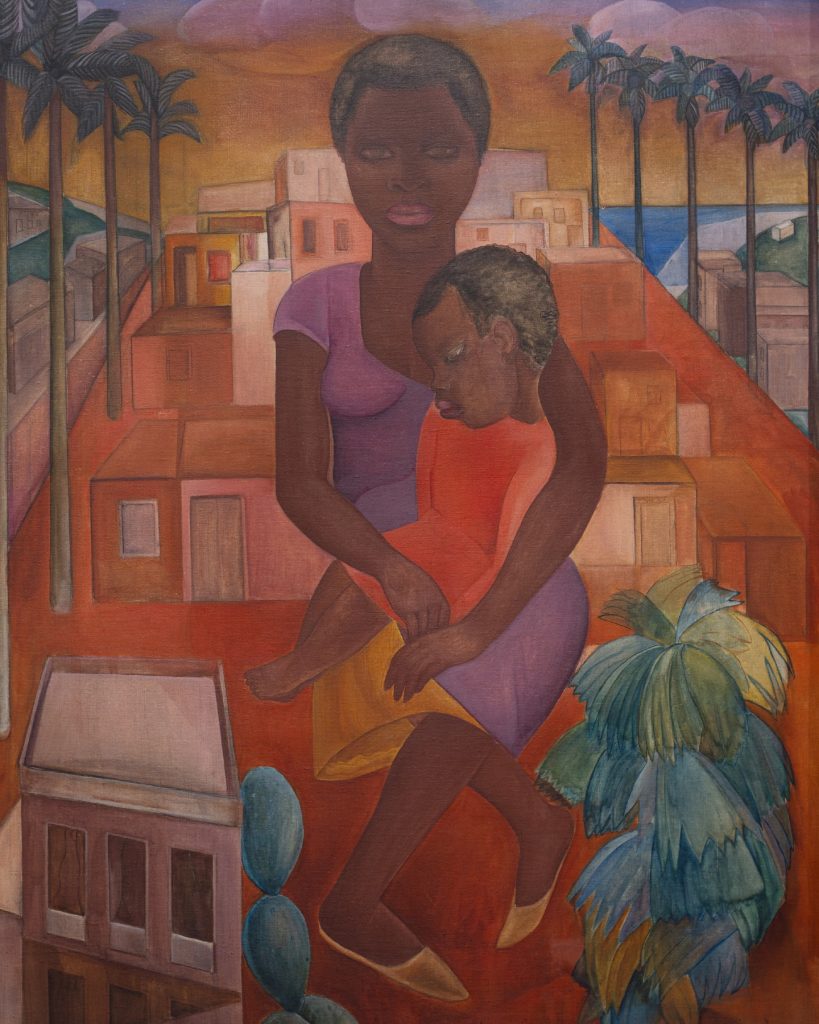
Lasar Segall (Brazil), Morro Vermelho (Red Hill), 1926.
Lula’s victory must be celebrated as an achievement of Brazil’s working people, who came out in the millions to defeat Bolsonaro. But now the work must begin: to strengthen movements, to continue to emancipate people from their suffering, and to build a sovereign economic policy that develops Brazil’s productive forces. The future cannot rest indefinitely upon one leader’s extraordinary ability to assemble a majority. What comes next is not just the next Lula but a rebuilt left capable of generating millions of Lulas. And thus we might see the tide turn and this era of counterrevolution open to a new period in which our revolutionary expectations can be realised.
In the run-up to the election, a host of remarkable Brazilian artists, such as Chico Buarque, Caetano Veloso, Gilberto Gil, Daniela Mercury, Xamã, and Ebony, sang ‘Bora Lula’ as part of the campaign. The song may be heard less often now, but its refrain should continue to echo each day along Brazil’s streets:
Nosso povo tá na rua
A mudança continua.Our people are in the streets.
The change continues.
Warmly,
Vijay