Food as an Act of Resistance
As La Via Campesina mobilises for food sovereignty on 16 October, four cooks, chefs, and organisers explore who controls the land, seeds, and knowledge behind the food on our tables.
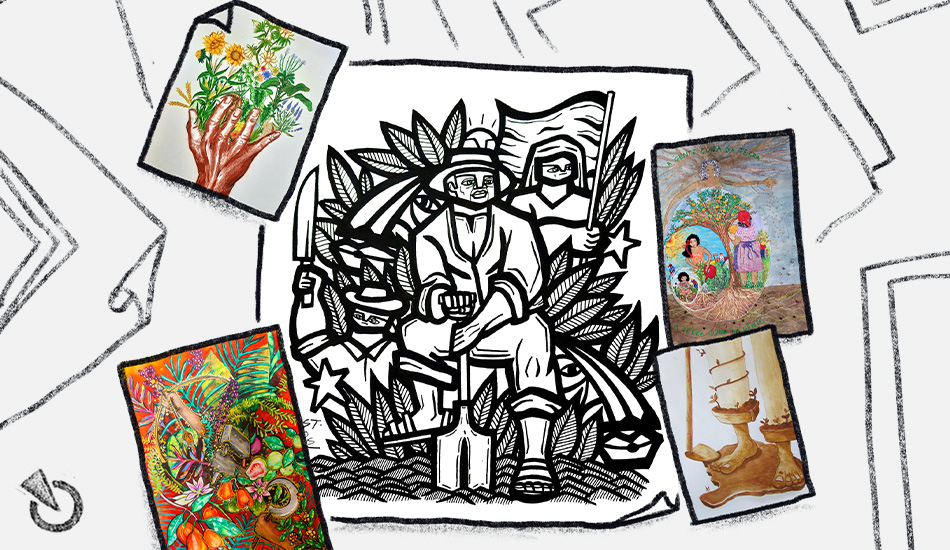
The images in this art bulletin are from the exhibition MST: 40 Years, an online exhibition of illustrations celebrating four decades of struggle for land and agrarian reform by Brazil’s Landless Rural Workers’ Movement (MST), organised in partnership with Tricontinental: Institute for Social Research and other organisations.
Listen to ‘A desalambrar’ (Tear Down the Fences!), written and performed by Uruguayan singer-songwriter Daniel Viglietti and also performed by Chilean singer-songwriter and theatre director Víctor Jara.
‘A desalambrar’ raises a fundamental question: who owns the land, and who has the right to cultivate it? The song’s call for agrarian reform and collective control over the resources that sustain life resonates with the struggle for food sovereignty.
Every 16 October, on World Food Day, La Via Campesina and its member organisations around the world mobilise for the International Day of Action for Peoples’ Food Sovereignty and against Transnational Corporations. Their mobilisation affirms that food systems should serve peoples’ needs and protect nature rather than generate profits. The movement also calls for the defence of peasant seeds – seeds that farming communities have cultivated, selected, saved, and exchanged over generations – and communities’ rights to save, reproduce, exchange, and sell them.
To explore how the struggle for food sovereignty extends from the land to the kitchen, encompassing the preservation of seeds, cultural knowledge, and collective traditions, we interviewed four cooks, chefs, and organisers. Anita Epulef Panguilef, a Mapuche cook and seed keeper from Curarrehue in Chile’s Araucanía Region, demonstrates how food sovereignty is practised through everyday relationships with land, water, biodiversity, and community. Norma Listman and Saqib Keval, chefs and co-owners of Masala y Maíz in Mexico City, explore the connections between Mexican, South Asian, and East African culinary traditions, using cooking to recover histories obscured by colonialism and shaped by migration and displacement. Ana Chã, a member of the MST and coordinator of the Elza Soares Cultural Centre in São Paulo, explains how these practices become part of a collective political project in which the struggle for land extends all the way to the table.
Together, their experiences show that defending food sovereignty means defending more than what ends up on our plates. It means defending peoples’ right to decide what is planted, who grows it, which seeds circulate, how food is prepared, whose knowledge is recognised, and how communities gather to eat.
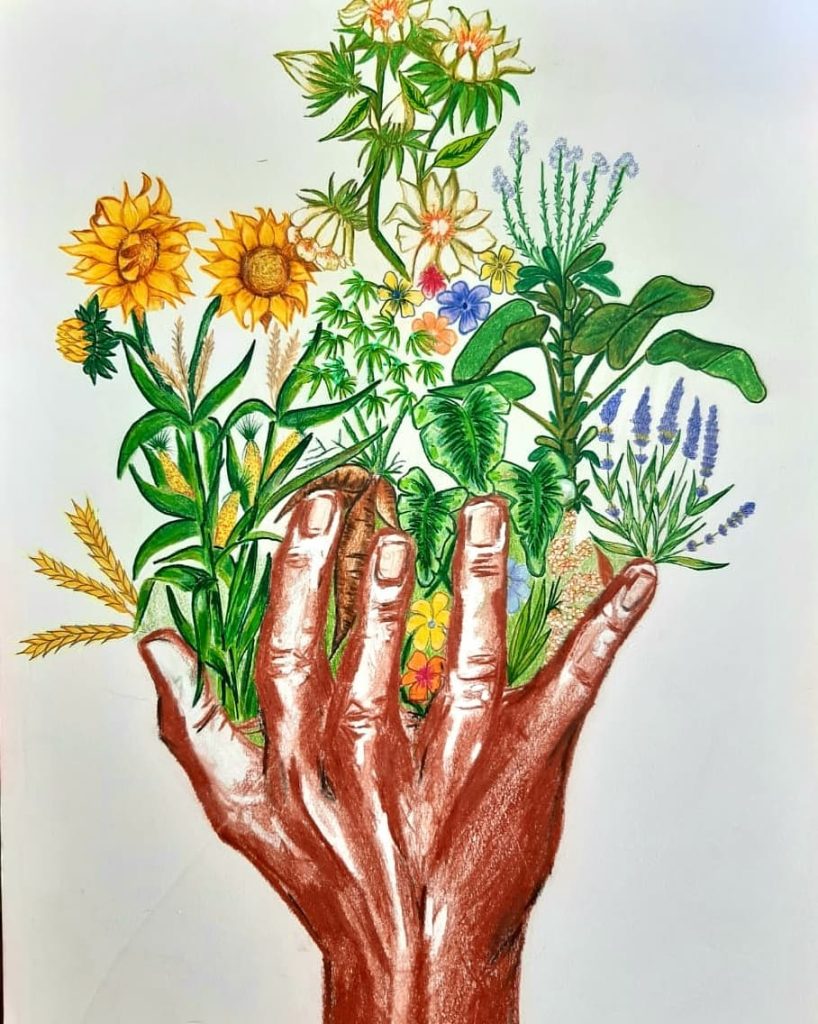
Credit: Ricardo Keferaus.
In Curarrehue, nestled among the mountains, forests, and rivers of southern Chile, Anita Epulef reminds us that food sovereignty is not an abstract concept but an everyday practice that begins long before a pot is placed over the fire. Her daily life involves selecting seeds for planting, preparing a trafkintu (a traditional Mapuche gathering for exchanging seeds and knowledge), checking whether frost has damaged the plants, gathering food from the vegetable garden, observing streams and other waterways, tending to lawen (medicinal plants), reading the clouds, and greeting fellow community members. She describes these practices as a dialogue with itrofillmogen, a Mapuche concept encompassing the diversity of life and the relationships among all living beings.
The word ‘Mapuche’ itself means ‘people of the land’. The name expresses more than an identity tied to a particular territory. For Anita, the relationship with the land shapes people’s understanding of nourishment, health, knowledge, and responsibility. ‘If the land becomes sick, the food becomes sick too’, she explains. Caring for the land therefore means caring for life.
Yet this relationship is threatened by the growing concentration of agricultural land in fewer and fewer hands. According to a 2026 report jointly published by the Food and Agriculture Organisation of the United Nations (FAO), the International Land Coalition, and the French Agricultural Research Centre for International Development, there are approximately 570 million farms worldwide. About 85% of the world’s farms are smaller than two hectares, yet they account for only 9% of agricultural land. By contrast, farms larger than 1,000 hectares represent just 0.1% of all farms but operate more than half of that land. The report also finds that the largest 10% of landholders operate 89% of the total.
The struggle over food therefore begins with the struggle over the means of producing it: land.
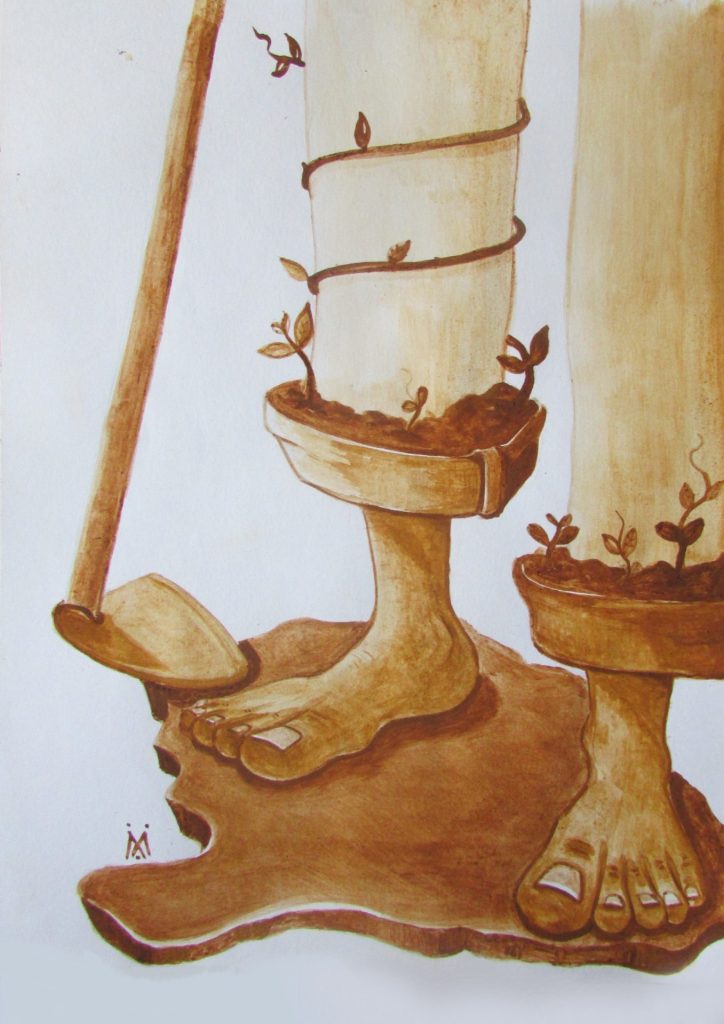
Credit: Marieli Ribeiro.
This understanding is central to the MST’s struggle for food sovereignty in Brazil. Ana Chã explains that land provides the material basis for communities to decide what to produce, how to live, how to care for nature, and how to organise themselves. Access to land alone, however, is not enough if farmers remain dependent on corporate seeds, agrochemicals, other agricultural inputs, and markets controlled by large companies.
Control over seeds is therefore also essential to food sovereignty.
‘Seeds are everything’, Anita tells us. In her community, saving seeds allows families to plant their own crops and produce food for the coming winter without depending on commercial seed suppliers. But this autonomy is threatened by efforts to privatise seeds that communities have freely saved and exchanged for generations. For Anita, such efforts threaten not only communities’ ability to produce food independently but also their collective knowledge and memory. She describes this as an act of ‘robbing the memory of a people’.
The loss of seed diversity is another concern. FAO has long cited an estimate that around 75% of crop genetic diversity was lost during the twentieth century, as farmers increasingly replaced local varieties – including those adapted to local growing conditions over generations – with genetically uniform, high-yielding varieties. When a seed variety disappears, the possibility of cultivating it is lost, while the knowledge of how to grow, preserve, prepare, and pass it on to future generations is also put at risk.
For La Via Campesina, the defence of peasant seeds is at the heart of the struggle for food sovereignty. The movement calls on peasant families and communities to become guardians of seeds, ensuring their preservation, reproduction, exchange, and collective protection.
The struggle over seeds does not end in the fields. It continues in the kitchen, where food is prepared, shared, and remembered.
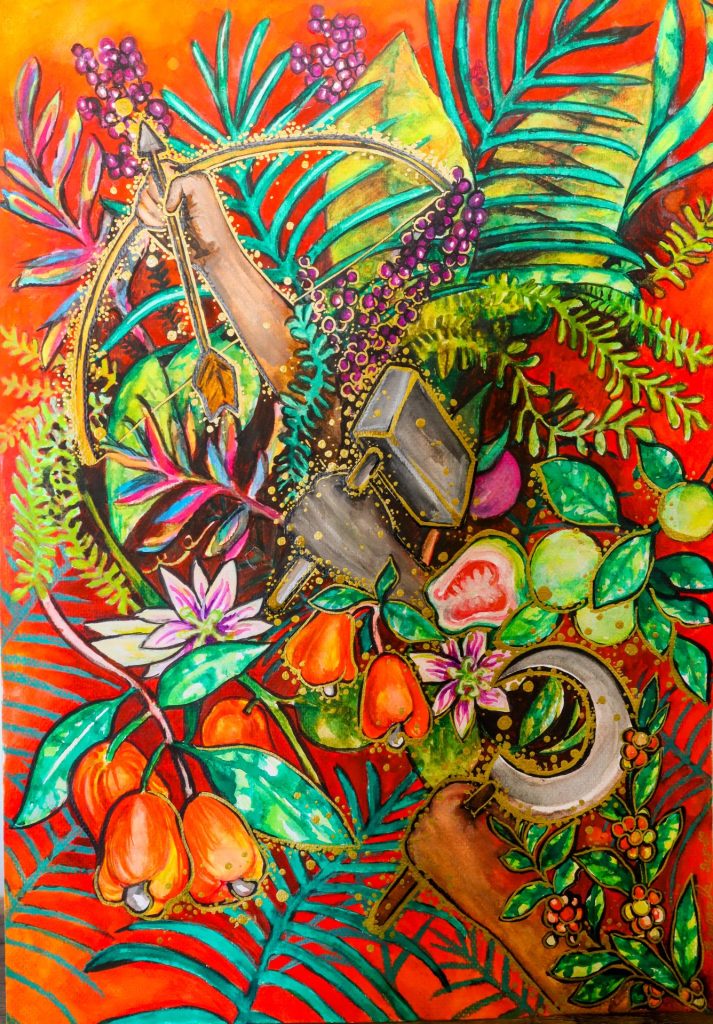
Credit: Camila Camomila.
For Anita, the connection between land, seeds, and food is also reflected in the ingredients she uses – gathered from local forests and vegetable gardens or grown from locally cultivated seeds. Her account brings together the autumn gathering of ngülliw (seeds from the pewen, or monkey puzzle tree), the harvesting of broad beans by older women in the community, the gathering of lleuques (fruit from the Chilean plum yew) by young people, and the smoking and cooking of chillies over a wood fire. Together, these practices reflect the relationship between food, land, and the transmission of knowledge across generations.
Preserving agricultural diversity is also a way of ensuring that communities can continue to grow their own food. For Anita, keeping several varieties of potatoes, for example, is not merely a matter of taste. If a variety disappears from the market, the community can still grow it. When she teaches someone to grind chilli, she also tells them how her grandmother used it. In this way, knowledge passes ‘from hand to hand’.
Traditional or ancestral knowledge is not a fixed collection of dishes from the past. It is practical knowledge accumulated over generations: knowing when to plant, which seeds are suited to a particular climate, which plants can be gathered from the forest, how food can be preserved, the medicinal properties of plants, how recipes change with the seasons, and how this knowledge is passed on.
Norma Listman and Saqib Keval similarly challenge the idea that culinary traditions are confined within national borders. At their restaurant, Masala y Maíz, they draw on histories of migration and exchange connecting Mexico, South Asia, and East Africa. Their dishes combine native Mexican maize, wild quelites (edible wild greens), cacao, vanilla, and Mexican chillies with South Asian and East African ingredients and cooking techniques.
For Norma and Saqib, sourcing native and traditional ingredients is ‘non-negotiable’. They argue that every peso spent on a native variety helps sustain its cultivation and keep its seeds in circulation, rather than contributing to its disappearance under industrial agriculture. But they also insist that chefs must look beyond the ingredients themselves and recognise the labour and knowledge of the people who cultivate them. Established chefs often have access to financial resources and public platforms that many agricultural producers lack. Norma and Saqib argue that this privilege comes with a responsibility to pay producers fairly and consistently, acknowledge their contributions publicly, and support the preservation of the agricultural knowledge behind each dish.
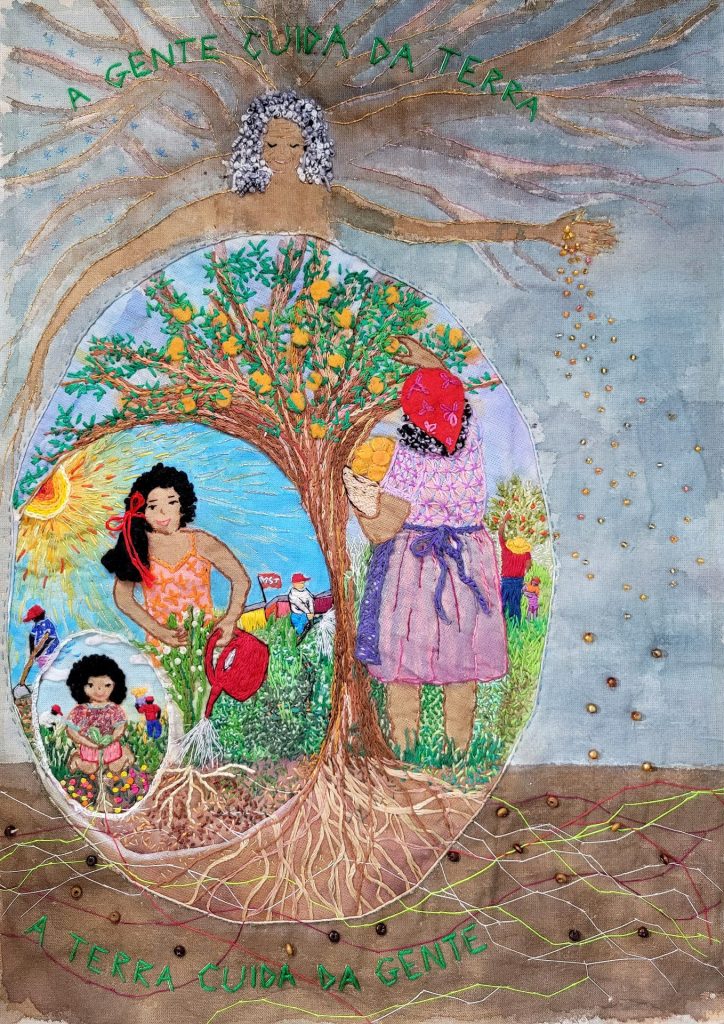
Credit: Estela Carvalho.
For Anita, cooking with young people, women, and children is an opportunity to share stories while preparing food together. As the water boils for soup, people chop, knead, talk, and remember. She teaches because she does not want younger generations to feel the same shame about their traditional foods that previous generations experienced. The kitchen becomes a place where language, memory, and cultural pride are passed on along with culinary knowledge.
‘When I teach, I am defending Mapudungun’, Anita explains, referring to the Mapuche language, which is preserved through the names of ingredients and traditional practices. Her everyday activities – from tending the garden to cooking for her family and visitors – become ways of defending her community’s relationship with the land.
Norma and Saqib describe a similar process of preserving cultural knowledge through recipes. Recipes can survive displacement, migration, colonisation, famine, drought, and genocide because they can be passed down through generations and recreated in everyday life. They do not depend solely on written records or institutions for their survival. Instead, they are preserved and transformed as people cook, adapt, teach, and share them. Preserving culinary knowledge is therefore less about maintaining an unchanging tradition than ensuring its continuity across generations.
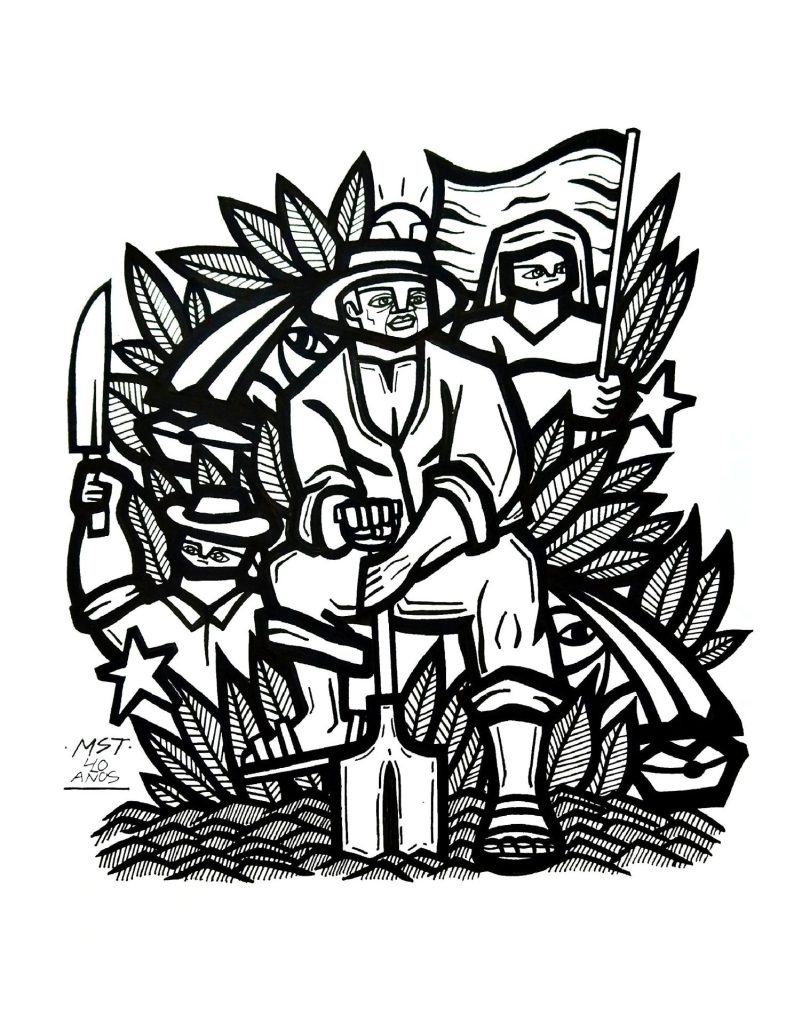
Credit: Pablo Placencia Lagos.
Ana Chã explains that collective kitchens are among the first spaces established in the MST’s encampments and also play an important role in the movement’s schools, cooperatives, meetings, and training centres. In these spaces, people share responsibilities, exchange knowledge and memories, build relationships, and prepare meals together. Through its Cozinhas Sem Terra (Landless Kitchens), the MST prepares healthy food using locally produced ingredients whenever possible while celebrating the culinary traditions of different regions of Brazil.
A meal can connect the person who saves the seed to the person who grows the crop, the person who cooks it, and the person who eats it. In doing so, it can make visible the people and the labour behind food – connections often obscured by the industrial food system.
For Ana, this collective approach to food is also a form of resistance to a system that treats food as a commodity and makes people increasingly dependent on large corporations. Recovering a grandmother’s recipe, planting a crop variety at risk of disappearing, exchanging seeds, bringing food from agrarian reform settlements to a school or urban community, organising a food fair, or teaching children where their food comes from are all ways of strengthening communities’ control over food and preserving the knowledge associated with its production and preparation.
These practices are part of the MST’s broader vision of popular agrarian reform, which links the democratisation of access to land with agroecology, seed protection, biodiversity, healthy food, cooperation, fair markets, the recovery of food cultures, and alliances between rural and urban communities.
This is food sovereignty as praxis: a political project realised through everyday collective action.
Although rooted in different histories and experiences, Anita’s seed keeping, Norma and Saqib’s cooking, and Ana’s organising through the MST all raise a common question: who gets to decide how food is produced and how the knowledge associated with it is preserved and passed on?
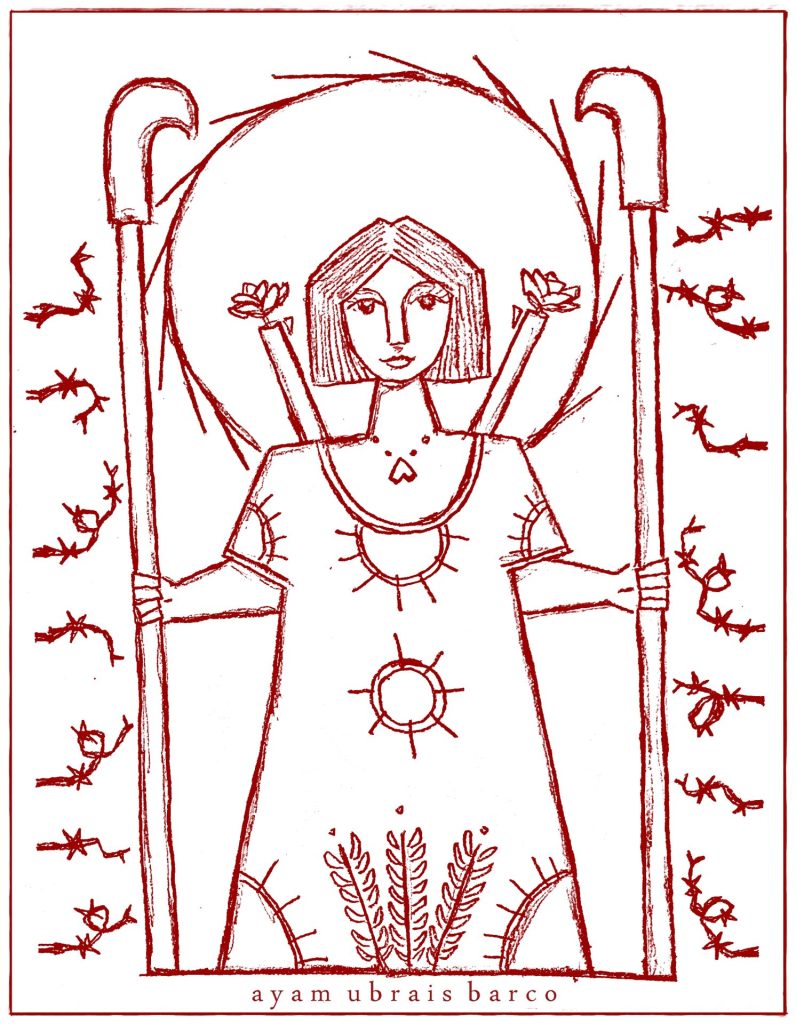
Credit: Madalena Ayam Ubrais Barco.
Food sovereignty means returning control over how food is produced and shared to peoples and communities.
But protecting seeds and securing land are only part of the struggle. As Ana reminds us, food sovereignty also requires transforming how we grow, prepare, eat, and share food, as well as our relationship with nature.
On 16 October, movements around the world once again affirmed that food is not merely a commodity. The challenge is to make this conviction a reality – in the soil, through seeds, in the kitchen, and at the table.
Anita offers a powerful metaphor for this struggle: ‘Every time I cook, for my family or in public, every interview, every post, every conversation is a trench.’
But a trench is not only a place to defend what remains. It is also a place to plant the seeds of a different future.
Warmly,
Soledad Varela
Operations Manager, Tricontinental: Institute for Social Research
Soledad studied culinary arts at the Escuela Culinaria Francesa in Santiago, Chile.