What China’s Global Initiatives Offer the World: The Forty-Second Newsletter (2026)
At a moment of war, debt, corporate power, and technological dependency, five Chinese proposals reopen a long-suppressed question: what institutions are needed to make peace, sovereignty, and development materially possible?
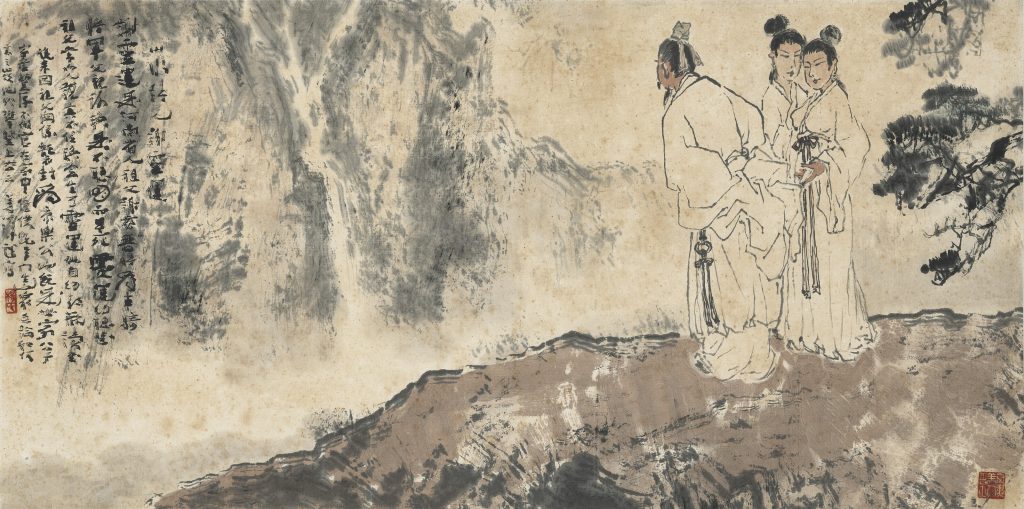
Yang Shanshen (China), Poet Xie Lingyun and His Companions, n.d.
Dear friends,
Greetings from the desk of Tricontinental: Institute for Social Research.
The fires of war burn from Palestine to Ukraine and from Sudan to Iran, demoralising billions of people around the world who suffer from the inferno and inflation. There seems to be no exit from these conflicts, no way to envisage how they will end. The NATO powers delusionally seek the defeat of Russia, while the United States seeks to overthrow the Islamic Republic of Iran. Neither of these outcomes is within the realm of possibility: Russia is a nuclear power capable of facing an existential threat, while Iran has demonstrated that it is capable of seriously harming US assets in the region. The white flag of surrender will not fly, but the aggressors are not willing to seriously come to the negotiating table.
It is in this terrain of demoralisation that the Chinese government has proposed five initiatives:
- The Belt and Road Initiative (BRI). Through infrastructure, trade, and investment, the BRI aims to help build a ‘global community of shared future’, a vision set out in the Chinese government’s 2023 white paper. Its two main components were first proposed a decade earlier: an economic belt across Central Asia, announced in Kazakhstan in September 2013, and a maritime silk road, announced in Indonesia that October.
- The Global Development Initiative. At the United Nations General Assembly in September 2021, amid the pandemic, President Xi Jinping suggested that a development plan – such as the UN’s 2030 Agenda – should be an organising purpose of international relations.
- The Global Security Initiative. At the Boao Forum for Asia, in April 2022, Xi proposed a vision for countries to develop themselves without planning for permanent conflict and coercion. The principles guiding development must rest on respect for territorial integrity.
- The Global Civilisation Initiative. Announced in March 2023, the initiative affirms civilisational diversity and different paths to modernisation. This was a direct rejection of the assumption that development requires imitating foreign cultures and institutions.
- The Global Governance Initiative. In September 2025, at the Shanghai Cooperation Organisation meeting in Tianjin, Xi brought institutional reform into sharper focus through five concepts: sovereign equality, international rule of law, multilateralism, a people-centred approach, and genuine results.

Yuan Qingyi (China), Spring Has Come, 1984.
Taken together, these five initiatives provide a formidable basis for a global conversation not only on peace but on its material foundation: development. Their promise must be judged by whether they help our societies create pathways to peace, build productive capacity, and exercise control over economic life. These initiatives attempt to restart a conversation that culminated with the 1974 adoption by the UN General Assembly of the Declaration on the Establishment of a New International Economic Order. China’s proposals show that what we need is not piecemeal reform of this or that global institution, or a ceasefire in this or that conflict, but a general overhaul of multilateralism that ensures not only formal equality between states but an end to the profound inequality in economic power.
These five initiatives do not, by themselves, establish a new international economic order. Currently, the international economic regime is a collection of rules governing trade, investment, taxation, debt, and technology. But these rules are developed to enforce corporate power rather than to encourage international democracy. They are shaped by transnational corporations (TNCs), which can overpower governments by moving investment, shifting profits, and playing jurisdictions against one another. What can these initiatives achieve if the actual rules of the game continue to put corporate profits above all else?
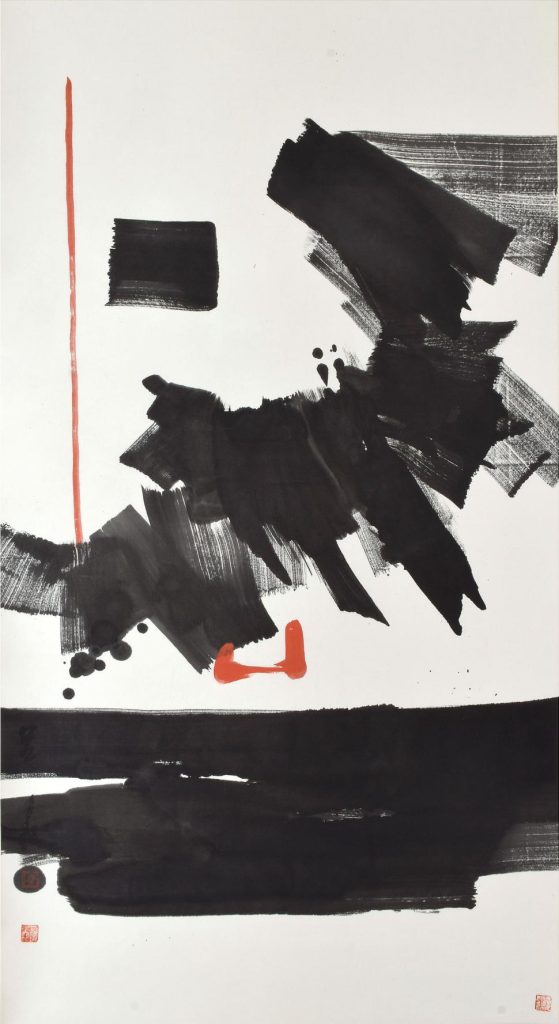
Lu Shoukun (China), Chan Painting, 1970.
The five initiatives’ broad principles will need to be turned into a programme of the Global South. This should include greater Southern influence in financial institutions, development finance suited to industrial transformation, and trade and investment rules that permit economic diversification. These principles open a conversation, but the task before the Global South is to give them institutional force. Here are five areas in which that programme can take shape:
- Taxation. A 2015 Oxford University working paper estimated that tax avoidance by TNCs could cost developing countries around $213 billion a year in the long run. This number was underestimated at that time and is surely much higher now. To deal with this problem, negotiations began in 2025 on the UN Framework Convention on International Tax Cooperation. This ongoing process provides an existing forum to redress problems through shared minimum standards and revenue allocation that reflect production as well as sales. It is only fair for countries to exchange information about TNCs, require public reporting by jurisdiction, prevent firms from winning concessions through threats of relocation, and cooperate to tax profits where real economic activity takes place.
- Labour standards. States should agree on enforceable protections for trade unions, collective bargaining, workplace safety, and freedom from forced labour. They should share inspection evidence and give workers ways to pursue claims across borders. Lead firms must face defined responsibilities for abuses in supply chains. Regional agreements can reduce the incentive to compete for investment by suppressing wages and rights. The International Labour Organization’s declaration on multinational enterprises provides guidance; binding enforcement requires further legal commitments.
- Corporate accountability. In 2014, the UN Human Rights Council established a working group to negotiate a legally binding instrument on business and human rights. More than a decade later, negotiations have produced successive drafts but no adopted treaty. A serious regime would reform investment agreements to protect legitimate public regulation and make corporate obligations enforceable. This should provide for investigation of corporate malfeasance, liability for companies whose conduct or failures contribute to harm, cooperation between judicial authorities, and enforceable remedies through a credible international legal system.
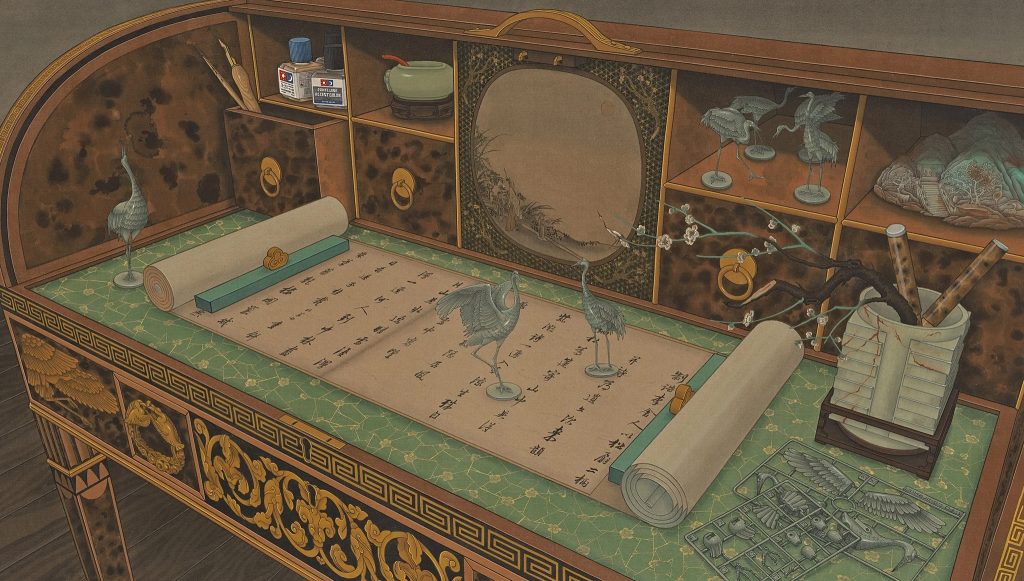
Wang He (China), Secretaire of Lin Hejing, 2024.
- Technology access. The negotiations over the Pathogen Access and Benefit-Sharing annex to the World Health Organization Pandemic Agreement provide a concrete arena in which countries of the Global South can press for technology cooperation that builds their productive capacity. The talks concern access to vaccines, treatments, and tests. The agreement’s provisions on technology transfer offer a starting point, although their reliance on mutually agreed terms leaves too much dependent on the willingness of private rights holders. Public funding and procurement should carry enforceable conditions to secure technology licences, share practical knowledge, train workers, and strengthen domestic research and suppliers. Southern countries can combine their purchasing power and jointly fund research institutions, while retaining the right to use compulsory licensing where international rules permit. Access to patents alone cannot create the capacity to manufacture: countries also need equipment, skilled workers, and the knowledge required to organise production. The task is to turn the agreement’s commitments into obligations with clear targets and deadlines, enabling countries to adapt, improve, and produce technologies themselves.
- Debt and finance. The UN’s Sevilla Commitment provides an opening for countries of the Global South to organise collectively for a fairer sovereign debt regime, drawing on the longstanding work of UN Trade and Development (UNCTAD) on debt restructuring. Its platform for borrowing countries should enable them to coordinate demands for transparent lending, timely restructuring, and binding rules that prevent private creditors from obstructing settlements. The intergovernmental process envisaged by the commitment should become a route towards an enforceable multilateral framework that protects essential public spending and judges repayment capacity alongside the investment needed for economic transformation.
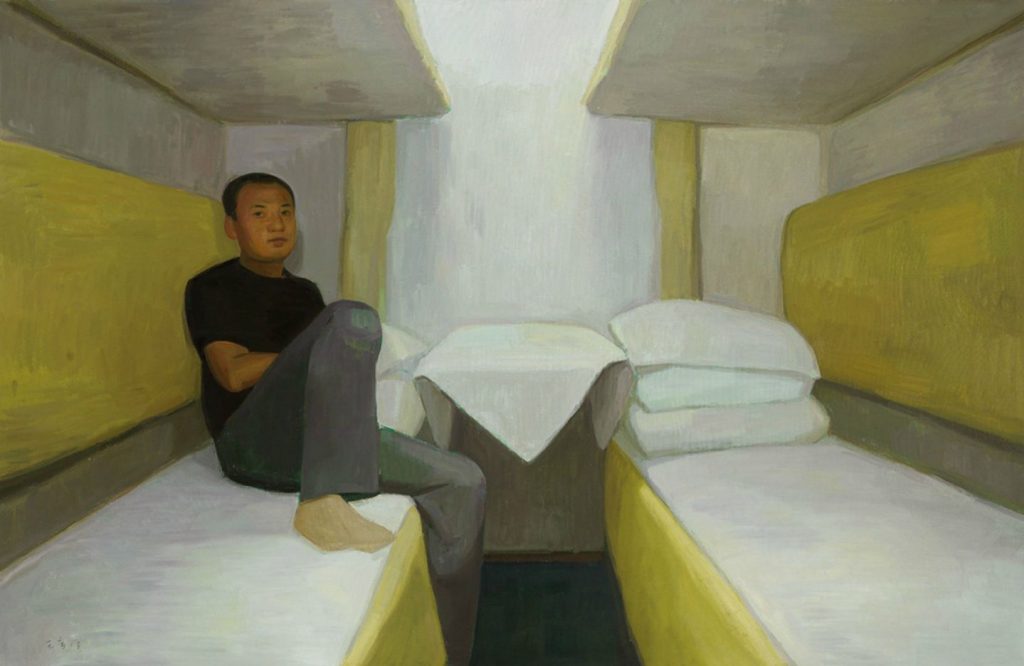
Wang Yin (China), On the Train, 2013.
I am writing this newsletter on a high-speed train departing from Xinyu, in China’s Jiangxi Province. Xinyu is where the seventeenth-century book on technology, Tiangong Kaiwu (The Exploitation of the Works of Nature), was written by Song Yingxing. The book has also inspired a dance drama directed by Lu Chuan. Today, the area is home to impressive factories – for lithium batteries and silicon steel – that use the most sophisticated productive techniques. While in Xinyu, I asked Wang Wen, dean of the Chongyang Institute for Financial Studies at China’s Renmin University, what he considered essential to the further advancement of the Global South. He pointed to three areas: industrialisation with care for the environment, the rejuvenation of local cultures, and the confidence to interact with other cultures without inferiority. As I left Xinyu behind and the countryside stretched forward, I wrote this poem:
There is no dust in the factory.
She sits at her desk in that place
Where silicon steel slips past her,
Thin as a length of fine lace.Her orange hard hat seems incongruous
Above the attentive face;
A silver river of a strip goes by,
And she keeps watch on its pace.‘What do you do at your desk?’ I ask.
‘Keep the belt at the proper speed’.
Her hand rests lightly on the keyboard,
Where the numbers are hers to read.We make the steel possible, I think,
Watching her fingers and eyes.
The machine has its thousand instructions;
She knows where trouble may arise.An ancient dancer enters the works,
Her sleeve makes a turn in the air;
Stepping down from Tiangong Kaiwu
She finds its descendants there.A lute, a bell, the sound of feet:
The old tune travels the floor.
She pauses before the moving steel,
Then follows its course to the door.‘Kindness for the people’s well-being’.
Lu Chuan speaks of Song Yingxing:
Outside, the workers board their buses;
The factory dusk is a luminous thing.A book of the everyday opens:
The furnace, the loom, and the grain.
The names of those who worked are missing;
The things that they knew remain.In Xinyu, they make the lithium cells
That carry the day into night;
Another page in Song’s old book
Is written in electric light.Ibn Khaldun considers the crafts;
Abul Fazl bends over a page.
The world had hands before Manchester;
No nation alone invents an age.There is no dust in the factory.
The steel runs silver and blue.
The dancer holds out her empty hands;
The worker knows what to do.We inherit the world with its unfinished art.
Warmly,
Vijay