We All Came Here from Somewhere: The Thirty-Seventh Newsletter (2026)
Capitalism depends on precarious migrant labour to discipline workers, deepen division, and extract wealth while weaponising anti-immigrant rhetoric to obscure the neoliberal destruction of public services and social welfare.
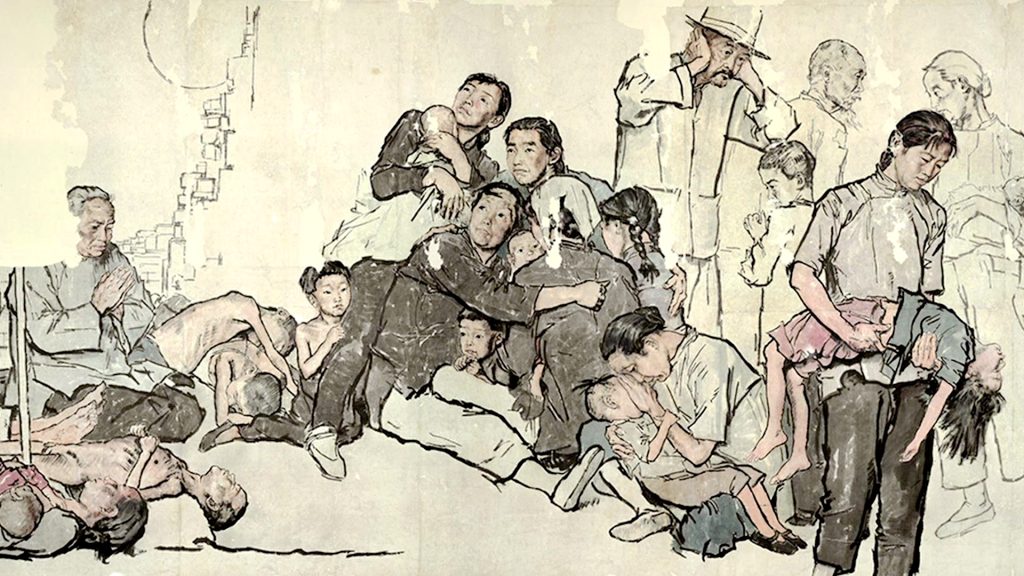
Jiang Zhaohe (China), detail from Liumin Tu (Refugees), 1943.
Dear friends,
Greetings from the desk of Tricontinental: Institute for Social Research.
Everywhere we go in the world today, from the Global North to the Global South, we are inundated with rising anti-immigrant rhetoric. It seems to be an inescapable part of public discourse. This discourse is particularly toxic in the Global North, where it has become a central pillar of the Far Right of a Special Type. In December 2025, US President Donald Trump called Somali immigrants in the US ‘garbage’ and said they should be sent ‘back to where they came from’. Trump’s Vice President JD Vance has said that immigration is the ‘greatest threat’ to both the United States and Europe. In Britain, then UK Prime Minister Keir Starmer said in May 2025 that his country risked ‘becoming an island of strangers’, a phrase echoed later that year by Andrew Hastie, then Australia’s Shadow Home Affairs Minister: ‘We’re starting to feel like strangers in our own home’.
The Global South is not immune to this discourse. In South Africa, there has been an explosion of xenophobia, with anti-migrant groups such as Operation Dudula (2021) and March and March (2024) emerging out of nowhere with funds to create serious anti-immigrant mayhem. These groups popularised the slogan Abahambe Makwerekwere (‘foreigners must go’) among sections of South Africans who have been pushed through the cracks of the post-apartheid settlement. These sections have pinned their socioeconomic anxieties on their neighbours – impoverished immigrants who came to South Africa from countries like Botswana, Lesotho, Mozambique, and Zimbabwe. These xenophobic groups have issued threats and deadlines for immigrants to leave the country, forcing desperate and vulnerable people to seek safety or leave South Africa in fear.
This rise of xenophobia reflects a general sentiment that the wretched living conditions of the working class are due to competition for scarce resources from immigrants rather than to the structural features of capitalism. It is claimed that impoverished and disempowered immigrants have, somehow, hollowed out the state and crowded out the job market, leaving native-born workers unable to live stable and dignified lives.
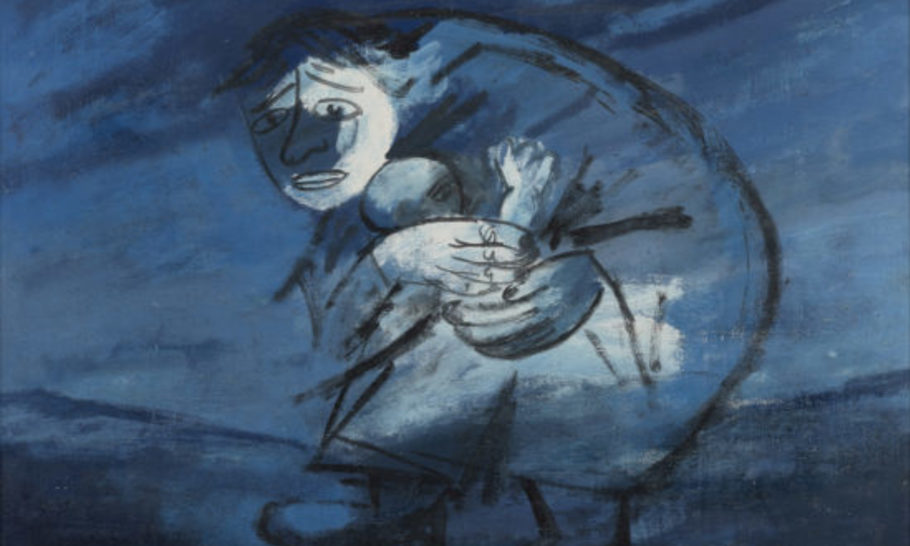
Josef Herman (Poland), Mother and Child Fleeing, 1942.
The discourse on immigration is riddled with factual inaccuracies, hyperbole, and bile. The apostles of xenophobia inflate the scale and geography of migration and poison the discourse around the issue. This distortion operates in three ways:
- Exaggerated scale. International migrants constitute only 3.6% of the world’s population. Most people who migrate do not leave the country of their birth, since they travel from countryside to city or from one town to another. Factoring in the plight of the internally displaced, only a quarter of migrants and displaced people travel from the Global South to the Global North, as I learned from an official of the International Organization for Migration.
- Exaggerated geography. For obvious reasons, Western media coverage concentrates on Mediterranean crossings, the US–Mexico border, and the English Channel. This frames migration as an issue that burdens only the Global North. But the reality is that most displacement takes place inside countries or between neighbouring countries. The overwhelming burden of refugee protection falls on the poorer nations in the South, not the wealthy North.
- Exaggerated language. Those who stoke the fires of anti-immigrant rhetoric almost always say that they oppose ‘illegal’ immigrants and not ‘legal’ immigrants. In practice, the threatening category of the ‘illegal immigrant’ begins to shape how people think of migration in general. Refugees, asylum seekers, undocumented workers, students, family members, temporary labourers, and even immigrants who came through legal channels come to be seen as ‘illegal’ or at least suspected of being so. The adjective ‘illegal’ shapes the meaning of the noun ‘immigrant’ and then overwhelms it. The adjective, even when it does not appear, begins to define the noun. In this way, just being an immigrant is treated as an act of transgression.
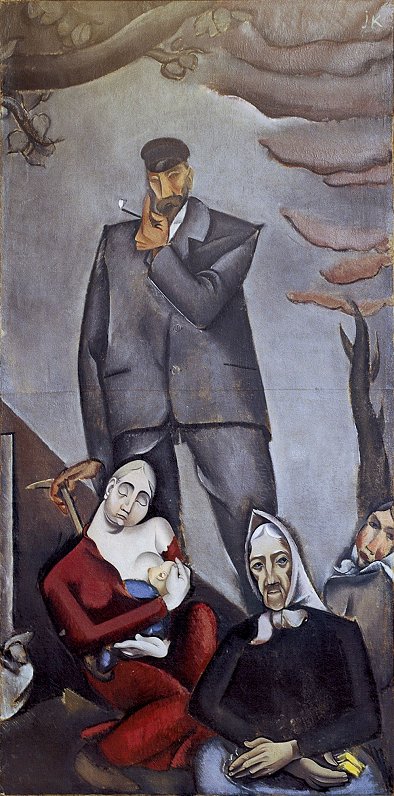
Jēkabs Kazaks (Latvia), Bēgļi (Refugees), 1917.
The ruling classes of the wealthier nations, mainly in the Global North, want the labour of immigrants but not their sociocultural lives or political participation. Major economic sectors in the Global North – agriculture, construction, logistics, and care work – depend on immigrant labour. Xenophobic rhetoric and restrictive legal regimes create an environment that makes it easy to discipline and exploit these workers through the threat of deportation and the denial of legal rights and collective bargaining. Yet it is undeniable that immigrants generate wealth for the ruling class where they live and work. Their remittances also sustain families in their countries of origin. The discourse around immigration and the economy is as muddled and confused as the political debate.
- The economic argument. Immigrants certainly increase immediate demand for housing, schools, transport, and healthcare, especially where arrivals are geographically concentrated. But immigrants also work, produce, pay taxes, and sustain economic sectors that suffer from labour shortages. The Organisation for Economic Co-operation and Development (OECD) shows that immigrants contribute to labour markets, public finances, employment, and job creation, though the benefits and costs are unevenly distributed. A large study by the International Monetary Fund across thirty-four OECD countries between 1980 and 2018 found that an immigrant inflow of 1% of total employment raised economic output by almost 1% within five years and that two-thirds of the increase came from higher labour productivity. Crucially, that study found no evidence that large inflows of immigrants reduce native-born employment.
- The labour question. Employers sometimes use precarious immigrant labour to lower working conditions or weaken trade union organising. However, the problem is not the immigrant worker per se but the employer’s power to differentiate and divide workers by legal status. Stronger, better-organised trade unions would help workers resist these divisive tactics, improve wages and working conditions, and secure residency, legal, and collective bargaining rights.
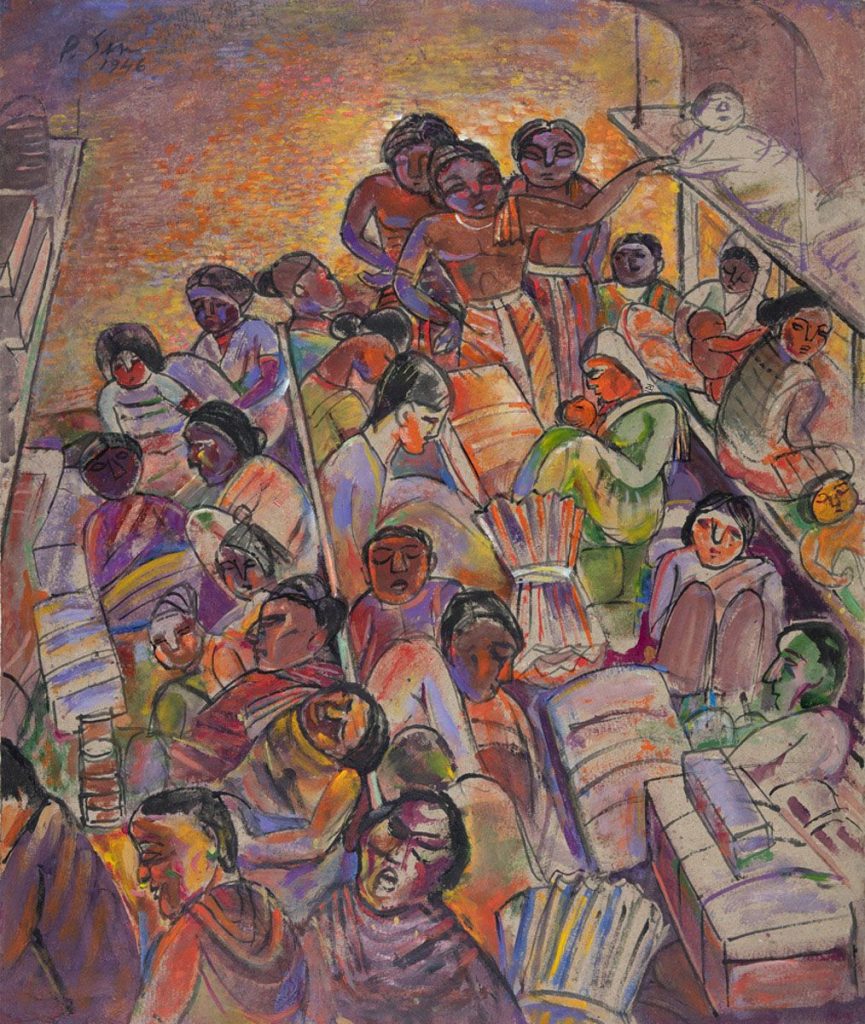
Paritosh Sen (India), Refugees, 1946.
Neoliberalism is the elephant in the room in the anti-immigration discourse. Immigrants arrive in societies that have already been ravaged by austerity and debt. The housing crisis, chronic unemployment, mental illness, and drug abuse are not conditions that immigrants create. These are the social effects of capitalist societies that have prioritised the profit of the few over the well-being of the many. The privatisation of public services, cuts to municipal budgets, and the subsequent collapse of state capacity and social welfare were neoliberal policies implemented in the service of wealthy and propertied classes. The very same political parties that implemented these neoliberal policies and are therefore responsible for the social havoc they have unleashed now scapegoat immigrants.
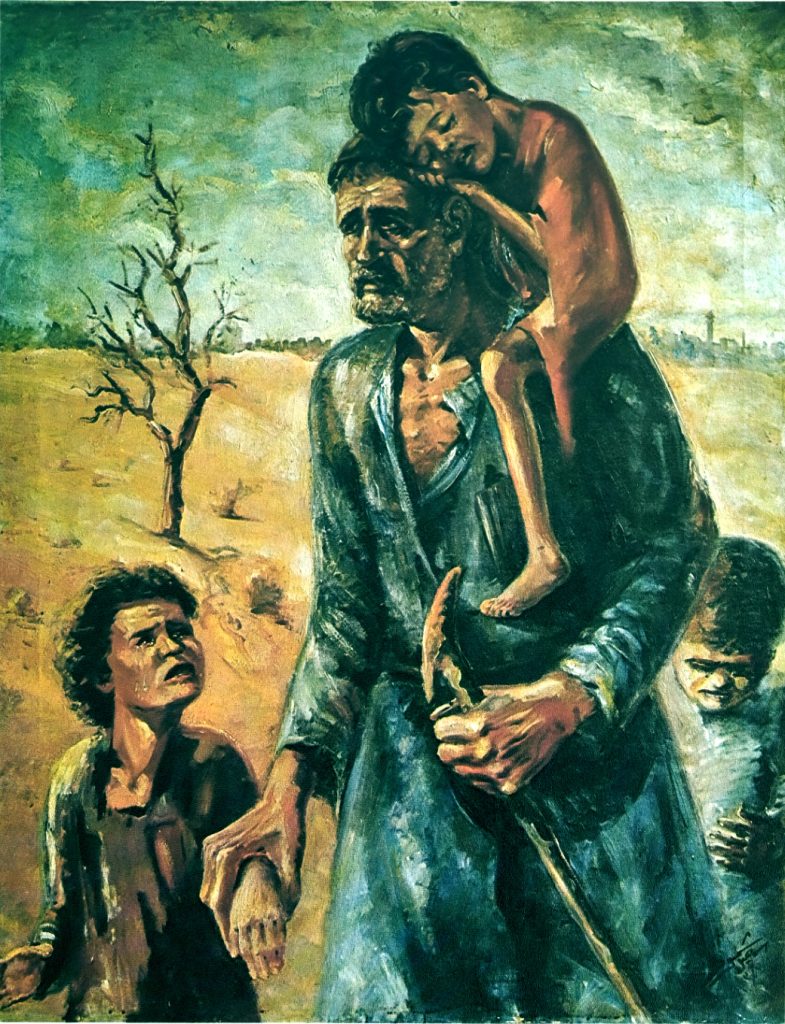
Ismail Shammout (Palestine), Where To?, 1953.
Anti-immigrant rhetoric functions to conceal the actual causes of social distress faced by billions of people around the world. The obscene military spending and catastrophic wars of our time, the vicious sanctions against states that defy the NATO+ bloc, the enforced debt servitude of states that cannot break out of the cycle of underdevelopment, the high cost of climate change, land dispossession, and the destruction of livelihoods are not caused by migration. They are caused by capitalism and imperialism, which would rather destroy the world for profit than heal it. In fact, migration itself is a result of capitalist imperialism, which destroys the basis of life in the Global South through war, debt, sanctions, and exploitation.
Unfortunately, the pervasive nature of anti-immigrant discourse has made it easier for an alienated worker to burn down a spaza shop (small grocery) in Soweto, South Africa, than to think about the brutal asymmetry of land ownership in their country. White South Africans make up roughly 7% of the population but own 72% of the farm and agricultural land, while Black South Africans make up almost 82% of the population and own only 4%. Imagining land reform is infinitely harder and more complex than burning down the shop of a poor immigrant shopkeeper from Botswana. Arming the working class with clarity against the mystifying rhetoric of xenophobia is one of the tasks that the left faces today. For its part, the South African Communist Party has taken a strong and clear stance against xenophobia and for solidarity.
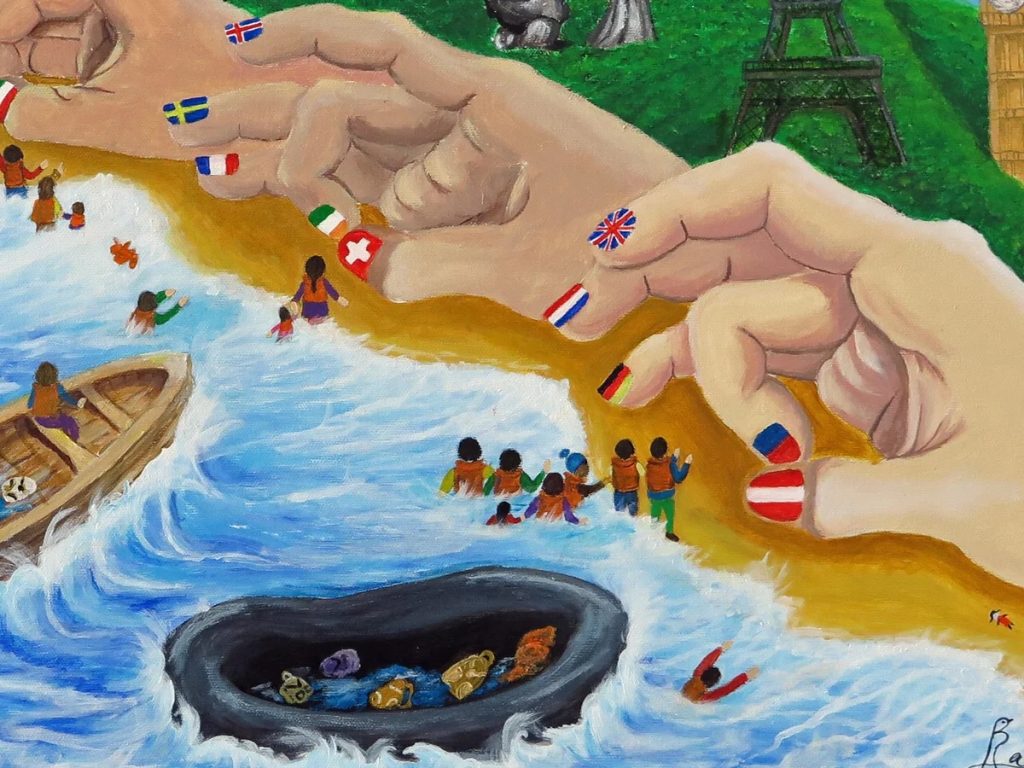
Razieh Gholami (Afghanistan), Hoping to Survive, 2019.
The great Caribbean-British poet Benjamin Zephaniah spent much of his life reflecting on his ancestry and displacement. Living between two worlds, he understood the very human struggles and feelings of loneliness and isolation that come with being an immigrant. In his poem ‘We Refugees’ (2000), Zephaniah captures, with warmth and simplicity, the irrationality and inhumanity of xenophobia:
We can all be refugees
Sometimes it only takes a day,
Sometimes it only takes a handshake
Or a paper that is signed.
We all came from refugees
Nobody simply just appeared,
Nobody’s here without a struggle,
And why should we live in fear
Of the weather or the troubles?
We all came here from somewhere.
Warmly,
Vijay