Social Power Is Built Before It Is Seen: The Thirty-Second Newsletter (2026)
While popular energy can fill streets and win elections, social power is the patient, organised capacity of the working class to transform society and make dignity the common sense of the age.
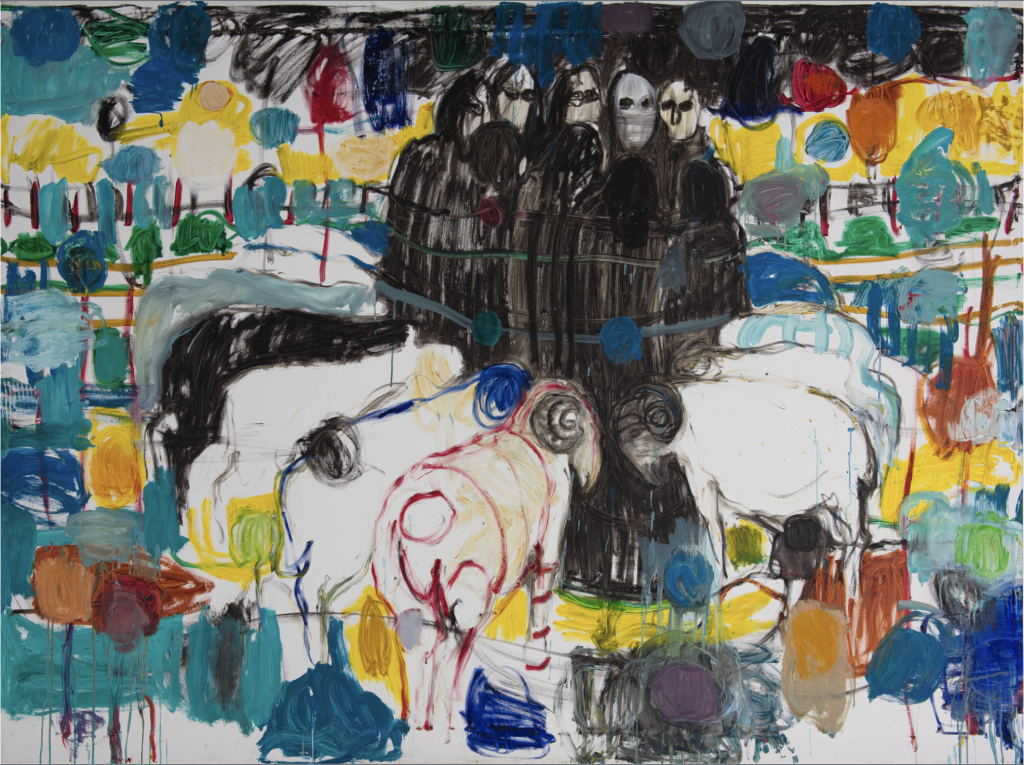
Misheck Masamvu (Zimbabwe), Behind Locked Doors Does Not Feel Safe Anymore, 2014.
Dear friends,
Greetings from the desk of Tricontinental: Institute for Social Research.
From the Bengal famine of 1943 to the election of the Left Front government in 1977, the communist movement in West Bengal, India, patiently built its strength among workers, peasants, refugees, students, and cultural workers. Through campaigns for food and land, the building of trade-union power, refugee mobilisation, and resistance to state repression, the left did more than win immediate demands: it created institutions of struggle, trained generations of organisers, and developed a political culture in which the grievances of different sections of people could be understood as part of a common struggle. The victory of 1977 did not suddenly produce social power at the ballot box; rather, it revealed the social power that had been built over more than three decades.
Popular energy is sometimes mistaken for social power. A political leader attracts large crowds, a slogan travels rapidly across social media, a demonstration fills the streets, and it is said that a movement has become powerful. These can be signs of visibility, enthusiasm, or momentum, but they are not necessarily evidence of organised strength: a crowd can disperse, an election can be lost, and a slogan can disappear as quickly as it arrived. Social power is something deeper; it is the organised capacity of a class to act in society, give direction to the aspirations of the people, and make its understanding of the world part of the common sense of the age.
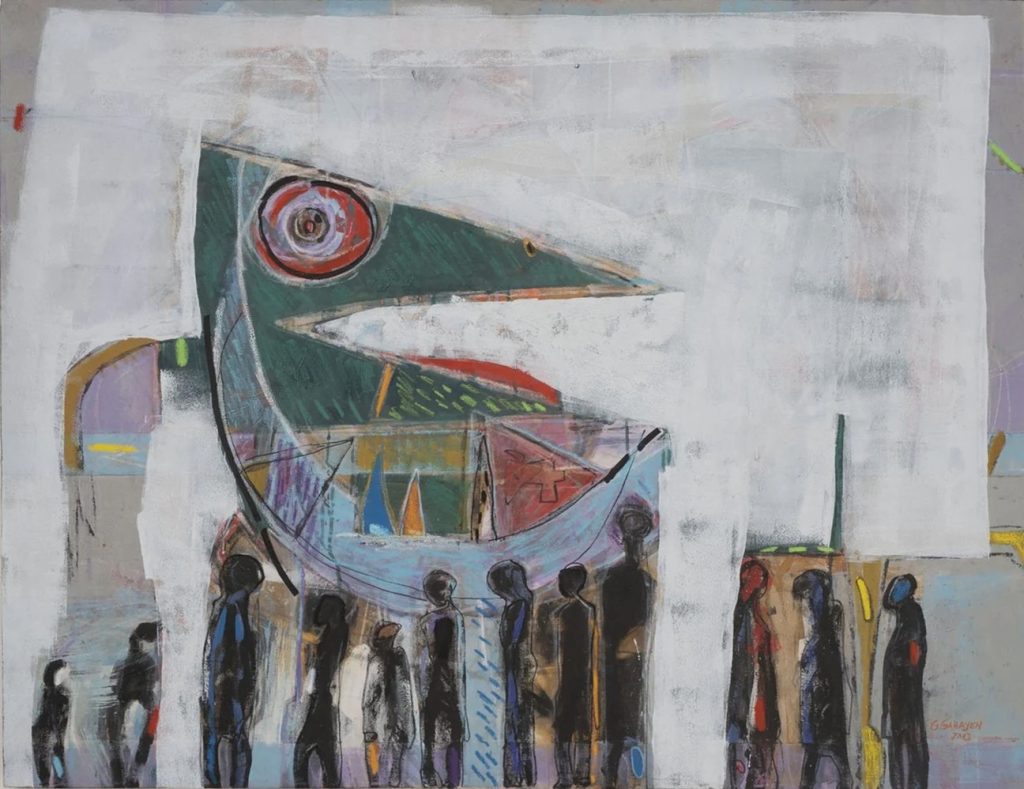
Gérard Gabayen (Senegal), Sweet Memories, 2019.
The capitalist class possesses social power not only because it owns factories, banks, mines, digital platforms, and large estates, but also because it has built institutions that transform its interests into the apparent interests of society. Its media presents the protection of private wealth as the defence of freedom, its economists describe cuts to public spending as ‘fiscal responsibility’, its educational institutions teach that competition is an expression of human nature, and its laws treat property rights as more important than the rights to food, housing, and a dignified life. The capitalist class does not have to convince everyone of its worldview; it only has to make its assumptions appear natural, set the boundaries of respectable discussion, and ensure that alternatives seem unrealistic even before they have been considered. This is capitalist hegemony: the ability of the ruling class to organise consent around a social order that serves its interests while appearing to express the interests of society as a whole.
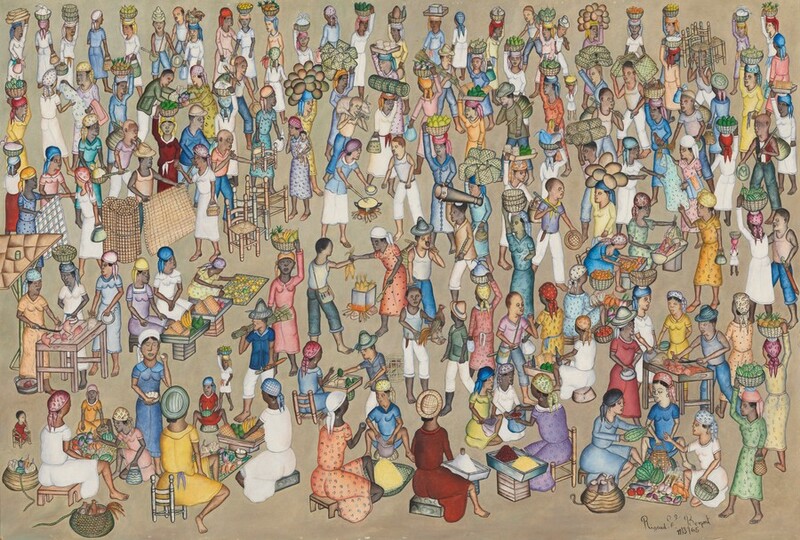
Rigaud Benoit (Haiti), Marketplace, 1965.
Capitalist social power rests not on consent alone but on the combination of consent and coercion: the media and schools, but also the police, courts, and prisons. For example, before the police can break a strike, newspapers must portray the strikers as selfish. The ruling class exercises social power by turning its worldview into common sense while keeping coercive institutions ready to defend that worldview when consent begins to fracture.
Capitalist hegemony, however, is never complete so long as the promises of capitalist society repeatedly collide with the realities of working-class life. In India, for instance, recent youth-led protests have exposed a sharp contradiction: young graduates are told that education guarantees employment, yet what awaits many after graduation is unemployment and precarious work. Such contradictions create the possibility of a new common sense, but suffering does not automatically produce socialist consciousness. Insecurity can give rise to solidarity, or it can be used to persuade the masses to blame immigrants, oppressed castes, religious or racialised minorities, women, or other workers. The crisis of an old hegemony can open the road to the left – through organisation and struggle – or it can open the road to the far right – through fear, resentment, and scapegoating. Conditions do not speak for themselves; they must be interpreted, and the struggle over their interpretation is part of the struggle for social power. But interpretation is not formed in the abstract. It is forged through collective activity.
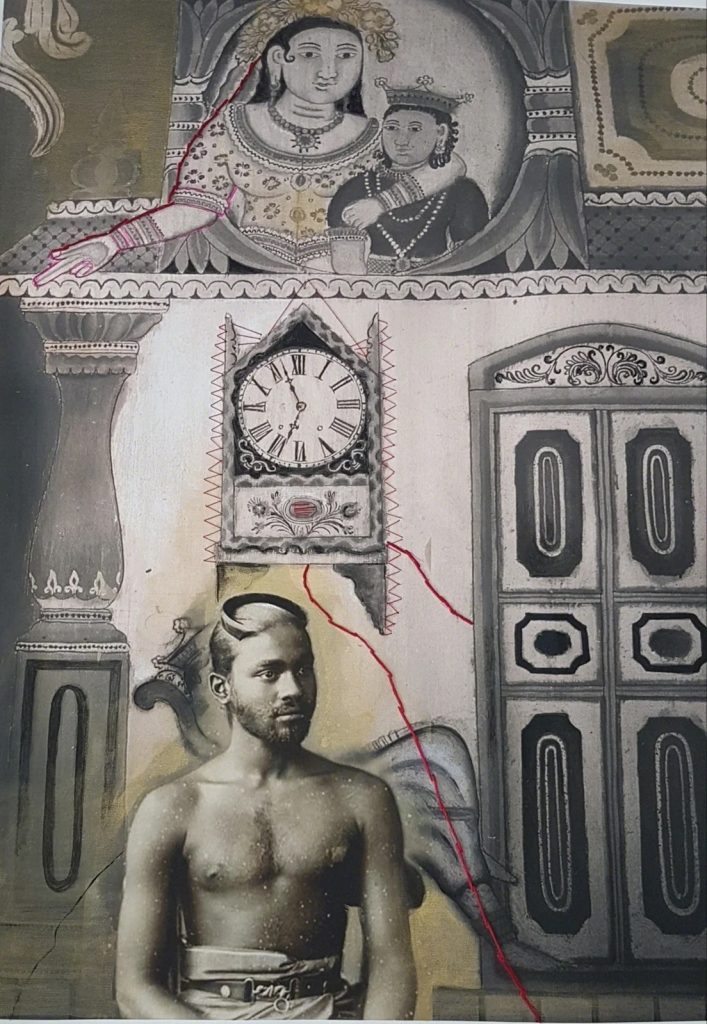
Sujeewa Kumari (Sri Lanka), The Time Map, 2018.
Peasant struggles for control over land challenge the sanctity of property rights while women’s struggles show that domination in the household is not a private matter but part of the social organisation of power. Every serious struggle contains an education process as people learn who stands with them, who opposes them, and which institutions claim neutrality while defending the existing order. They discover capacities in themselves and in one another that capitalist society teaches them to underestimate. That is why social power cannot be built through communication alone. Posters, newspapers, videos, and social media campaigns are important, but they cannot substitute for organisation. People do not change their understanding of the world merely because they encounter the correct argument. Consciousness changes through participation in collective activity.
Mobilisation gathers people around an event, while organisation holds them together and develops their capacity for sustained struggle. Mobilisation can express anger; organisation transforms anger into memory, discipline, leadership, and strategy. Social power emerges when popular energy becomes organised capacity. It is built through trade unions, peasant associations, women’s organisations, neighbourhood committees, political schools, cultural institutions, community media, and revolutionary parties. These institutions preserve the lessons of one struggle and carry them into the next. Through the patient work of building such organisations, social power shapes the capacities required for a new society.
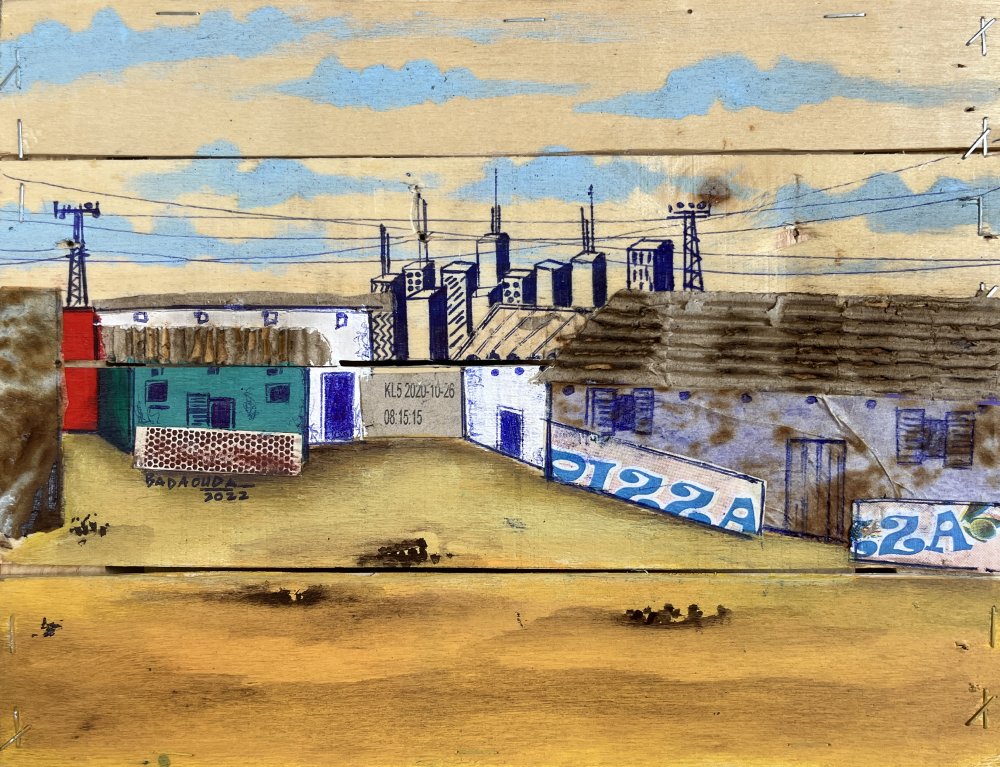
Daouda Ba (Senegal), Désordre Urbain XI (Urban Disorder XI), 2021.
Fragmentation of the working class is one of capital’s strengths. The working class is spread across factories and farms, offices and schools, households and informal markets. Workers, essential to production and social reproduction, find that their political rights are often denied and that their contribution to society is frequently denigrated. Capital turns this dispersion and denigration into division: formal-sector workers are told to fear informal workers, citizens to fear migrants, urban workers to disregard peasants, and men to treat women’s emancipation as a threat. Religious, racial, ethnic, caste, and linguistic differences are turned into permanent lines of political division. The task of socialist organisation is not to pretend that these differences do not exist, nor to demand that every struggle dissolve itself into an abstract class unity. It is to construct unity by showing how different forms of oppression are tied to a shared social order.
In our tradition, the construction of this unity is called the creation of a ‘historical bloc’: an alliance of social forces held together not merely by temporary agreement but by a common political project. Such a bloc must be rooted in the working class and address the aspirations of all those whose lives are deformed by capital, imperialism, patriarchy, racism, caste oppression, and the destruction of nature. A political programme cannot be a checklist in which each social group is assigned a separate demand. It must provide a coherent explanation of the crisis and a credible direction for society, showing how public healthcare, agrarian reform, dignified employment, women’s liberation, ecological repair, and national sovereignty belong to a common project. The ruling class says that society must be organised around the freedom of capital; a socialist historical bloc must insist that society be organised around the dignity of labour and the reproduction of life. This is how social power becomes hegemonic: not through a messaging strategy but through the construction of political leadership by organisation and struggle.
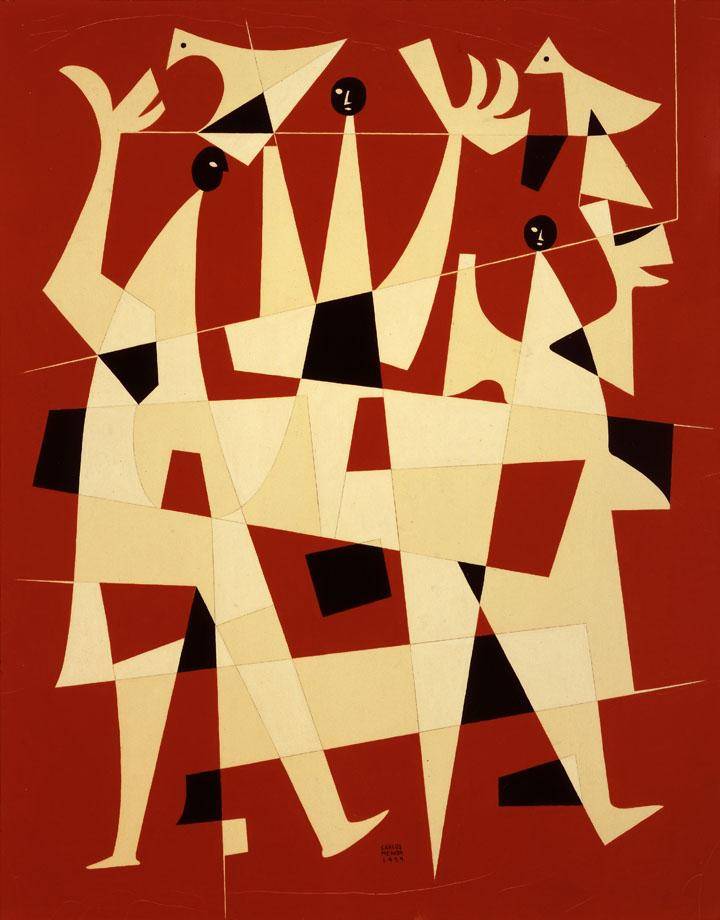
Carlos Mérida (Mexico), Festival of the Birds, 1959.
The ruling class offers an emotional interpretation of the world. It tells workers that their neighbours are dangerous, that foreigners are stealing their future, that poverty is shameful, and that collective action is futile. It cultivates resentment while preventing that resentment from developing into an understanding of the system, turning legitimate anger towards those with even less power. This is the emotional terrain on which the far right of a special type organises. It offers belonging to people who feel abandoned, pride to those who have been humiliated, and certainty to those whose lives have become precarious. Its explanations are false, but the pain to which it speaks is real.
A socialist politics that responds only with statistics will remain weak. It must provide dignity, companionship, courage, and hope, not as empty slogans but as experiences created through organisation. Culture is central to this work: songs, poetry, theatre, visual art, and collective rituals preserve historical memory and provide images of a future that cannot yet be fully described in policy documents. Revolutionary culture teaches people not merely what to oppose but what they are struggling to become. Social power requires a battle of ideas because the ruling class presents its domination as common sense, and it requires a battle of emotions because common sense is held in place not only by argument but by fear, desire, shame, and hope.
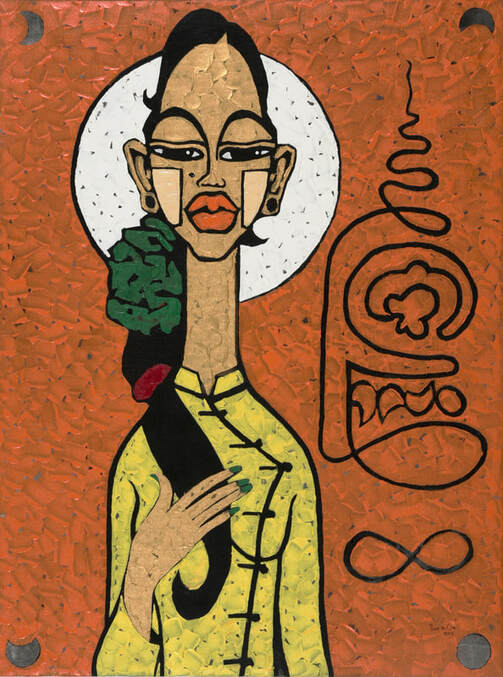
Zwe Mon (Myanmar), Untitled, 2013.
Social power is indispensable, but it is not sufficient. A movement may create strong popular organisations while the capitalist class continues to control investment, production, and the coercive apparatus of the state. The socialist project must therefore develop a strategy to translate social power into governmental power and to transform the state itself. However, electoral victories should not be confused with the completion of this process. A left party can form a government while banks, corporations, senior bureaucrats, judges, military officers, and media monopolies remain under the influence of the old ruling bloc. This is why a left government must strengthen the independent organisation of the people and why popular organisations must not become passive defenders of sympathetic ministers. Social power is what allows a project to survive beyond one government, one election, or one generation of leaders.
There is a tendency to see politics only at the moment of harvest: who won the election, who formed the government, which law was passed, and which palace was occupied. But every harvest is preceded by long and largely invisible labour. Seeds are selected and planted, soil is repaired, water is carried, and young plants are protected from heat and disease. Most of this work is forgotten when the harvest is finally gathered. Yet the construction of social power is this patient labour: it takes place when a cadre leads a political class after a long day of work, when a union organiser visits a worker who fears dismissal, when women establish a committee against violence, when peasants study the structure of agricultural debt, and when young people create a cultural group in a neighbourhood abandoned by the state. None of these actions alone transforms society, but together they create a people capable of transformation.
What the people lack is not capacity but the organised means to recognise, combine, and exercise it. Social power begins when they cease to regard themselves merely as those who suffer from history and begin to understand that they can make it.
Warmly,
Vijay