Why Is There a Woman at the Maandamano (Protests)?
Kenya’s security forces weaponised sexual violence to crush women’s participation in the Gen-Z uprising — exposing how neoliberal austerity and patriarchal repression converge on working-class women’s bodies across the continent.
A wave of ‘Gen-Z’ protests took place from Indonesia to Tanzania, from Nepal to Morocco. While they are often characterised as being shaped by digitally organised youth, these movements are fuelled by more mundane worries: youth unemployment and the strains of life in austerity societies. While the youth want to ‘speak back’, they are met with state repression, including abductions, arrests, and sexual violence. Kenya’s maandamano (protests) of 2024 and June 2025 lifted up these grievances, mainly sparked by discontent over the Finance Bill of 2024, which proposed higher taxation on basic goods amidst youth unemployment, disillusionment with society, entrenched corruption, and a deepening economic crisis. This was a cycle of protest against the austerity regime in post-colonial states.
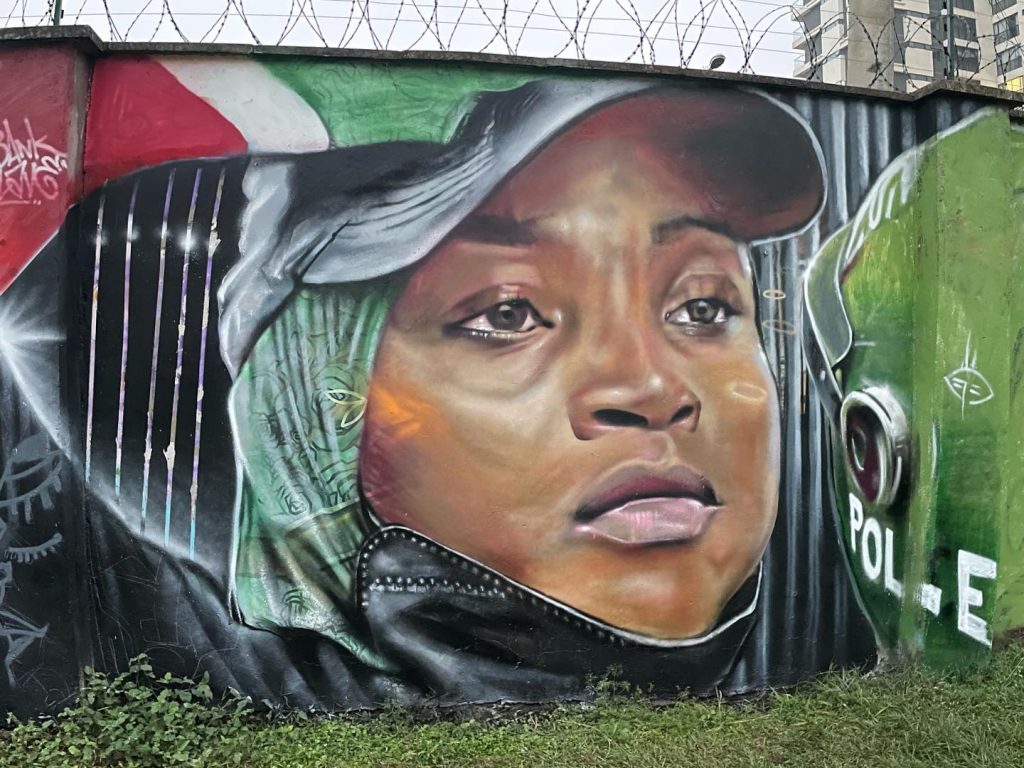
A mural by Bankslave depicting Shakira Wafula, who became an icon of Kenya’s Gen Z-led protests against the Finance Bill 2024 after defiantly raising the Kenyan flag before riot police.
During the June 2025 protests, Juliet Nyabuto of Women for Matiang’i said, ‘The rape and assault of women during national protests is a national shame. We will not mince words. These were not random acts of violence; these were targeted attacks meant to silence and terrorise women’. Rather than focus on the sexual violence against protestors, the media portrayed the women as unruly, and as part of the wider Gen-Z movement that was represented as chaotic, reckless, politically immature, and violent. Women and girls who came to protests began to be seen as criminals and then almost open to rape – a framework that stripped women of their political agency and masked the precarious condition that enabled that violence.
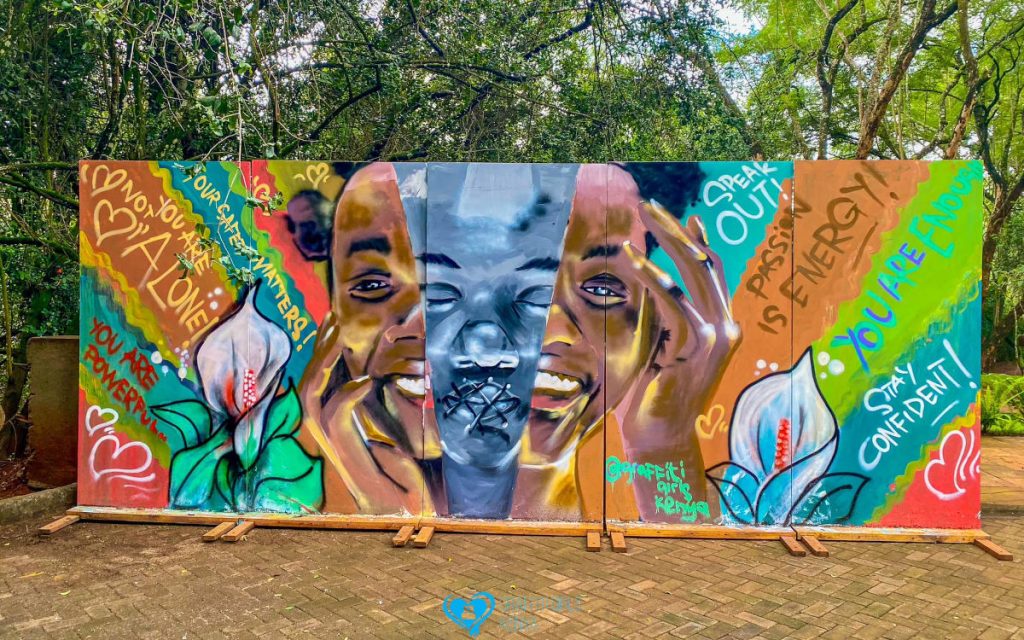
A triptych mural by Graffiti Girls Kenya depicting three young women’s faces — two joyful, one silenced with a barbed motif over the mouth — with the messages ‘You Are Not Alone’, ‘Our Safety Matters’, ‘Speak Out’, and ‘You Are Enough’, Nairobi, 2024. Credit: Graffiti Girls Kenya.
Media outlets such as the Daily Nation, Citizen TV, the Star, and social media platforms portrayed the women protestors as apolitical, passive, and vulnerable victims of violence – depictions that obscured their political activity, ultimately revealing deep patriarchal assumptions that draw from colonial logics into post-colonial Kenya. What were women doing outside the feminised domestic private sphere and marching in the masculine political public sphere? That seemed to be the overarching question. For instance, Daily Nation coupled ‘women and children’ as the most exposed during the protests – women being dependents and as vulnerable as children at the protests. The Nation roundtable on NTV Kenya shamed the victim, insisting on the idea that sexuality warranted respectability and that was not to be found in the fields of protest. These media portrayals reinforced the idea that ‘fragile’ women’s bodies trespassed on the dangerous ground of the public; but they ignored the fact that several young women had been leading and mobilising the protests, in fact many were its leaders (such as Anini Barasa, Hanifa Adan, and Shakira Wafula). By erasing these women, the media re-masculinised the public sphere and re-feminised the private sphere.
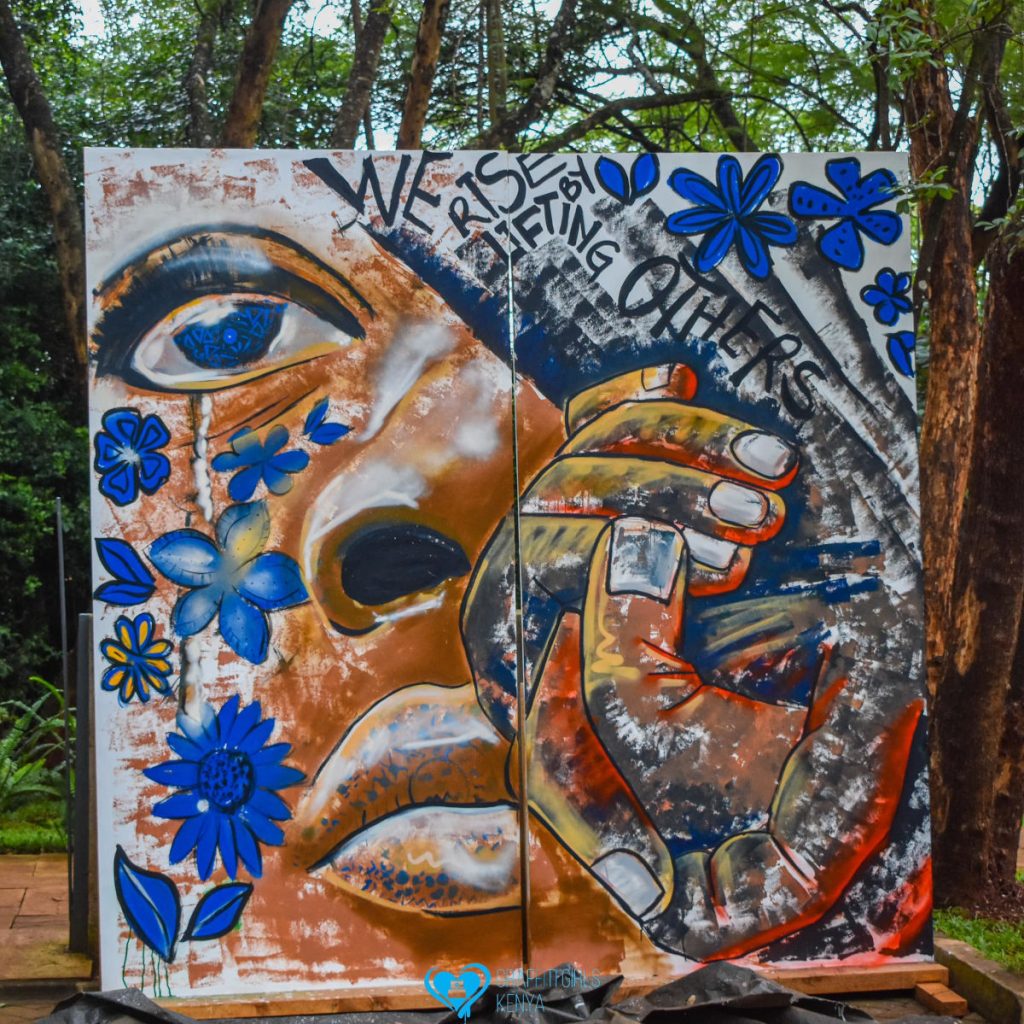
A mural by Graffiti Girls Kenya showing a woman’s face adorned with blue flowers and an outstretched hand, with the words ‘We Rise by Lifting Others’, Nairobi, 2024. Credit: Graffiti Girls Kenya.
Reactions to the violence against women came swiftly, with the Kenyan Women Senators Association calling for a criminal investigation into the attacks. Chairperson Veronica Maina criticised not only the ‘senseless violence’ but also the fact that this violence was being celebrated on social media. But neither condemned the Finance bill nor did the police move on the investigations (‘we are still trying to collect data’, said Muchiri Nyaga of the National Police Service – a classic tactic of stalling). A ‘gender specialist’ – Crispin Afifu – told Kenyan women to take care by avoiding isolated routes and walking in trusted groups. Although caring paternal advice, such a reaction ignored the structural problems raised by the protests and shifted responsibility back to them as individuals. The non-governmental organisation Usikimye took the view of care as well, but mainly care for the rape survivors and care to get their stories into the language of policy and humanitarian relief. Njeri Migwi, director of Usikimye, said of the violence of the goons and the police during the demonstrations, ‘I’m heartbroken. We can’t be fighting for freedom during the day and against rapists at night. The assaults were organised violence. The intention is clearly to make women afraid to come out and protest – and a protest without women isn’t an organic one’.
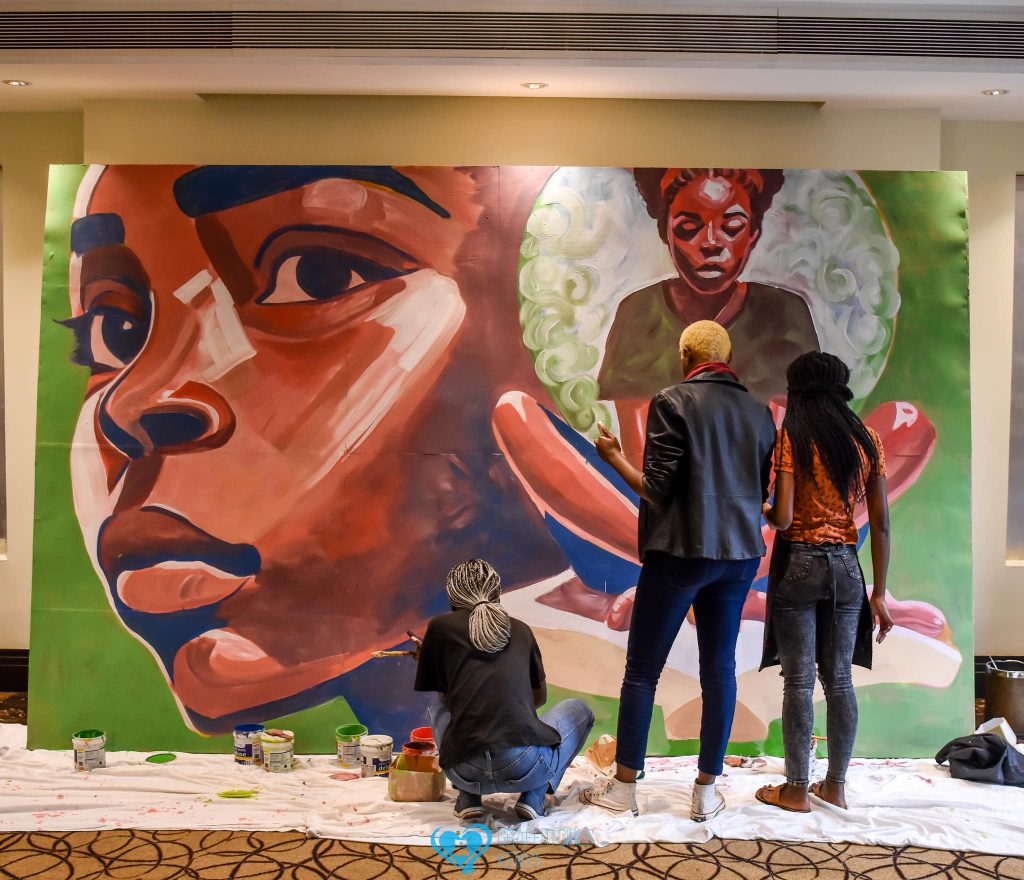
Artists from Graffiti Girls Kenya paint a mural in Nairobi, August 2024. Credit: Graffiti Girls Kenya.
The women on the streets, walking home after the protests, were not just women. They were working-class women who had no access to private transportation. Economic precarity and the collapse of public transportation exposes working women to the patriarchal aspects of the night. Class and gender intersect with economic precarity to produce vulnerability. In this regard, sexual violence during the Gen-Z-led protests is not simply a byproduct of the anarchic protests, but it emerged within the broader political economy of neoliberal capitalism that systematically exploits, disciplines, and depoliticises women’s bodies.
The reaction of these various social forces to the protests and to the violence against women is important to register and study. But even the most sympathetic and clear position, as articulated by Usikimye, does not forthrightly expose the hidden subsidies women provide to neoliberal capitalism – with individual female survivors shouldering the costs of treatment, trauma, and lost income, while rendering unpaid caregiving for children, elders, and households. The neoliberal system in Kenya, as elsewhere, has shifted the burden of care and safety to the individuals and to the households, which masks the way the Kenyan state has withdrawn from care and protection – indeed, has become the instrument not of protection but of violence to protect certain classes. Building from Migwi’s statement that the protests faced ‘organised violence’, in fact, the protestors spoke for an entire set of classes in society that face the structural violence of the neoliberal Kenyan state.
Such dynamics are not peculiar to Kenya. Across the tricontinent, similar crises perpetuated by debt and austerity amidst neoliberal restructuring emerge. They reveal the crisis is not accidental but fundamentally structural to neoliberal logic.
Warmly,
Sinthia
 | Sinthia Atata Joech |