Television for Social Change in Ghanaian History
Ghana Television began in 1965 with a mandate for education and social transformation. Today, Ghanaian media face neocolonial pressures, but efforts to reclaim progressive Pan-African values continue.
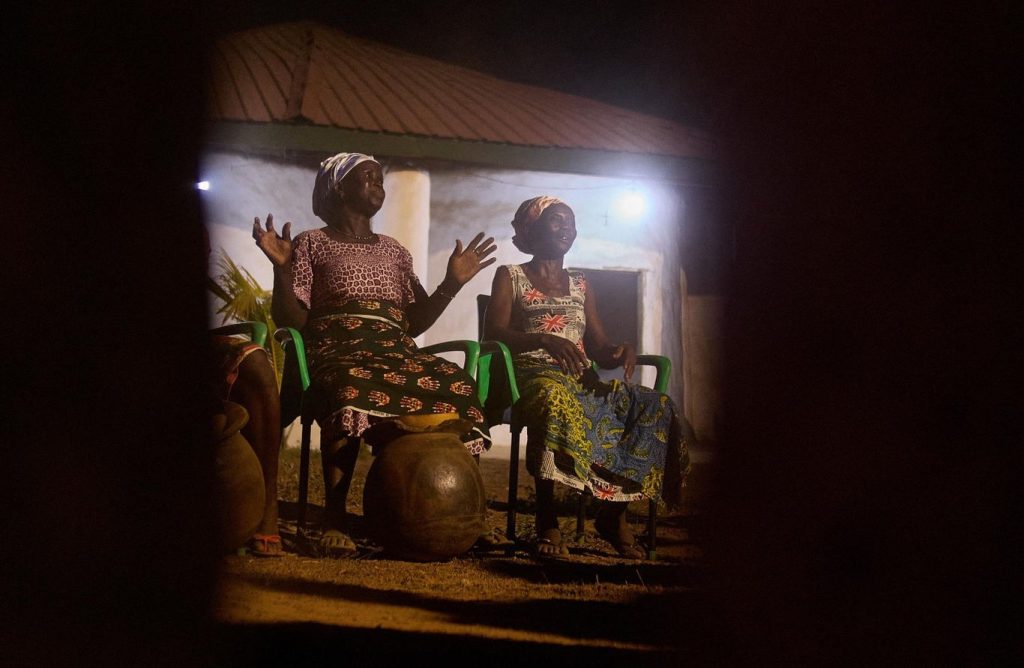
Evans Ahorsu (Tamale, Ghana), Untitled, 2025.
Ghana Television (GTV) began transmission in 1965, but Ghanaians did not have access to colour television until 1985. Global media histories demonstrate the marginalisation of Africa in the global mediascape, revealing how media innovations were slow to diffuse across the continent. Within Ghana, the North faces marginalisation on two fronts, as it is often the last part of the country to benefit from such innovations. For instance, although GTV had been broadcasting since the 1960s, the national electricity grid only reached one of Northern Ghana’s largest cities in 1989.
Once the North was connected to the electricity grid, television access began to grow, with well-to-do citizens purchasing TV sets to tune into GTV’s broadcasts. This diffusion remained in its early stages, since only a small number of people could afford colour television sets. Communal viewing became widespread: television owners would often bring their sets outside into a compound courtyard at night so that neighbours could gather to watch. During the day, it was common to see children standing outside their neighbour’s window to watch television. Throughout the 1990s, GTV maintained a monopoly on television broadcasting in the North.
No statement encapsulates the mandate of GTV – and by extension the Ghana Broadcasting Corporation (GBC) – better than Dr. Kwame Nkrumah’s speech at the inauguration of the Ghana Television Service in 1965:
Ghana’s Television will be used to supplement our educational programme and foster a lively interest in the world around us. It will not cater for cheap entertainment nor commercialism. Its paramount object will be education in the broadest and purest sense. Television must assist in the socialist transformation of Ghana.
President Nkrumah’s remarks emphasised the importance of education as the guiding principle of GBC’s mission and vision. In his view, education encompassed several goals: promoting science and technical training to make them accessible to the masses; focusing on agriculture; and providing general information on vocational work and practical skills for people both at home and at school.
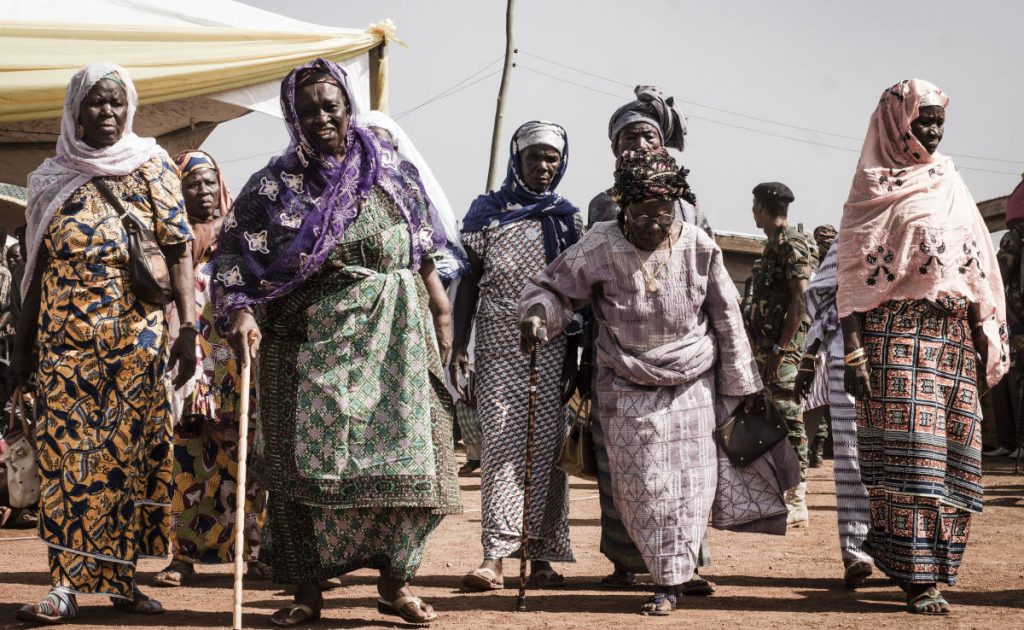
Mandeiya Michael (Yendi, Ghana), Untitled, 2019.
Alhaji Adam Cockra, a veteran journalist from Tamale who worked at GBC for forty-two years (1966-2008), recalls how television eventually came to Northern Ghana. ‘A small transmitter was installed in Tamale to take care of the North. Staff in Tamale received by Ghana Airways [flight] what was telecast the previous day in Accra… In other words, everything viewers in the North saw on TV was a day old. Even then, only Tamale and its environs could view TV until the 1990s’.
Despite these structural hurdles in bringing television to Ghanaians who were marginalised by geography, ethnicity and class, President Nkrumah’s vision for media in Ghana extended beyond education into the realm of consciousness-raising:
Our broadcasting service should struggle ceaselessly to make itself the people’s service. It should identify itself fully with the people’s aspirations for a fuller life. It should continue to fight uncompromisingly against the forces militating against our progress. It will be its task to expose and unmask imperialism, colonialism and neocolonialism in all its forms and manifestations, and support our endeavours for the political unification of our Continent.
Although Nkrumah made this statement in an era when African countries were fighting for liberation from colonial rule and the African diaspora in America was fighting for civil rights, it remains relevant today. The Global South continues to be subjected to neocolonial and imperialist violence from Europe and North America.
Many media outlets and watchdog organisations have neglected this mandate and become stooges of the ruling elite as well as of imperialist core nations such as France and the United States. This marks a stark departure from Nkrumah’s vision for Ghana’s media. For example, the French ambassador to Ghana Anne Sophie Avé (2018-2022), hosted a program called Touch of France. It aired on private stations GHOne TV and Metro TV from 2019 to 2021, promoting French propaganda and soft power under the guise of cultural exchange. Nkrumah would have described this as a neocolonisation of the media landscape.
In 2022, the US embassy organised and funded a fact-checking workshop for rural journalists in Ghana. The following year, it was a major sponsor for the twenty-seventh Ghana Journalists Awards, held in Accra in October 2023. Ahead of Ghana’s national elections in 2024, the US embassy worked with the Ghana Journalists Association to organise a workshop for journalists on election reporting. It is therefore unsurprising that journalism in Ghana today has largely failed to critically interrogate and challenge US imperialism – including, for example, how the US military has established a military base at Ghana’s international airport and its personnel enjoy more rights and protections than Ghanaian citizens.
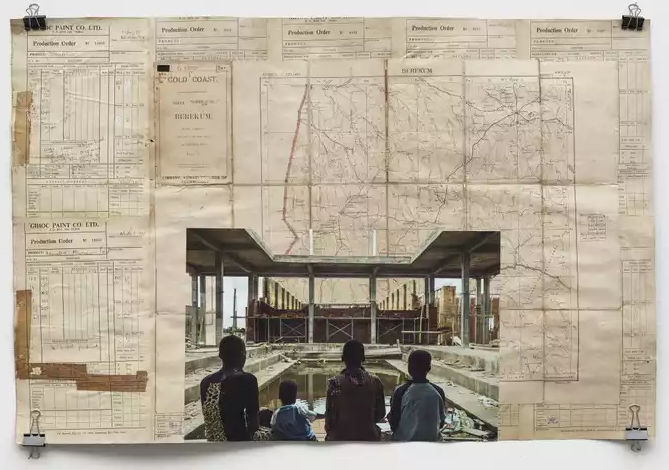
Ibrahim Mahama (Ghana), Shine a Light, 2021.
More broadly, Ghana’s media have abdicated their watchdog role. They fail to ask the important questions that would inform the public about how such developments affect the nation’s sovereignty. The embassies of Global North nations in Europe and North America occupy an integral position in civil society circles of the country by funding research and journalism training workshops, wining and dining the movers and shakers in media and journalism, and so on, which can often stifle journalists’ ability to more sharply critique the neocolonial and imperialist actions of these nations. Yet, there are efforts to resist the prevailing contemporary conditions with a few stations like Accra-based Pan-African TV are attempting to foreground pan-Africanist values which not only engage with issues affecting the African continent, but the African diaspora at large.
The history of television in Ghana is incomplete without highlighting the role women played in developing the medium. Influenced by the Pan-African values central to Nkrumah’s vision for media in a newly independent Ghana, key aspects of early television development were shaped by Pan-Africanists such as Shirley Graham Du Bois (from the United States) and Genoveva Marais (from South Africa). Marais served as director of programmes for Ghana’s television service at its inception, and she introduced and shaped programming in line with the Pan-African and socialist vision on which the GBC was founded.
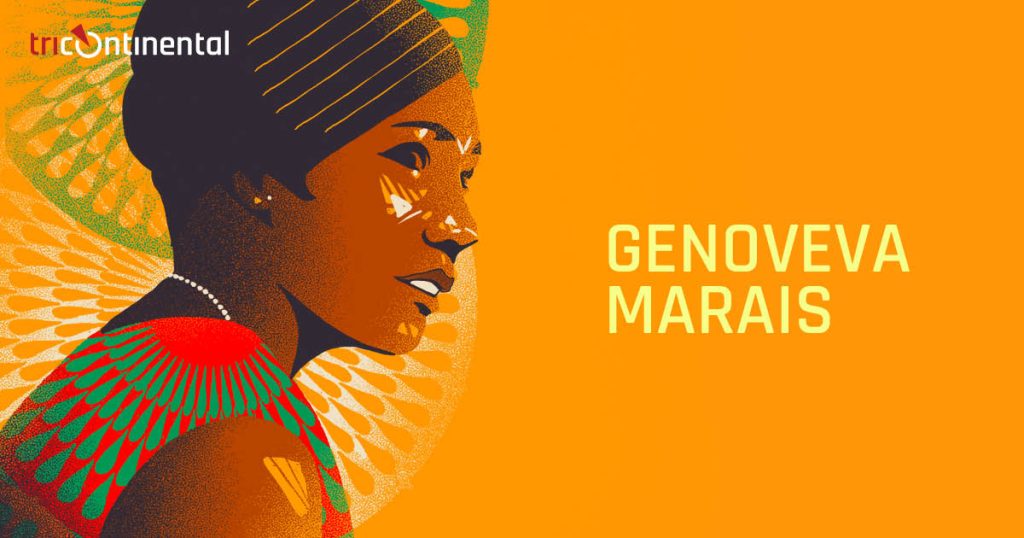
Despite these early contributions, very few women hold management positions in Ghana’s television industry today. Gender representation on television has diverged sharply from the Pan-African, anticolonial values that underpinned TV’s early years. The male gaze now dominates, and media narratives on gender are often filtered through a lens of objectification and other tropes perpetuated by patriarchal systems.
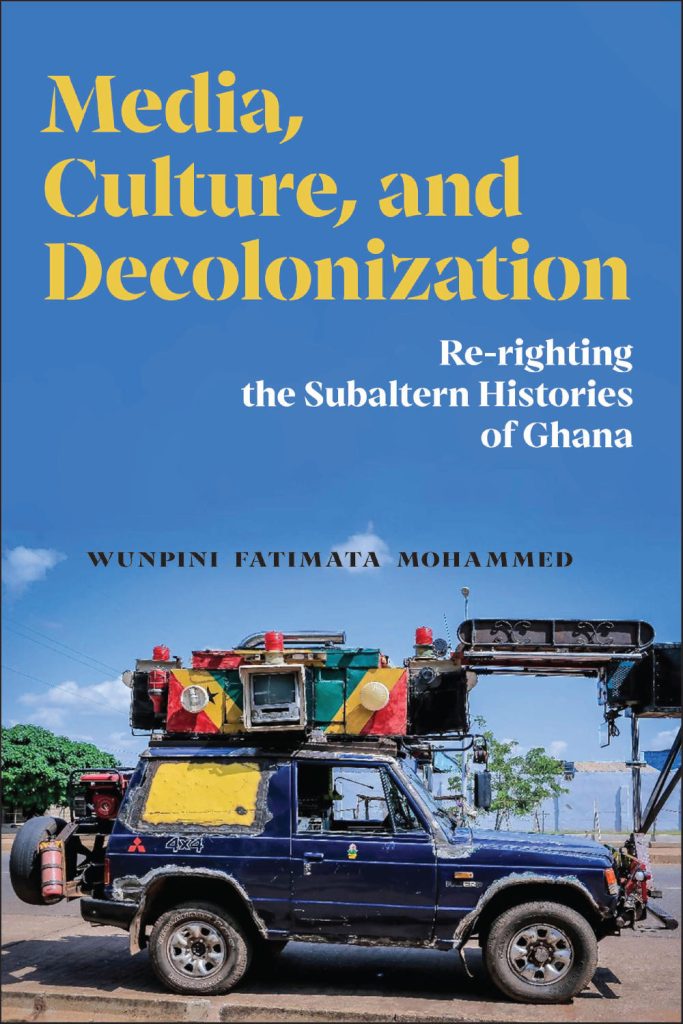
This newsletter is a lightly edited excerpt from my new book, Media, Culture, and Decolonisation: Re-righting the Subaltern Histories of Ghana (December 2025), drawn from the chapter ‘Television for Social Change’. In the wider book, I show how indigenous-language television stations in Northern Ghana – particularly Dagbanli-language stations – are striving to realise the dream Nkrumah set out: media as a force for social transformation. Progressive African media organisations have much to learn from these initiatives, especially about how to build the conditions in which marginalised communities can take ownership of the radical work that media institutions are capable of doing in Ghana and beyond.
Warmly,
Wunpini Fatimata Mohammed
 | Wunpini Mohammed |