A Letter from the United Nations Special Rapporteur on the Right to Health
From apartheid South Africa to the halls of the United Nations, Dr Tlaleng Mofokeng reflects on injustice, resilience, and the power of art to reimagine health and humanity amidst crisis and hope.
Dear friends,
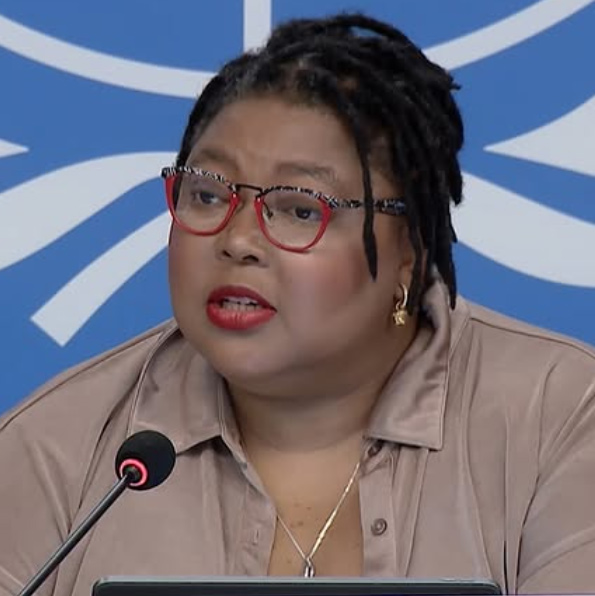
In April 2002, the United Nations (UN) Commission on Human Rights established the mandate of the UN Special Rapporteur on the Right to Health, a position later endorsed by the UN Human Rights Council in 2007. Thirteen years later, in 2020, I was appointed by the UN Human Rights Council as the Special Rapporteur on the Right to Health – the first woman and the first African, to hold this role.
I was born and raised in apartheid South Africa and, having later studied medicine at the University of KwaZulu-Natal, I worked as a doctor in the Gauteng Health Department and at Charlotte Maxeke Johannesburg hospital. My medical school was named after Nelson Mandela, and the hospital I worked in is named after the first Black woman to get an undergraduate degree in South Africa. Charlotte Maxeke (1871-1939) joined the campaign against pass laws and fought for the right to the vote and for education for all. As part of this campaign, she became the first Black woman to be called to testify before a government commission on education. In 1920, Maxeke joined the Industrial and Commercial Workers Union. It was hard not to be inspired by these figures – Mandela of course, very well known, and Maxeke, sadly, largely unknown outside South Africa.
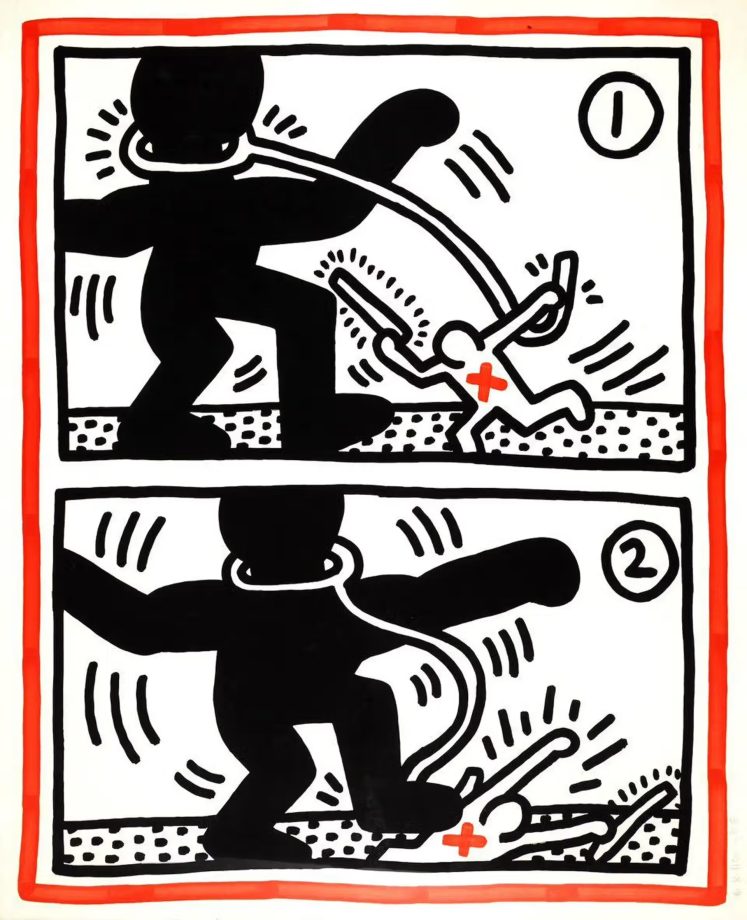
Keith Haring (USA), Free South Africa 3, 1985.
As a young doctor at the height of the AIDS epidemic in South Africa, I found that young patients would follow me out of the hospital to my car to ask questions related to their sexual health and their sexual lives. These sincere questions sparked my interest in Sexual and Reproductive Health and Rights (SRHR). It is important to point out that both the Committee on Economic, Social, and Cultural Rights (2010) and the Committee on the Elimination of Discrimination against Women have indicated that a woman’s right to health must include sexual and reproductive health. While my patients were not receiving the medical information that they needed, my own identities as a Black African woman shaped the medical attention that I did or did not receive. My investment in SRHR led to the writing of Dr. T: A Guide to Sexual Health and Pleasure (Picador, 2021), which demystified many aspects of sexual life and sexual health. I was eager to shift sexual health from being treated as a pathology to being recognised as part of human pleasure and human life. I also wanted to elevate sexual pleasure to its rightful place, alongside sexual health and sexual rights.
South Africa’s health care system is profoundly unequal, reflecting the apartheid-era inequalities that remain intact for much of the population. There is a well-resourced private sector serving a wealthy, largely white clientele, and an underfunded public sector that struggles to care for the sick – largely poor and largely Black. South Africa has very advanced hospitals and research institutions, yet the public is plagued by overcrowding and under-resourced staff. This situation is not unlike that of much of the Global South – a neo-colonial structure that should be called medicide: the death of millions due to the absence of adequate health care.
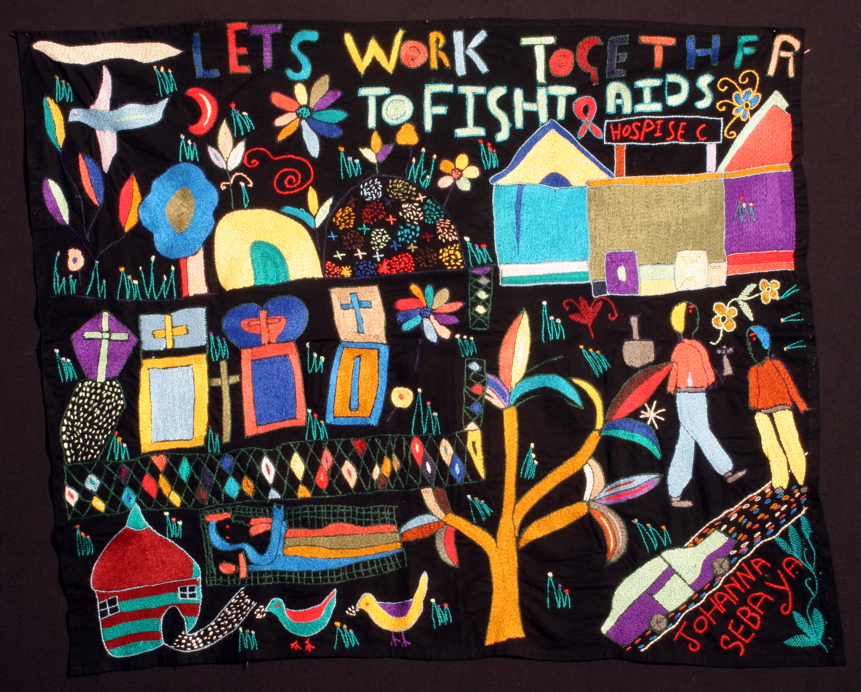
Johanna Sebaya (South Africa), Mapula Embroidery Project, Let’s Work Together to Fight AIDS, 2005.
As a South African black woman medical doctor, once a Black girl under apartheid, my tenure at the United Nations demanded that I use anti-colonial, anti-racist, anti-sexist approaches. I had lived through apartheid, racism, and sexism -all of which undermined my right to health. At the time of my appointment, the world was undergoing rapid change and confronting one of the greatest health challenges in recent memory: the pandemic. COVID-19 shut the world down and personal protective equipment became an unquestionable part of public life – not just tools for health workers during specific procedures.
From a pandemic, we entered a genocide. I remain proud to be a South African, given that it was South Africa that took Israel to the International Court of Justice on the charge of genocide. It has been horrific to witness Israel bomb hospitals and health care centres. Palestinian health workers have been exhausted, harassed, arrested, and – if not killed – prevented from doing their work as first responders. Health care facilities and health workers must be protected under international law. It is completely unacceptable that Israel has bombed so many of them, continuing to attack a healthcare system already on its knees. We allowed Israel to unlock new levels of horror that cannot easily be undone. This is medicine under attack. A stark example of medicide.
My tenure was not smooth sailing, but art has been a constant in my life, allowing me to dance and express joy at the hardest of times. It has been five years since my appointment, and in this role I continue to reflect on what has been both a rewarding and extremely turbulent one as the right to health remains challenged, unfulfilled, and structurally decimated at every level across the world. Amidst heartbreak, loss, grief, genocides, and medicide, there has also been joy and art – through which we express ourselves, remember what has happened and imagine what is possible. Art has remained steady and vital as we reimagine another world, one far better than this, where the right to health is not policy but a reality for all. Amid rage, genocides, medicide, loss and feelings of powerlessness, we have seen art emerge – whether through Refaat Alareer’s If I Must Die poetry collection, sculptures, or music from across the world.
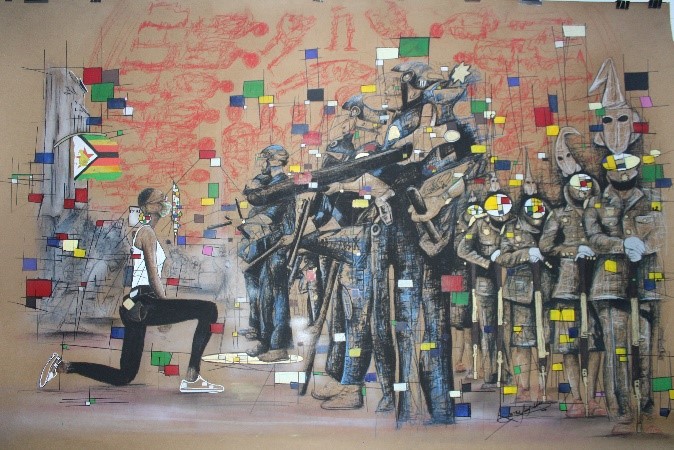
Ras Silas Motse (South Africa), Afrikan Geometry reborn contaminated, 2020.
Art and Health
Both as a child and now as an adult, art has been central to how I see the world and how I imagine a better one. I experienced art in music in church with my mother, in the theatre productions at school, and in the protest and pop music that surrounded me. At medical school, I was moved by protest music, including songs and other art forms that encouraged people to practice safe sex. During the pandemic, I was fascinated by the ways art adapted: podcasts flourished, baking shows emerged online, artists held virtual concerts, and albums were launched online. The potential of art to clarify consciousness struck me, and I began to make more art myself as a way of speaking to the world.
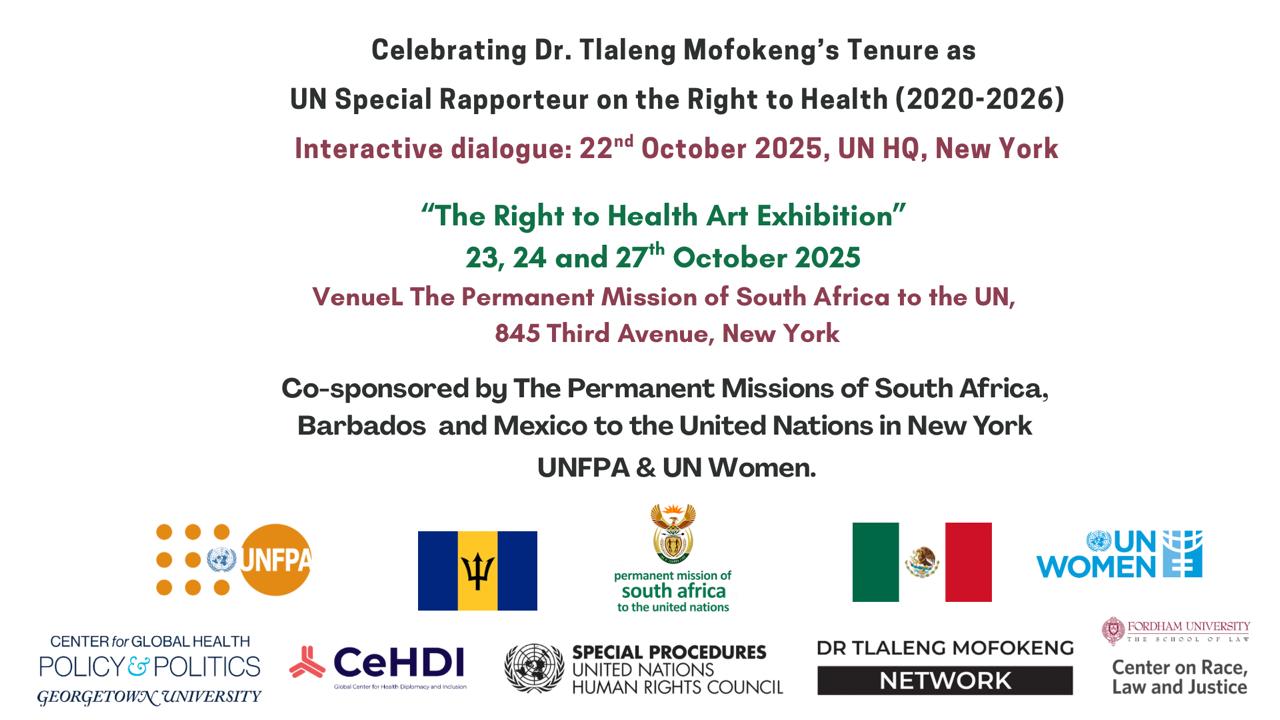
The Right to Health Art Exhibition (New York), October 2025
As my tenure as the UN Special Rapporteur on the Right to Health comes to an end, art continues to be central to my daily life and work. Returning to art feels like the perfect way to close the circle. To mark this conclusion and to open the way for what lies ahead, I will be hosting an art exhibition in New York later this year. The art works will come from civil society practitioners and human rights defenders, addressing the role of art in confronting critical health and human rights issues. While these are the overarching themes, each artwork will speak to a particular aspect of the right to health and medicine – such as health transformation, humanitarian efforts, equality, and health policy reform.
Dr. Tlaleng Mofokeng
 | Dr. Tlaleng Mofokeng |